Founding of Georgetown College on January 23, 1789
1789 · Washington, D.C., United States
Georgetown College, the first Catholic college in the United States, was founded.
January 27, 1785
The University of Georgia is founded, becoming the first public university in the United States.
Athens, United States | University of Georgia
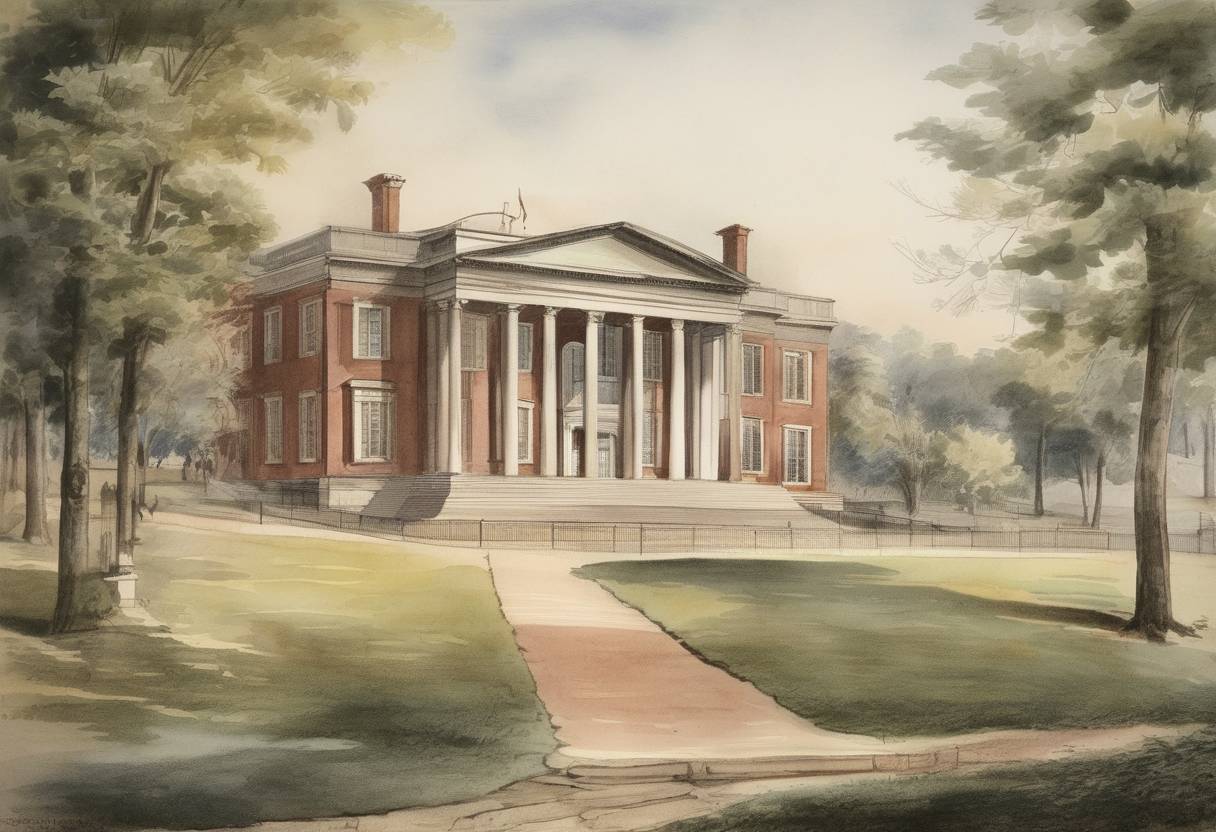
On January 27, 1785, the University of Georgia (UGA) was established, marking a significant milestone in American education as the first public university in the United States. This event laid the groundwork for the expansion of public higher education across the nation.
In the years following the American Revolution, there was a growing recognition of the need for education to support the new republic. Leaders believed that an educated citizenry was essential for the survival and prosperity of the democratic experiment. This period saw the emergence of several educational initiatives aimed at fostering civic responsibility and leadership.
The University of Georgia was chartered by the Georgia General Assembly, which passed the charter on January 27, 1785. The charter was drafted by Abraham Baldwin, a Yale graduate and a prominent figure in Georgia politics. Baldwin’s vision was to create an institution that would provide education to the citizens of Georgia, thus contributing to the state’s development and governance.
The charter’s approval made UGA the first state-chartered university in the United States, setting a precedent for the establishment of other public universities. The charter emphasized the importance of education for the public good and outlined the governance structure of the university.
The University of Georgia officially opened its doors to students in 1801, with Josiah Meigs serving as its first president. The university’s establishment was a pivotal moment in the history of American education, as it demonstrated the commitment of state governments to support higher education.
UGA’s founding influenced the creation of other public universities, contributing to the democratization of education in the United States. It underscored the belief that education should be accessible to all citizens, not just the elite.
Today, the University of Georgia is a leading public research university, known for its diverse academic programs and contributions to research and public service. Its founding is celebrated as a landmark event in the history of American education, symbolizing the enduring value of public investment in higher learning.
The establishment of UGA paved the way for the development of a robust public university system in the United States, which continues to play a critical role in advancing knowledge, fostering innovation, and promoting social mobility.
Source: en.wikipedia.org