General George Washington's Farewell Address to the Continental Army
1783 · Rocky Hill, United States
In Rocky Hill, New Jersey, General George Washington gave his farewell address to the Continental Army.
March 15, 1783
George Washington delivered his Newburgh Address, defusing a potential military coup by the Continental Army.
Newburgh, United States | Continental Army
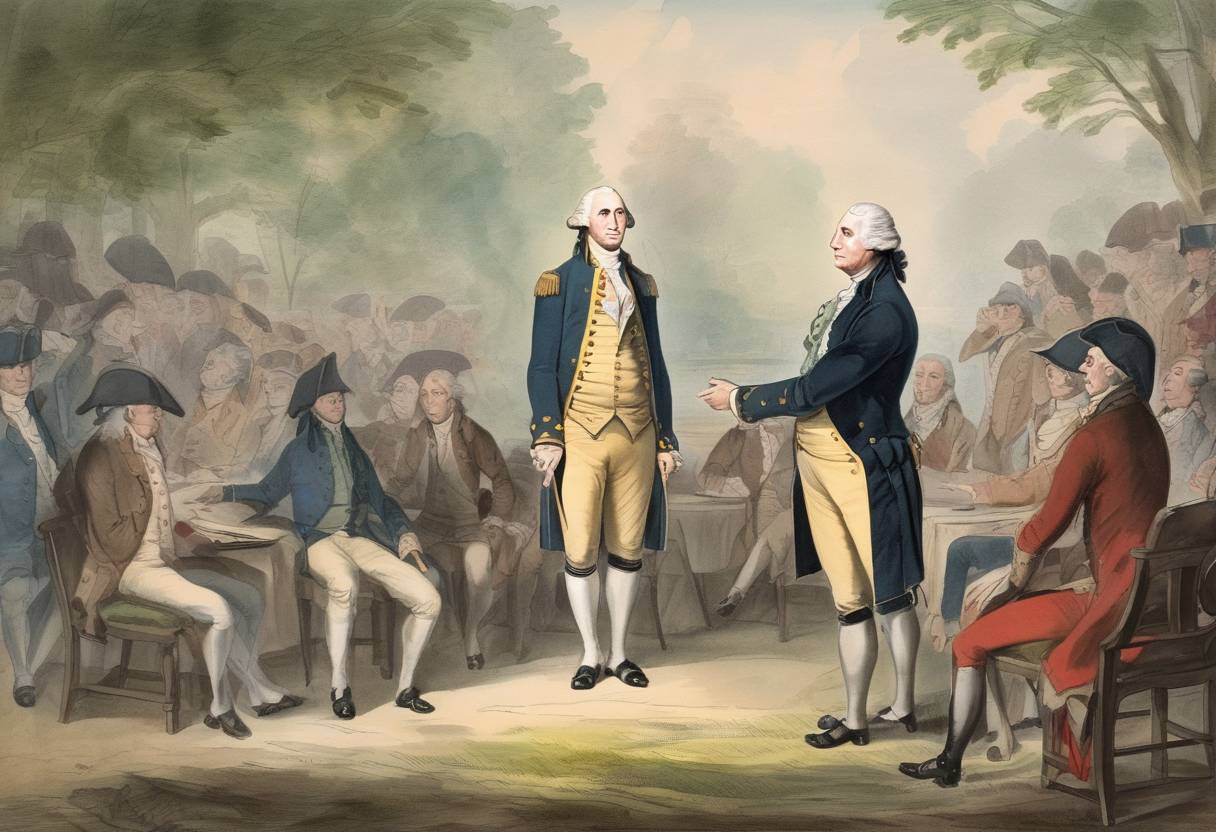
On March 15, 1783, General George Washington delivered what is now known as the Newburgh Address, a pivotal moment in American history that helped avert a potential military coup by the Continental Army. This event took place in Newburgh, New York, where the army was stationed as the Revolutionary War was drawing to a close.
Economic Hardships: The Continental Army faced severe economic hardships. Soldiers had not been paid for months, and there were widespread grievances about the lack of financial support from the Continental Congress.
The Newburgh Conspiracy: Frustration among the officers led to the emergence of the Newburgh Conspiracy, a plan by some officers to challenge the authority of Congress. They considered using the army’s strength to pressure Congress into meeting their demands for pay and pensions.
Washington’s Leadership: Aware of the growing discontent, Washington was determined to maintain civilian control over the military and prevent any actions that could undermine the fledgling republic.
The Assembly: On March 15, Washington called a meeting of his officers at the army’s headquarters in Newburgh. The atmosphere was tense, with many officers expecting a decisive move against Congress.
Washington’s Speech: In his address, Washington appealed to the officers’ sense of duty, patriotism, and honor. He acknowledged their grievances but urged them to maintain their loyalty to Congress and the principles of the revolution.
The Spectacles Moment: A poignant moment occurred when Washington paused to put on his spectacles, remarking that he had “grown gray in the service of my country and now find myself growing blind.” This humanized him and deeply moved the officers, reinforcing his message of sacrifice and unity.
Defusing the Crisis: Washington’s address successfully defused the crisis. The officers, moved by his words and leadership, abandoned any plans for insurrection.
Preserving Civilian Control: The event underscored the importance of civilian control over the military, a foundational principle for the United States.
Washington’s Legacy: The Newburgh Address solidified Washington’s reputation as a leader committed to the ideals of the revolution and the fledgling nation’s democratic principles.
In conclusion, the Newburgh Address was a critical moment in American history, demonstrating the power of leadership and the importance of upholding democratic values even in times of great internal strife. Washington’s actions not only preserved the integrity of the army but also set a precedent for the relationship between military and civilian governance in the United States.
Source: en.wikipedia.org