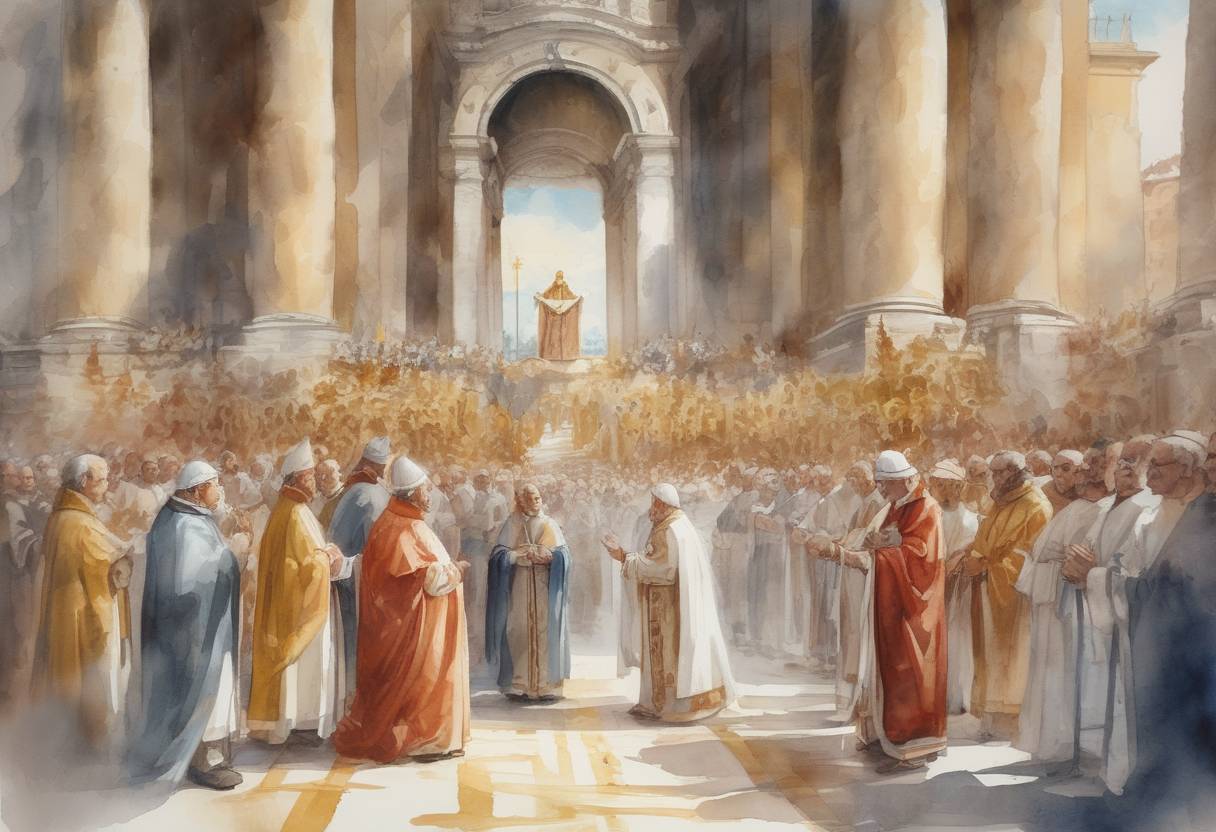
Saint Agatho Becomes Pope
On June 27, 678, Saint Agatho was elected as the Pope, succeeding Pope Donus. His papacy marked a significant period in the history of the Catholic Church, characterized by his diplomatic skills and efforts to resolve theological disputes.
Background
Pope Donus: Agatho’s predecessor, Pope Donus, served as the pope from 676 until his death in 678. His papacy was relatively peaceful, focusing on the administration of the church and the maintenance of church properties.
Context of the Time: The late 7th century was a period of theological and political challenges for the papacy. The church was dealing with the Monothelitism controversy, a Christological doctrine that proposed Christ had only one will, which was a significant point of contention between the Eastern and Western churches.
Agatho’s Papacy
Diplomatic Efforts: Agatho is particularly noted for his diplomatic approach to resolving the Monothelitism controversy. He convened a synod in Rome, which condemned Monothelitism and affirmed the doctrine of two wills in Christ, aligning with the Chalcedonian Definition.
Third Council of Constantinople: Agatho’s efforts culminated in the Third Council of Constantinople (680-681), which was the sixth ecumenical council. Although Agatho did not live to see the conclusion of the council, his letters and theological positions were influential in its decisions, which ultimately condemned Monothelitism and reinforced the orthodox position.
Relations with the Byzantine Empire: Agatho maintained good relations with the Byzantine Emperor Constantine IV, which helped facilitate the resolution of theological disputes and improved the relationship between the Eastern and Western branches of Christianity.
Legacy
Canonization: Agatho was later canonized as a saint, recognized for his role in maintaining the unity of the church and his contributions to resolving significant theological disputes.
Impact on the Church: His papacy is remembered for its emphasis on theological clarity and ecclesiastical diplomacy, setting a precedent for future popes in dealing with doctrinal controversies.
Saint Agatho’s papacy was a pivotal moment in church history, demonstrating the importance of dialogue and diplomacy in resolving complex theological issues. His leadership helped to strengthen the unity of the Christian church during a time of division and uncertainty.