Queen Christina of Sweden's Abdication - June 6, 1654
1654 · Uppsala, Sweden
Queen Christina of Sweden abdicated the throne and was succeeded by her cousin Charles X Gustav.
January 12, 1528
Gustav I of Sweden is crowned King of Sweden, marking the end of the Kalmar Union and the beginning of the modern Swedish state.
Uppsala, Sweden | Swedish Monarchy
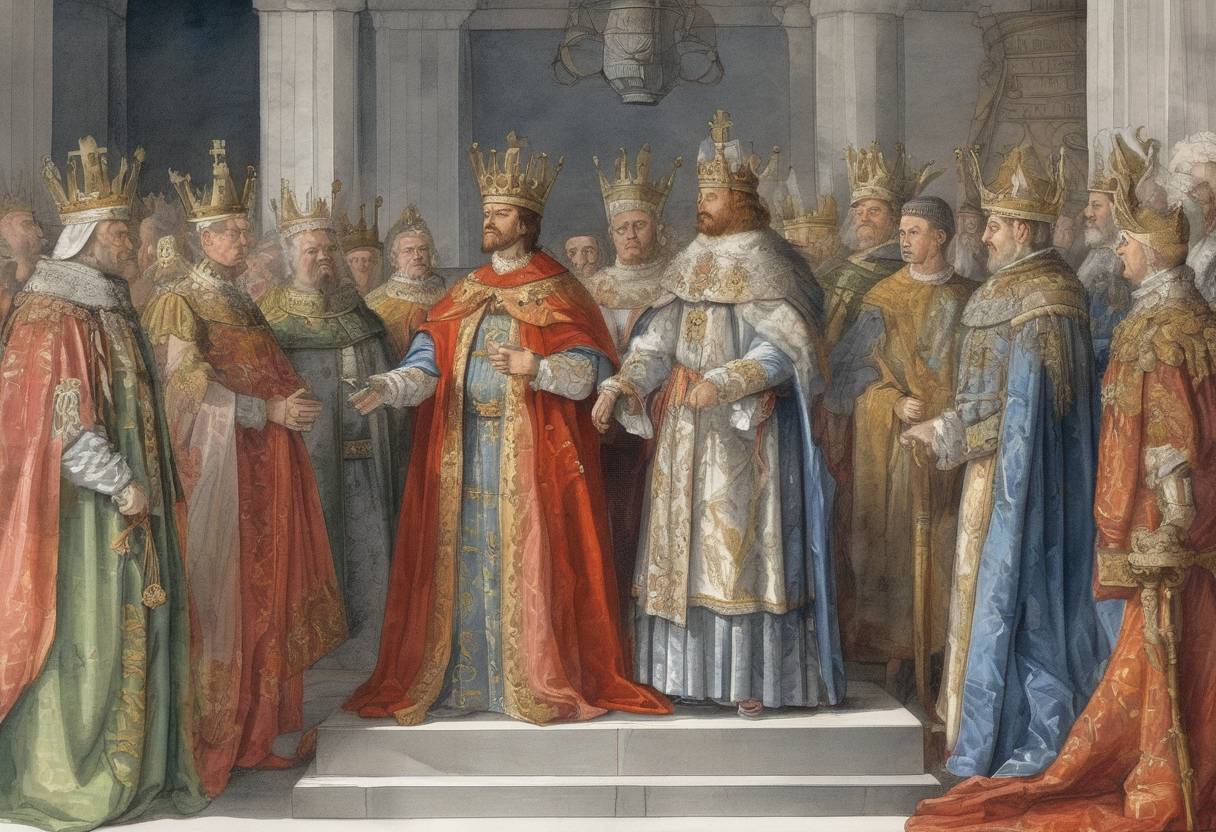
On January 12, 1528, Gustav I of Sweden was crowned King, a pivotal moment in Swedish history that marked the end of the Kalmar Union and the beginning of the modern Swedish state. This event was significant not only for Sweden but also for the broader Scandinavian region.
The Kalmar Union was a series of personal unions that united the three kingdoms of Denmark, Norway, and Sweden under a single monarch, beginning in 1397. The union was intended to counter the growing influence of the Hanseatic League and to consolidate power in the region. However, it was fraught with internal conflicts and power struggles, particularly between Denmark and Sweden.
Gustav Eriksson, later known as Gustav Vasa, emerged as a key figure in the Swedish resistance against Danish rule. Born into a noble family, Gustav was captured by the Danes during the Stockholm Bloodbath in 1520 but managed to escape. He led a successful rebellion against King Christian II of Denmark, rallying support from Swedish peasants and nobility alike.
Gustav’s coronation on January 12, 1528, in Uppsala Cathedral, was a formal acknowledgment of his leadership and the independence of Sweden from the Kalmar Union. The ceremony was a significant departure from previous coronations, emphasizing Swedish sovereignty and the establishment of a hereditary monarchy.
The coronation effectively ended the Kalmar Union, as Sweden asserted its independence and rejected Danish dominance. This shift allowed Sweden to develop its own national identity and governance structures.
Gustav I’s reign laid the groundwork for the modern Swedish state. He implemented significant reforms, including the centralization of power, the establishment of a national army, and the introduction of Lutheranism as the state religion following the Protestant Reformation.
Under Gustav’s leadership, Sweden began to modernize its economy, focusing on mining and trade. His reign also saw the promotion of Swedish culture and language, further solidifying national identity.
Gustav I ruled until his death in 1560, leaving a legacy of a strong, centralized Swedish state. His descendants continued to rule Sweden, with the Vasa dynasty playing a crucial role in the country’s history. The end of the Kalmar Union allowed Sweden to emerge as a significant power in Northern Europe, influencing regional politics for centuries to come.
In summary, the coronation of Gustav I on January 12, 1528, was a transformative event that not only ended the Kalmar Union but also set Sweden on a path toward becoming a modern nation-state.
Source: en.wikipedia.org