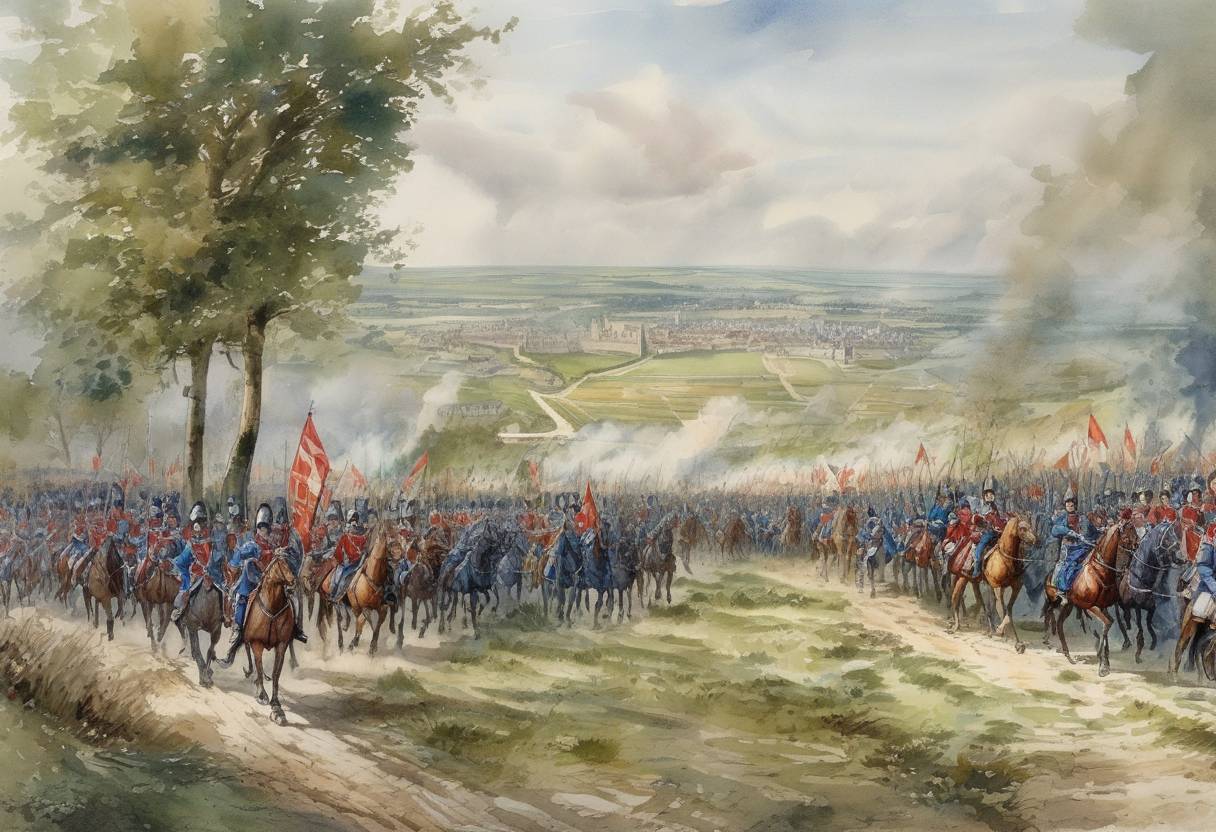
Certainly! Here’s a detailed account of the Battle of Soissons in markdown format:
The Battle of Soissons (June 6, 913)
The Battle of Soissons, which took place on June 6, 913, was a significant conflict in the history of West Francia, marking a pivotal moment in the Carolingian dynasty’s decline and the rise of Robert I as King of West Francia.
Historical Context
- Carolingian Decline: By the early 10th century, the Carolingian dynasty, which had ruled much of Western Europe since the 8th century, was in decline. Internal strife, external invasions, and weakened central authority plagued the realm.
- Charles III (Charles the Simple): Charles III, known as Charles the Simple, was the reigning king of West Francia. His reign was characterized by efforts to consolidate power and manage the threats posed by Viking incursions and rebellious nobles.
- Robert I: Robert I was a powerful noble and a member of the Robertian dynasty, which would later give rise to the Capetian dynasty. He was a key figure among the Frankish nobility and had previously served as a regent.
The Battle
- Location: The battle occurred near Soissons, a strategic location in northern France.
- Conflict: The battle was primarily a result of growing dissatisfaction among the Frankish nobility with Charles III’s rule. Robert I, leveraging his influence and military strength, challenged Charles’s authority.
- Outcome: Robert I’s forces decisively defeated Charles III’s army. This victory was crucial in undermining Charles’s position as king.
Aftermath
- Robert I’s Ascension: Following his victory at Soissons, Robert I was proclaimed king by the Frankish nobility. His reign, however, was short-lived, as he died in battle in 923.
- Charles III’s Fate: Charles the Simple was captured and imprisoned, effectively ending his reign. He spent the remainder of his life in captivity, dying in 929.
- Impact on West Francia: The battle and its aftermath marked a significant shift in power from the Carolingians to the Robertians, setting the stage for the eventual rise of the Capetian dynasty, which would dominate French history for centuries.
Broader Historical Significance
- Transition of Power: The Battle of Soissons exemplifies the transition of power from the Carolingian dynasty to emerging noble families, highlighting the fragmentation and decentralization of power in medieval Europe.
- Feudal Dynamics: The conflict underscores the feudal dynamics of the period, where local lords and nobles wielded significant power, often challenging the authority of the king.
The Battle of Soissons is a key event in understanding the complex political landscape of early medieval France and the gradual shift towards the feudal structures that would define the Middle Ages.