Vietnam War Protest in Washington, D.C. - October 21, 1967
1967 · Washington, D.C., United States
A large Vietnam War protest occurs in Washington, D.C., as thousands of demonstrators march against the war.
May 4, 1970
The Kent State shootings occurred when the Ohio National Guard fired on students protesting the Cambodian Campaign, resulting in four deaths and nine injuries.
Kent, USA | Ohio National Guard
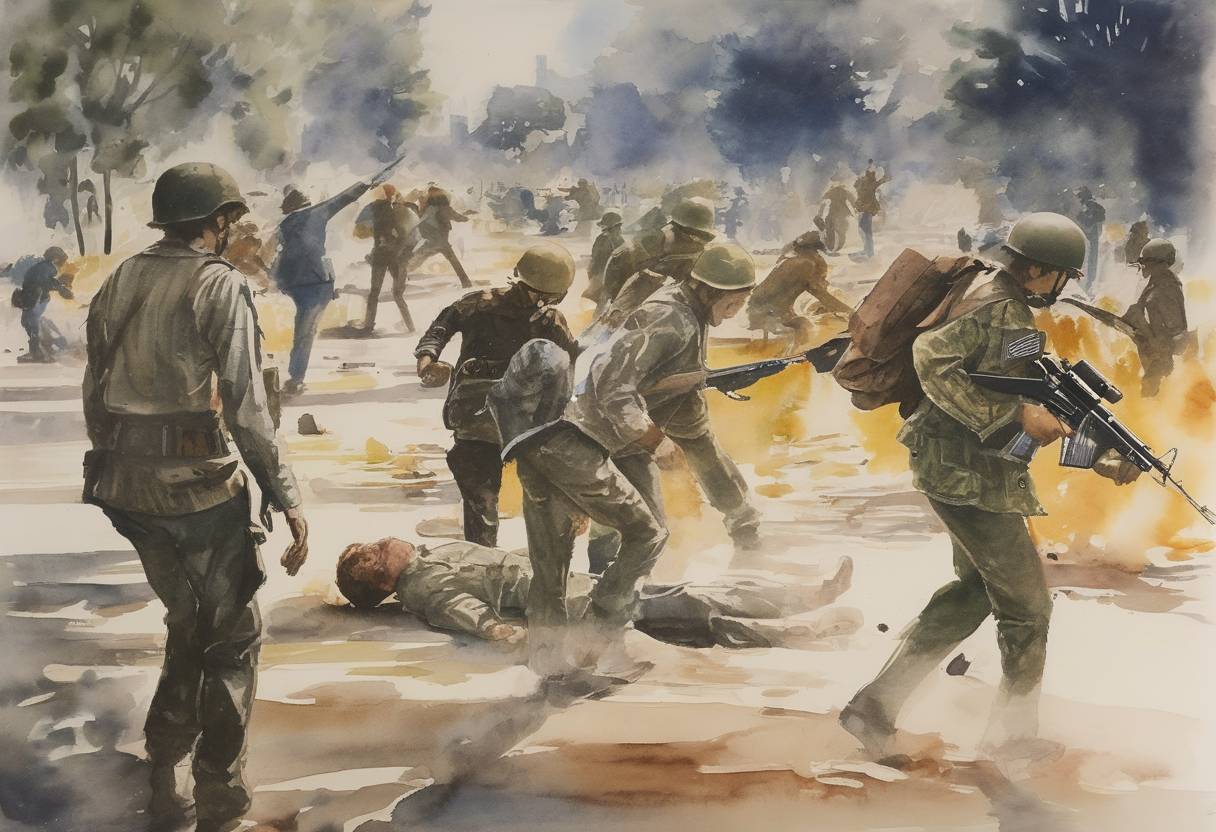
On May 4, 1970, a tragic event unfolded at Kent State University in Kent, Ohio, when the Ohio National Guard fired on unarmed college students during a protest against the United States’ invasion of Cambodia, part of the broader Vietnam War. This incident resulted in the deaths of four students and injuries to nine others, marking a significant and somber moment in American history.
The Kent State shootings occurred against a backdrop of widespread anti-Vietnam War sentiment across the United States. President Richard Nixon’s announcement on April 30, 1970, of the Cambodian Campaign—a military operation to disrupt North Vietnamese supply lines—sparked a surge of protests on college campuses nationwide. Many Americans viewed the expansion of the war into Cambodia as a betrayal of Nixon’s promise to de-escalate the conflict.
May 1, 1970: Protests began at Kent State University, with students rallying against the Cambodian Campaign. Tensions escalated over the weekend, with some incidents of vandalism and confrontations with local authorities.
May 2, 1970: The ROTC building on campus was set on fire, further intensifying the situation. In response, Ohio Governor James A. Rhodes dispatched the Ohio National Guard to the university to restore order.
May 3, 1970: Governor Rhodes held a press conference, describing the protesters as “un-American” and vowing to maintain control. The presence of the National Guard on campus heightened tensions.
On May 4, a protest was scheduled for noon despite a ban on gatherings. Approximately 2,000 students gathered on the university’s Commons. The National Guard attempted to disperse the crowd using tear gas, but the wind rendered it ineffective. As tensions escalated, a group of guardsmen advanced on the students, eventually retreating to a hill.
At approximately 12:24 PM, as the guardsmen reached the top of the hill, 28 of them turned and fired into the crowd. The gunfire lasted approximately 13 seconds, resulting in the deaths of four students:
Nine other students were wounded, some of whom were not actively participating in the protest.
The Kent State shootings had profound and lasting impacts:
National Reaction: The incident sparked outrage and further protests across the country. It intensified the national debate over the Vietnam War and the role of government in suppressing dissent.
Cultural Impact: The shootings became a symbol of the deep divisions within the United States during the Vietnam War era. The event was immortalized in songs, literature, and art, most notably in the song “Ohio” by Crosby, Stills, Nash & Young.
Legal and Political Consequences: Investigations into the shootings were conducted, but no guardsmen were convicted. The event led to changes in how protests were managed on college campuses and raised questions about the use of military force in civilian settings.
The Kent State shootings remain a poignant reminder of the potential consequences of political and social unrest, highlighting the importance of dialogue and peaceful resolution in times of national crisis.
Source: en.wikipedia.org