End of the Broadcasting Ban on the IRA and Sinn Féin - November 1, 1994
1994 · Dublin, Ireland
The Irish Government announced the end of a 15-year broadcasting ban on the IRA and its political arm Sinn Féin.
January 6, 1839
The Night of the Big Wind, a massive storm, hits Ireland, resulting in widespread destruction and loss of life.
Dublin, Ireland
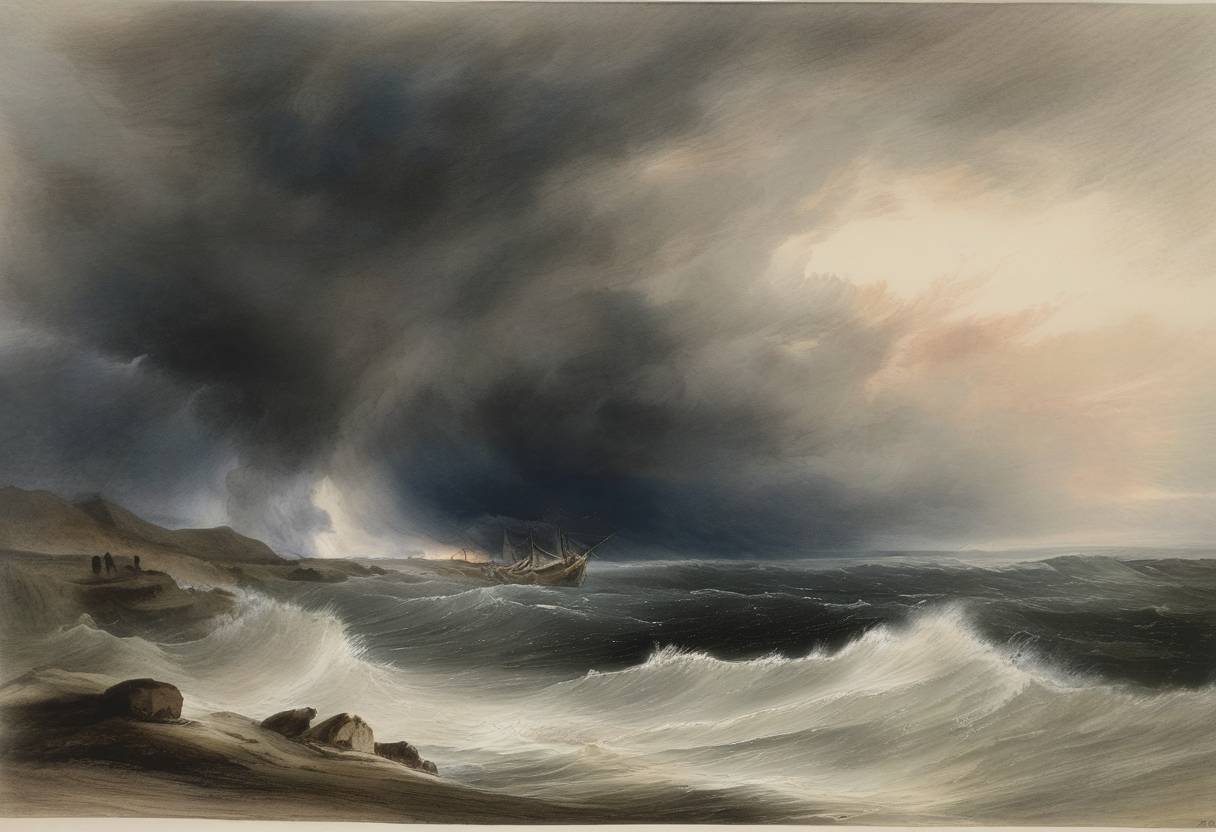
On January 6, 1839, one of the most devastating storms in Irish history, known as “The Night of the Big Wind” (Oíche na Gaoithe Móire), struck Ireland. This catastrophic storm reshaped the country’s landscape and left a lasting impact on its population.
During the early 19th century, Ireland was primarily an agrarian society, and the infrastructure was poorly equipped to handle severe weather conditions. The storm began when a deep depression from the Atlantic moved across the country after unseasonably warm weather saturated the atmosphere.
Meteorological Phenomenon: The storm was characterized by exceptionally high winds, with gusts reaching unprecedented speeds. Coupled with rain and a sudden temperature drop, it created a perfect storm.
Destruction: The storm caused widespread destruction across Ireland, affecting both urban and rural areas. Thousands of homes were damaged or completely destroyed. In Dublin alone, one-third of the dwellings sustained considerable damage.
Loss of Life: There were estimates of around 300 casualties, though precise numbers vary. Many fell victim to collapsed buildings and other storm-associated dangers.
Economic and Social Effects: The storm disrupted communication and transportation networks, exacerbating the hardships of an already impoverished populace. In its aftermath, efforts were mobilized to provide relief to the most affected regions.
“The Night of the Big Wind” remains one of the most significant weather-related disasters in Ireland’s history. Its legacy was far-reaching, influencing both cultural and administrative aspects of Irish society. The storm prompted improvements in building practices and a greater focus on weather-induced disaster preparations. Additionally, its anecdotal infamy led to its inclusion in folklore, and it was even used as a benchmark during pension assessments in later years.
The night exemplifies the profound effect natural disasters can have on societies, shaping national consciousness and policy.
Source: en.wikipedia.org