1975 · Saigon, Vietnam
Operation Frequent Wind, the evacuation of American civilians and 'at-risk' Vietnamese from Saigon, begins as the Vietnam War draws to a close.
March 29, 1973
The last United States combat troops left South Vietnam, marking the end of direct U.S. military involvement in the Vietnam War.
Saigon, Vietnam | United States Armed Forces
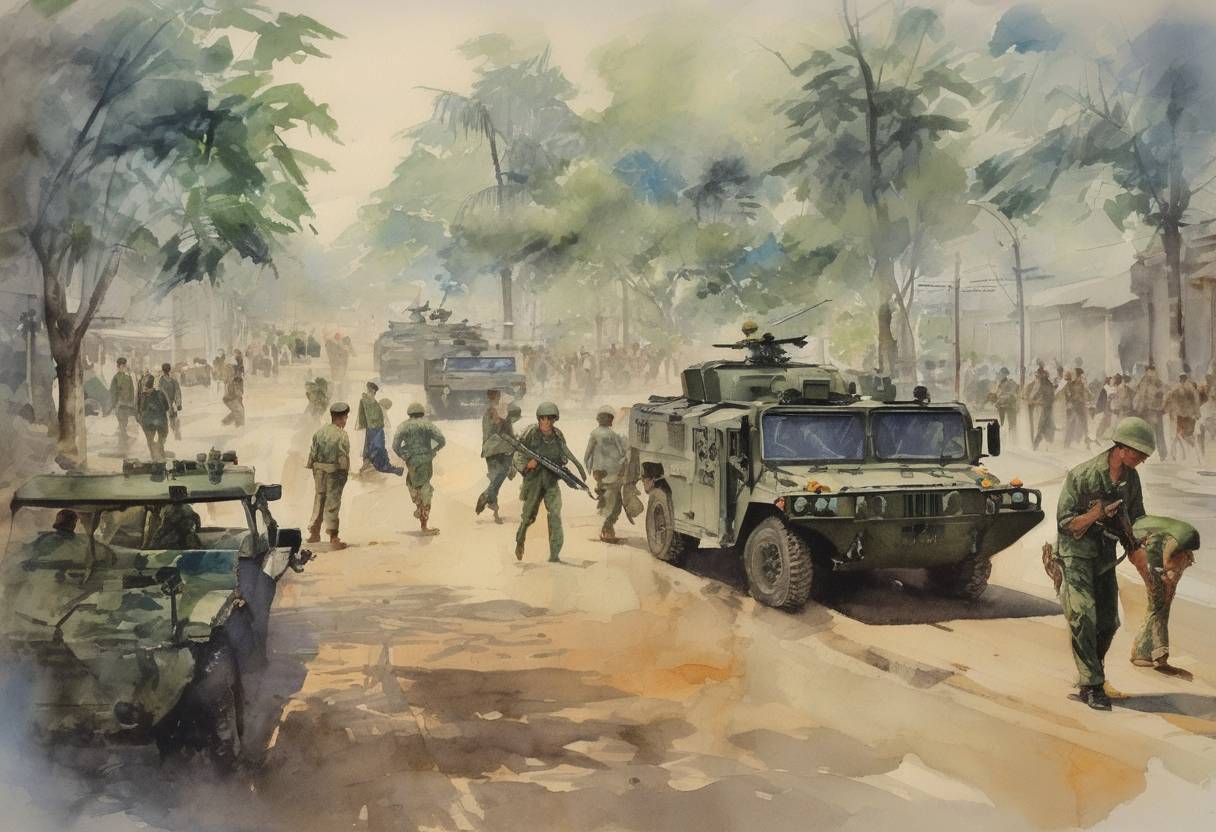
On March 29, 1973, the last United States combat troops departed from South Vietnam, marking a pivotal moment in the Vietnam War and the end of direct U.S. military involvement in the conflict. This withdrawal was a significant milestone in the protracted and controversial war that had deeply affected both the United States and Vietnam.
The Vietnam War, which began as a struggle between communist North Vietnam and non-communist South Vietnam, escalated into a major Cold War conflict. The United States, fearing the spread of communism in Southeast Asia, became heavily involved in the 1960s, providing military support to South Vietnam.
Tet Offensive (1968): A massive surprise attack by the North Vietnamese and Viet Cong forces on South Vietnamese cities, which, despite being a military failure for the communists, significantly shifted American public opinion against the war.
Vietnamization Policy: Initiated by President Richard Nixon, this strategy aimed to gradually withdraw U.S. troops while transferring combat responsibilities to the South Vietnamese forces.
Paris Peace Accords (January 27, 1973): These agreements, signed by the United States, North Vietnam, South Vietnam, and the Viet Cong, called for a ceasefire and the withdrawal of U.S. troops, while leaving the political future of South Vietnam unresolved.
The departure of the last U.S. combat troops was the culmination of the Vietnamization policy and the implementation of the Paris Peace Accords. On this day, the remaining 2,500 American military personnel left Vietnam, although a small contingent of military advisors and Marines remained to protect U.S. installations.
Continued Conflict: Despite the withdrawal of U.S. troops, fighting between North and South Vietnam continued. The ceasefire was frequently violated, and the conflict persisted until the fall of Saigon on April 30, 1975, when North Vietnamese forces captured the city, leading to the reunification of Vietnam under communist control.
Impact on the United States: The Vietnam War had profound effects on American society, including widespread anti-war protests, a reevaluation of U.S. foreign policy, and a legacy of veterans’ issues.
Legacy in Vietnam: The war left Vietnam devastated, with millions of casualties and extensive destruction. The country faced significant challenges in rebuilding and healing from the war’s impact.
The withdrawal of U.S. combat troops from Vietnam marked a turning point in American military and foreign policy. It led to a more cautious approach in subsequent international conflicts and contributed to the development of the “Vietnam Syndrome,” a term used to describe the reluctance to engage in overseas military interventions.
The events of March 29, 1973, remain a critical chapter in the history of the Vietnam War, symbolizing the end of a contentious era in U.S. history and the beginning of a complex period of reconciliation and reflection for both nations involved.
Source: en.wikipedia.org