Publication of *Pride and Prejudice* by Jane Austen
1813 · London, United Kingdom
Pride and Prejudice by Jane Austen is first published in the United Kingdom.
January 16, 1605
The first edition of 'Don Quixote' by Miguel de Cervantes was published in Madrid, Spain, becoming one of the most influential works of literature.
Madrid, Spain | Spanish Publishing
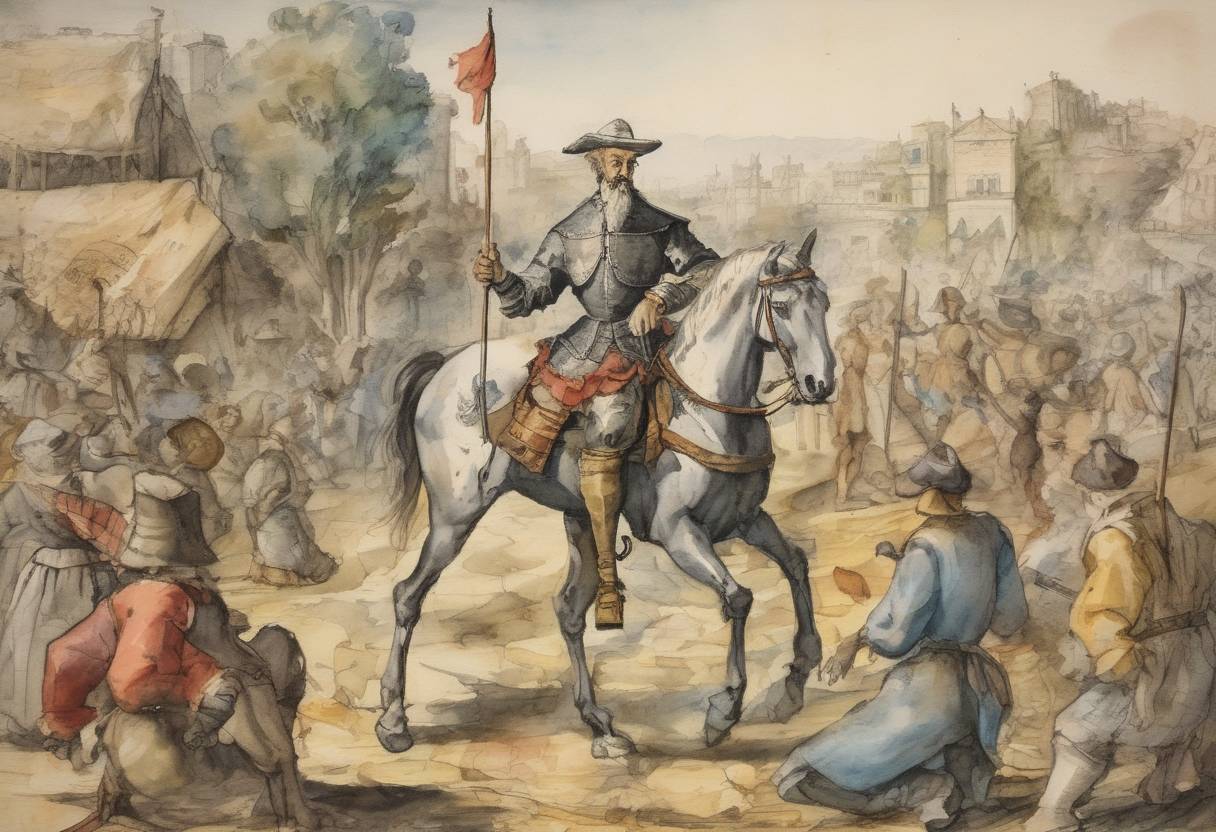
On January 16, 1605, the first edition of “El ingenioso hidalgo don Quijote de la Mancha”, commonly known as Don Quixote, was published in Madrid, Spain. Written by Miguel de Cervantes, this seminal work is considered one of the most influential pieces of literature in the Western canon and a cornerstone of modern Western literature.
Miguel de Cervantes: Born in 1547 in Alcalá de Henares, Spain, Cervantes led a life marked by hardship and adventure. He served as a soldier, was captured by pirates, and spent years in captivity in Algiers before returning to Spain. These experiences enriched his writing, providing a deep understanding of human nature and society.
Literary Environment: The late 16th and early 17th centuries were a vibrant period for Spanish literature, known as the Spanish Golden Age. This era saw the flourishing of drama, poetry, and prose, with Cervantes emerging as a key figure.
Plot: Don Quixote follows the adventures of a nobleman, Alonso Quixano, who becomes so enamored with tales of chivalry that he decides to become a knight-errant himself. Adopting the name Don Quixote, he sets out on a quest to revive chivalry, accompanied by his loyal squire, Sancho Panza.
Themes: The novel explores themes of reality versus illusion, the nature of sanity, and the conflict between idealism and pragmatism. It is a satirical take on the romantic chivalric traditions of the time, offering a critique of the outdated values and the absurdity of rigid social structures.
Structure: The novel is divided into two parts, with the first published in 1605 and the second in 1615. The narrative style is innovative, employing a complex interplay of perspectives and a self-referential approach that was groundbreaking for its time.
Literary Influence: Don Quixote is often cited as the first modern novel due to its narrative complexity and character development. It has influenced countless writers, including Gustave Flaubert, Fyodor Dostoevsky, and James Joyce.
Cultural Significance: The novel’s characters, particularly Don Quixote and Sancho Panza, have become archetypes in literature and popular culture. The term “quixotic” has entered the lexicon to describe idealistic but impractical pursuits.
Translations and Adaptations: Don Quixote has been translated into numerous languages and adapted into various forms, including plays, films, and ballets, underscoring its universal appeal and enduring relevance.
The publication of Don Quixote marked a pivotal moment in literary history, heralding a new era of narrative form and thematic exploration. Cervantes’ work continues to captivate readers with its humor, depth, and insight into the human condition, securing its place as a timeless masterpiece.
Source: www.britannica.com