762 · al-Musayfirah, Syria
The Abbasid Caliphate defeats the Umayyad forces at the Battle of al-Musayfirah, consolidating their control over the region.
January 25, 0750
The Abbasid Revolution culminates in the overthrow of the Umayyad Caliphate, leading to the establishment of the Abbasid Caliphate.
Harran, Umayyad Caliphate | Abbasid Caliphate
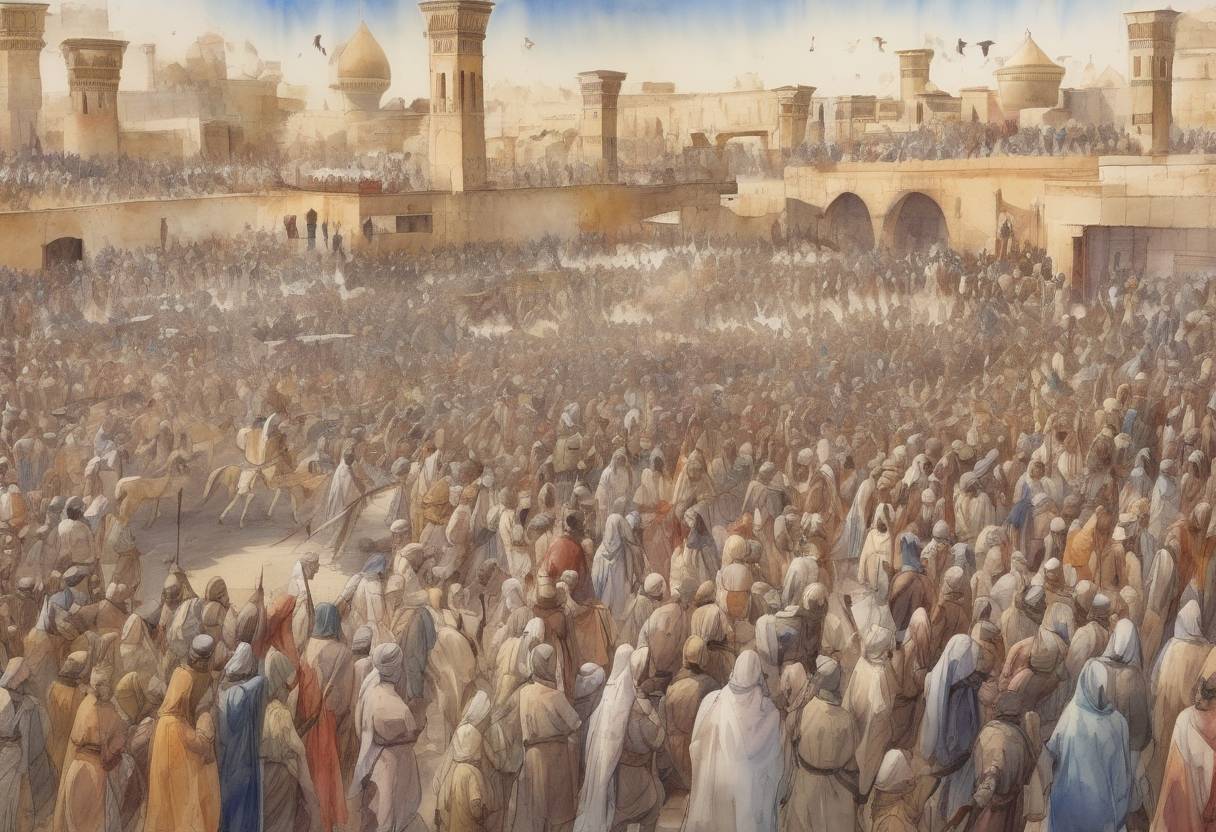
The Abbasid Revolution, culminating on January 25, 750, marked a significant turning point in Islamic history, leading to the overthrow of the Umayyad Caliphate and the establishment of the Abbasid Caliphate. The Umayyad Caliphate, which had ruled since 661, was characterized by its expansionist policies and the establishment of a vast empire stretching from Spain to India. However, it faced growing discontent due to perceived favoritism towards Arab Muslims, heavy taxation, and a lack of inclusivity for non-Arab Muslims, known as Mawali.
Dissatisfaction and Opposition: The Umayyad rule faced increasing opposition from various groups, including the Shia, who supported the leadership of the Prophet Muhammad’s family, and the non-Arab Muslims, who felt marginalized.
The Role of the Abbasid Family: The Abbasids, claiming descent from Muhammad’s uncle, Abbas ibn Abd al-Muttalib, capitalized on this discontent. They positioned themselves as champions of a more inclusive Islamic leadership.
The Black Standard: The Abbasids rallied support under the banner of the Black Standard, symbolizing their revolutionary movement against the Umayyads.
The Battle of the Zab: The decisive moment came at the Battle of the Zab on January 25, 750. The Abbasid forces, led by Abu Muslim, defeated the Umayyad army, effectively ending Umayyad rule.
Following their victory, the Abbasids systematically dismantled Umayyad power. The last Umayyad caliph, Marwan II, was killed, and the Abbasids began consolidating their rule. They moved the capital from Damascus to Baghdad, which became a center of learning, culture, and commerce.
Cultural and Intellectual Flourishing: The Abbasid Caliphate is often regarded as a golden age of Islamic culture, marked by significant advancements in science, medicine, philosophy, and the arts.
Inclusivity and Administration: The Abbasids implemented a more inclusive administration, integrating non-Arabs into the government and military, which helped stabilize their rule.
Long-term Impact: The Abbasid Caliphate lasted until the Mongol invasion in 1258, leaving a lasting legacy on Islamic civilization and influencing the cultural and political landscape of the Middle East.
The Abbasid Revolution not only reshaped the Islamic world but also set the stage for a period of remarkable cultural and intellectual achievements that would influence societies far beyond its borders.
Source: en.wikipedia.org