Antonio Guterres Begins Term as UN Secretary-General
2017 · New York City, United States
Antonio Guterres began his term as the Secretary-General of the United Nations, succeeding Ban Ki-moon.
October 13, 2006
Ban Ki-moon is elected as the eighth Secretary-General of the United Nations, succeeding Kofi Annan.
New York City, United States | United Nations
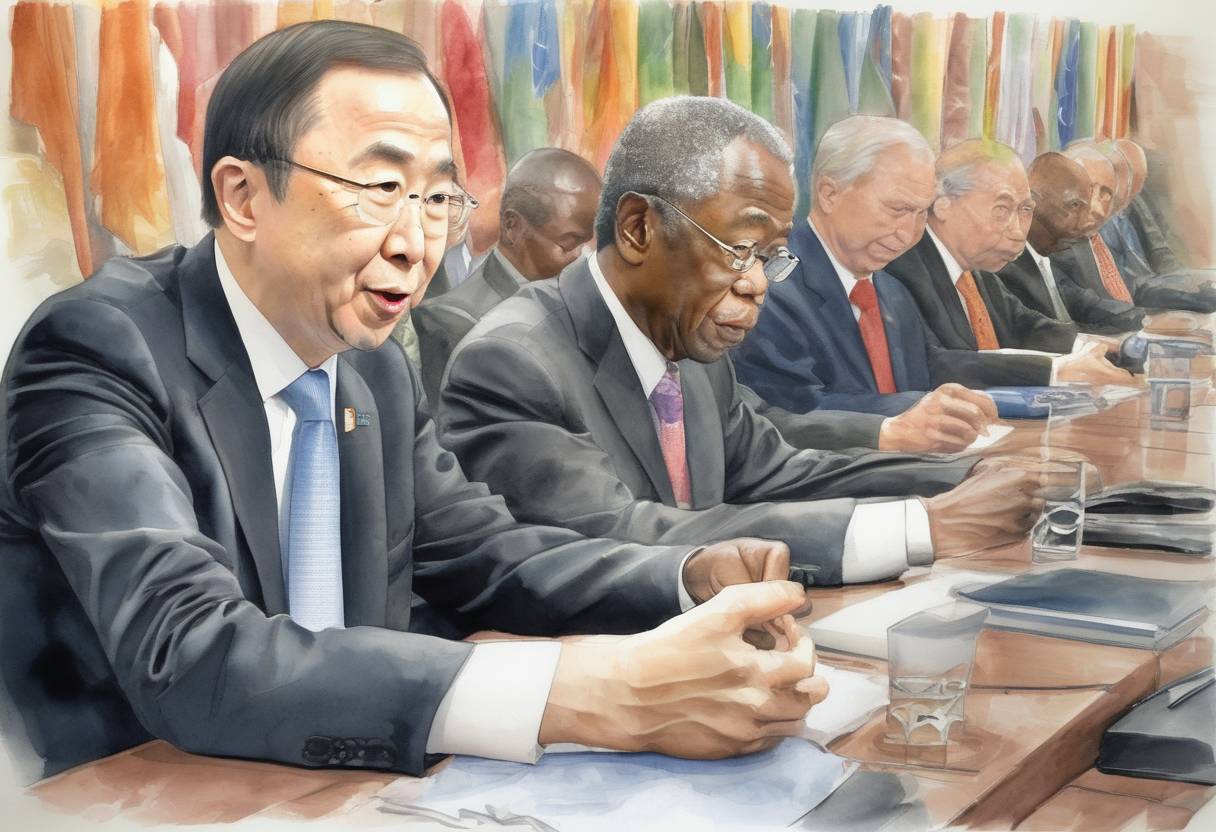
On October 13, 2006, Ban Ki-moon was elected as the eighth Secretary-General of the United Nations, succeeding Kofi Annan. This marked a significant moment in the history of the UN, as Ban became the first South Korean to hold this prestigious position.
Ban Ki-moon was born on June 13, 1944, in Eumseong County, South Korea. He had a distinguished career in diplomacy and international relations, serving in various capacities within the South Korean government. Before his election as Secretary-General, Ban was the Minister of Foreign Affairs and Trade of South Korea, a role in which he gained substantial experience in international diplomacy.
The election of the UN Secretary-General is a complex process involving both the Security Council and the General Assembly. Ban Ki-moon emerged as a leading candidate after several rounds of informal straw polls conducted by the Security Council. His candidacy was supported by key member states, including the United States, China, and Russia, which are permanent members of the Security Council with veto power.
On October 9, 2006, the Security Council formally recommended Ban for the position. Subsequently, on October 13, 2006, the General Assembly officially appointed him as Secretary-General by acclamation, reflecting broad support for his leadership.
Ban Ki-moon served two terms as Secretary-General, from January 1, 2007, to December 31, 2016. During his tenure, he focused on several key issues:
Ban Ki-moon’s leadership was characterized by his commitment to multilateralism and his efforts to address some of the most pressing global challenges. His tenure saw significant developments in international cooperation on climate change and sustainable development. Ban’s diplomatic skills and dedication to the principles of the United Nations left a lasting impact on the organization and its member states.
In summary, Ban Ki-moon’s election as the eighth Secretary-General of the United Nations on October 13, 2006, marked the beginning of a decade-long leadership that sought to address global issues through collaboration and dialogue.
Source: www.un.org