The Battle of Bakhamra: June 30, 763
763 · Bakhamra, Abbasid Caliphate
The Battle of Bakhamra takes place during the Abbasid Caliphate's civil war, known as the Alid Revolt.
December 2, 0763
The Battle of Bakhamra takes place, where the Abbasid Caliphate defeats the Alid rebels in Iraq, solidifying Abbasid control.
Bakhamra, Abbasid Caliphate | Abbasid Caliphate
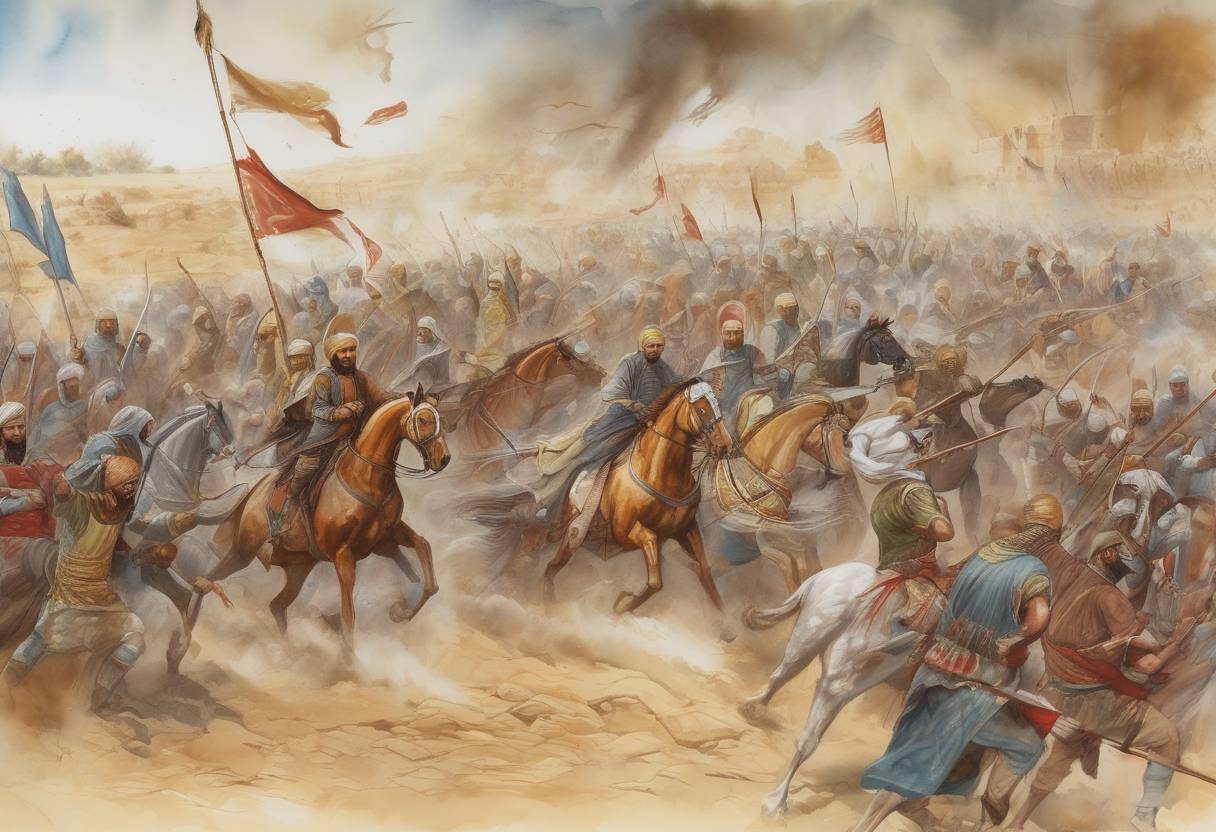
The Battle of Bakhamra, fought on December 2, 763, was a significant military engagement that played a crucial role in solidifying the Abbasid Caliphate’s control over Iraq. This battle was part of the larger conflict between the Abbasid Caliphate and the Alid rebels, who were descendants of Ali, the cousin and son-in-law of the Prophet Muhammad, and thus had a legitimate claim to leadership in the eyes of their supporters.
The Abbasid Caliphate: Established in 750 CE after overthrowing the Umayyad Caliphate, the Abbasids sought to consolidate their power across the Islamic world. Their rule was characterized by a shift of the political center to Baghdad, which became a hub of cultural and intellectual activity.
The Alid Rebellion: The Alids, representing a faction that believed leadership should remain within the Prophet’s family, posed a significant challenge to Abbasid authority. The rebellion was fueled by dissatisfaction with Abbasid rule and the desire for a leadership change.
Tensions in Iraq: Iraq was a critical region for the Abbasids, both strategically and economically. The Alid rebellion in this area threatened the stability and control of the Abbasid regime.
Location: The battle took place near Bakhamra, a location in Iraq that became the focal point of the conflict between the Abbasid forces and the Alid rebels.
Forces Involved: The Abbasid army, well-organized and equipped, faced off against the Alid rebels, who, despite their fervor and determination, were less organized and lacked the resources of the Abbasid forces.
Outcome: The Abbasids emerged victorious, decisively defeating the Alid rebels. This victory was crucial in quelling the rebellion and reaffirming Abbasid dominance in the region.
Consolidation of Power: The defeat of the Alid rebels at Bakhamra solidified the Abbasid Caliphate’s control over Iraq, allowing them to focus on governance and the expansion of their empire.
Impact on the Alid Movement: The loss weakened the Alid movement, although it did not entirely extinguish their claims or aspirations. The Alid cause would continue to inspire future uprisings and movements within the Islamic world.
Legacy: The battle underscored the Abbasids’ military strength and their ability to maintain control over their territories. It also highlighted the ongoing tensions between different factions within the Islamic community, a theme that would persist throughout Islamic history.
In summary, the Battle of Bakhamra was a pivotal moment in the early years of the Abbasid Caliphate, reinforcing their rule and shaping the political landscape of the Islamic world during that era.
Source: www.britannica.com