Dissolution of the Cavalier Parliament - January 24, 1679
1679 · London, England
King Charles II of England dissolves the Cavalier Parliament after 18 years of rule, marking a significant event in the political history of England.
April 23, 1661
King Charles II of England, Scotland, and Ireland was crowned in Westminster Abbey, marking the restoration of the monarchy after the English Civil War and the Interregnum.
London, England
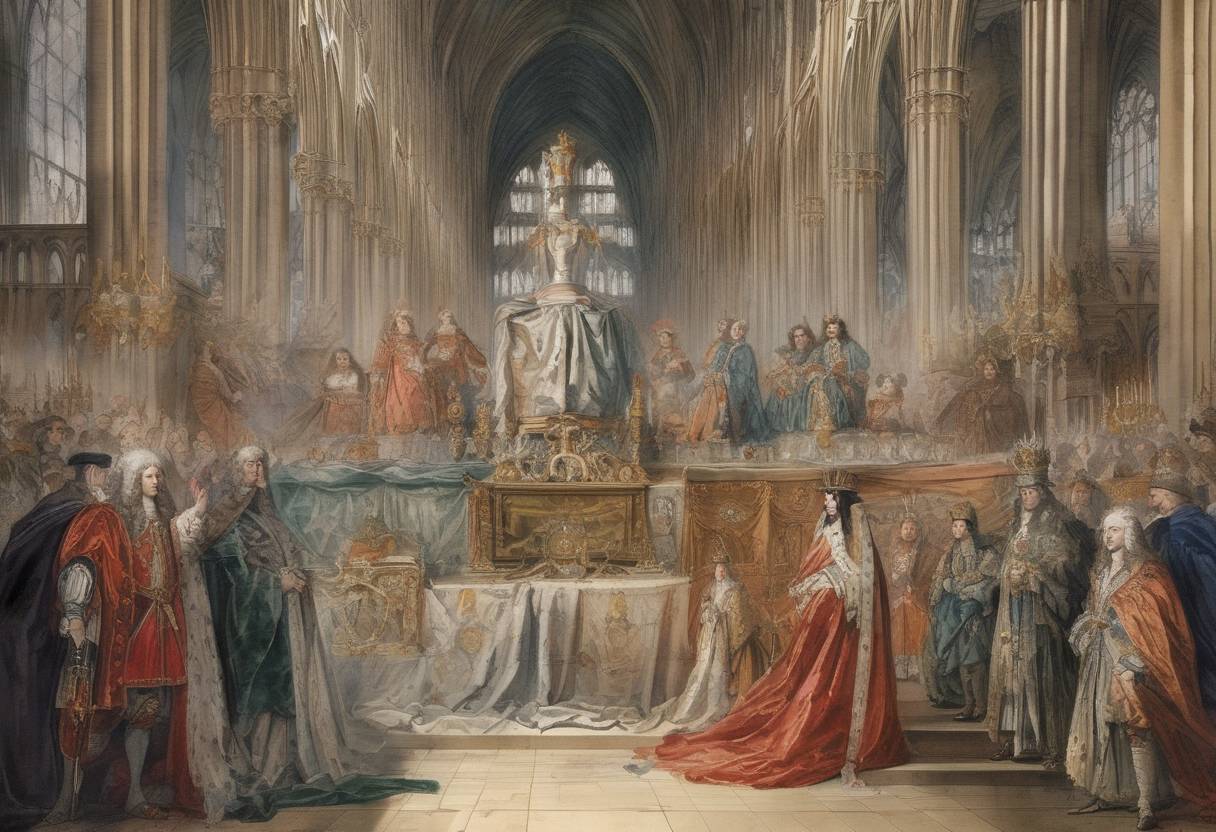
On April 23, 1661, King Charles II was crowned at Westminster Abbey, a significant event marking the restoration of the monarchy in England, Scotland, and Ireland after a tumultuous period of civil war and republican rule known as the Interregnum.
The English Civil War was a series of armed conflicts and political machinations between Parliamentarians (“Roundheads”) and Royalists (“Cavaliers”). The war stemmed from disputes over how England should be governed and issues of religious freedom. King Charles I, Charles II’s father, was executed in 1649, leading to the abolition of the monarchy and the establishment of the Commonwealth under Oliver Cromwell.
Following the execution of Charles I, England became a republic, known as the Commonwealth, and later the Protectorate under Cromwell’s rule. This period saw significant political upheaval and strict Puritanical rule, which led to widespread dissatisfaction.
After Cromwell’s death in 1658 and the subsequent political instability, there was a growing desire to restore the monarchy. In 1660, Charles II was invited back to England from exile in France, marking the beginning of the Restoration. He entered London on May 29, 1660, his 30th birthday, to great public acclaim.
The coronation of Charles II was a grand affair, symbolizing the return to traditional monarchy and the end of republican rule. Held at Westminster Abbey, the ceremony was steeped in historical and religious significance, reflecting the restoration of the Anglican Church as well.
The restoration of Charles II brought about significant changes:
Charles II’s reign, known as the “Merry Monarch,” was characterized by a more tolerant and hedonistic court compared to the austere Cromwellian regime. His reign laid the groundwork for the constitutional monarchy that would evolve in England.
The coronation of Charles II remains a pivotal moment in British history, symbolizing the resilience of the monarchy and its ability to adapt and endure through periods of profound change.
Source: en.wikipedia.org