Abolition of Slavery by the French National Convention on February 5, 1794
1794 · Paris, France
The French National Convention banned slavery in all its territories.
August 22, 1791
The Haitian Revolution began as a slave uprising in the French colony of Saint-Domingue, which eventually led to the establishment of Haiti as the first independent black republic.
Saint-Domingue, Haiti | Revolutionaries
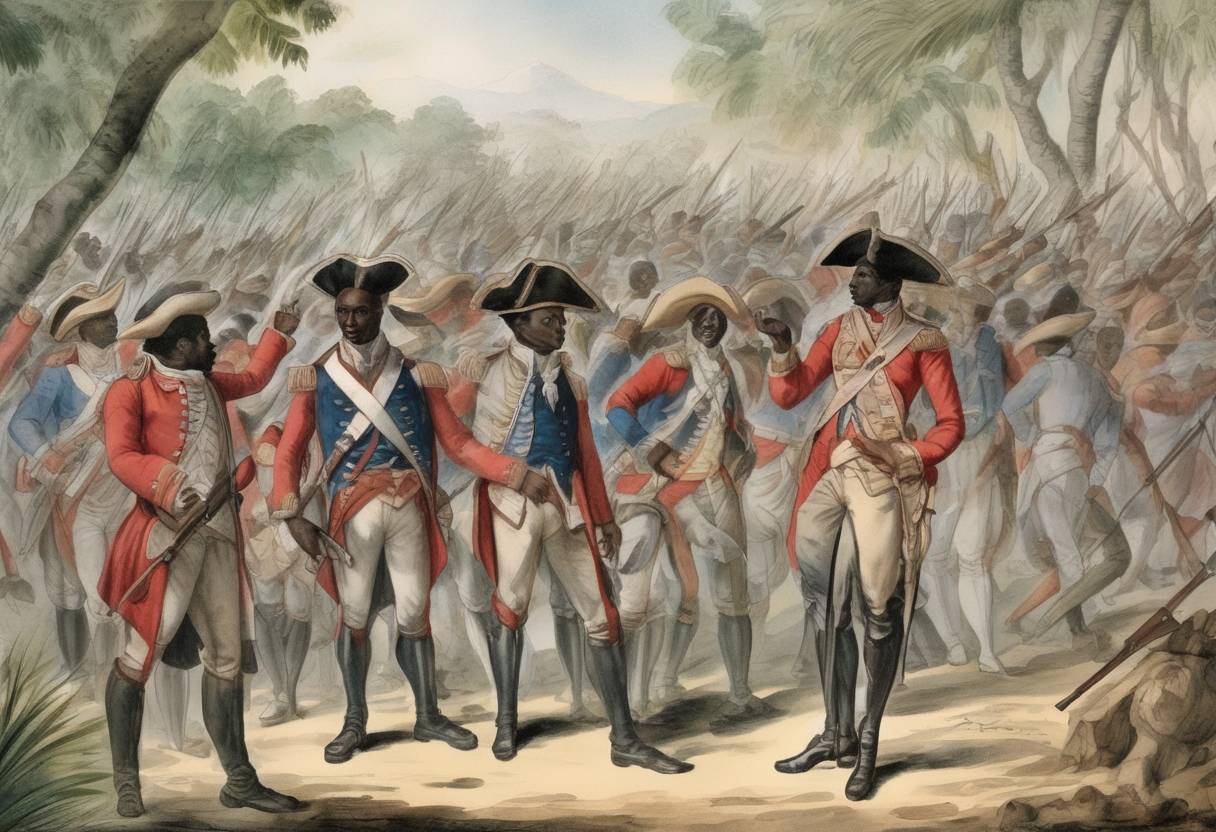
On August 22, 1791, a significant and transformative event in world history began: the Haitian Revolution. This revolution started as a slave uprising in the French colony of Saint-Domingue, which is present-day Haiti. It ultimately led to the establishment of Haiti as the first independent black republic and the first nation to be founded as a result of a successful slave revolt.
Saint-Domingue was one of the wealthiest colonies in the Caribbean, primarily due to its lucrative sugar and coffee plantations. The colony’s economy heavily relied on the labor of enslaved Africans, who were subjected to brutal conditions and severe exploitation. By the late 18th century, the population of Saint-Domingue consisted of approximately 500,000 enslaved Africans, 32,000 whites, and 28,000 free people of color.
The social hierarchy was rigid, with deep racial and class divisions. The French Revolution, which began in 1789, inspired ideas of liberty, equality, and fraternity, and these ideas began to permeate the colony. However, the rights proclaimed in France were not extended to the enslaved and free people of color in Saint-Domingue, leading to growing discontent.
The uprising on August 22, 1791, was meticulously planned by enslaved leaders, including Boukman Dutty, a Vodou priest, who is often credited with initiating the revolt. The insurrection began in the northern part of the colony, where enslaved people rose against their oppressors, setting plantations ablaze and killing many plantation owners.
The revolt quickly spread across the colony, with thousands of enslaved people joining the fight for freedom. The initial phase of the uprising was marked by violent confrontations and significant destruction, as the enslaved sought to dismantle the oppressive system that had subjugated them for so long.
Several key figures emerged during the revolution, including Toussaint Louverture, a former enslaved person who became a prominent leader. Louverture was instrumental in organizing the revolutionary forces and negotiating with foreign powers. His leadership was pivotal in transforming the uprising into a broader struggle for independence.
The revolution was complex, involving multiple phases and shifting alliances. The French government, initially resistant to the demands of the revolutionaries, eventually abolished slavery in the colony in 1794, partly to gain the support of the black population against British and Spanish forces.
The Haitian Revolution culminated in the defeat of Napoleon Bonaparte’s forces, who attempted to reassert French control over the colony. On January 1, 1804, Jean-Jacques Dessalines, one of Louverture’s generals, declared the independence of Haiti, making it the first independent nation in Latin America and the Caribbean, and the first post-colonial independent black-led nation in the world.
The revolution had profound global implications. It challenged the institution of slavery, inspired other slave uprisings, and forced colonial powers to reconsider their policies. The success of the Haitian Revolution also had a significant impact on the abolitionist movement worldwide.
In conclusion, the uprising that began on August 22, 1791, was a pivotal moment in history, marking the beginning of a long and arduous struggle for freedom and independence. The Haitian Revolution remains a powerful symbol of resistance and the fight for human rights.
Source: en.wikipedia.org