Felix Mendelssohn's Violin Concerto Premiere
1845 · Leipzig, Germany
Felix Mendelssohn's Violin Concerto premiered in Leipzig, Germany, marking a significant contribution to the violin concerto repertoire.
December 8, 1881
The first performance of Edvard Grieg's 'Holberg Suite' took place in Bergen, Norway, celebrating the 200th anniversary of Ludvig Holberg's birth.
Bergen, Norway
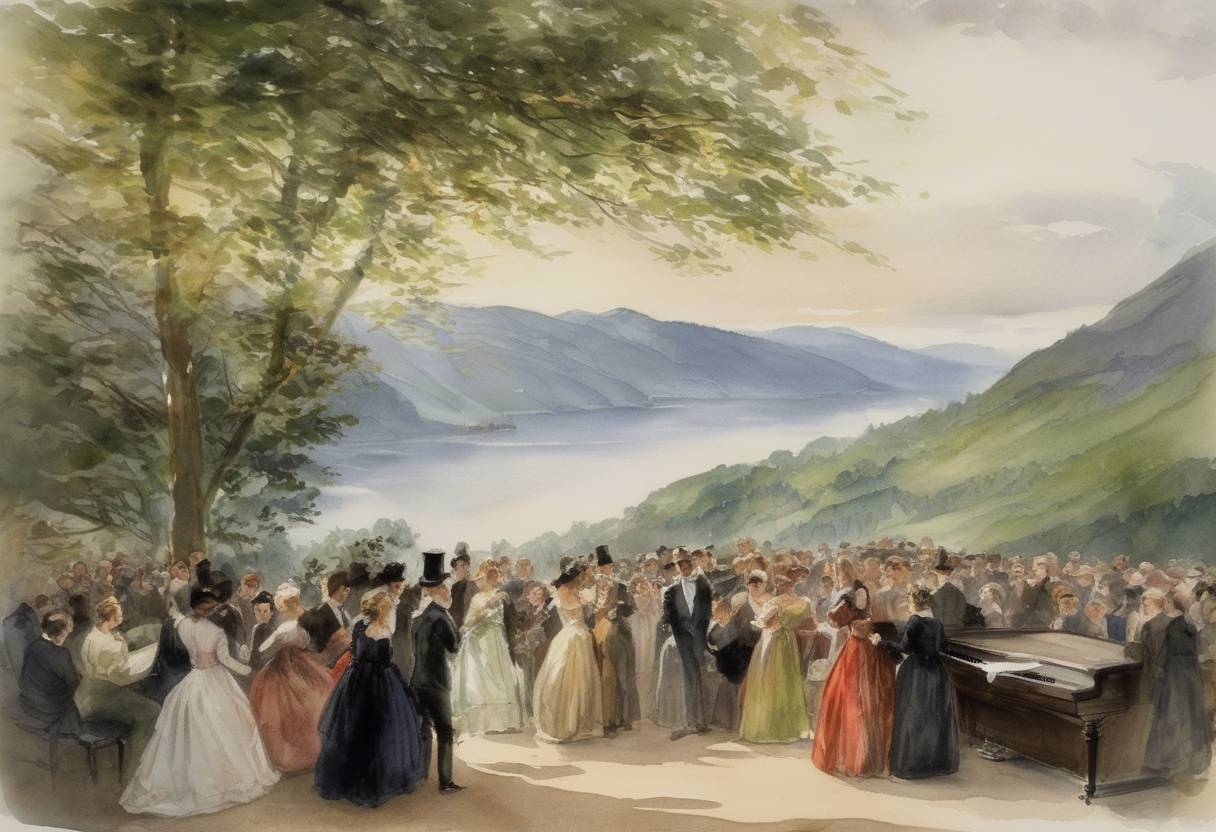
On December 8, 1884, the first performance of Edvard Grieg’s “Holberg Suite” took place in Bergen, Norway. This significant event commemorated the 200th anniversary of the birth of Ludvig Holberg, a celebrated playwright and one of the most prominent figures in the Danish-Norwegian literary world of the 18th century.
Edvard Grieg, a renowned Norwegian composer, was commissioned to create a piece for this anniversary celebration. He composed the “Holberg Suite,” originally titled “From Holberg’s Time: Suite in Olden Style” (Norwegian: “Fra Holbergs tid”), for piano in a style reminiscent of the Baroque era. Grieg later adapted the suite for string orchestra, which is the more commonly performed version today.
The premiere was held at the Harmonien concert hall in Bergen, Grieg’s hometown. This orchestral version brought to life the suite’s five movements, each inspired by the dance forms popular during Holberg’s time. The suite elegantly blends Baroque stylings with Grieg’s distinctive Romantic sensibilities.
The “Holberg Suite” is celebrated for its successful fusion of old and new musical styles, and it stands as a testament to Grieg’s compositional prowess. Its performance not only honored Ludvig Holberg but also reinforced Norway’s cultural renaissance during the late 19th century, a period marked by increasing national awareness and artistic expression.
Today, the “Holberg Suite” remains one of Grieg’s most beloved works, performed frequently by orchestras around the world. Its enchanting melodies and historical homage continue to captivate audiences, ensuring both Grieg’s and Holberg’s legacies endure in the annals of cultural history.
Source: www.britannica.com