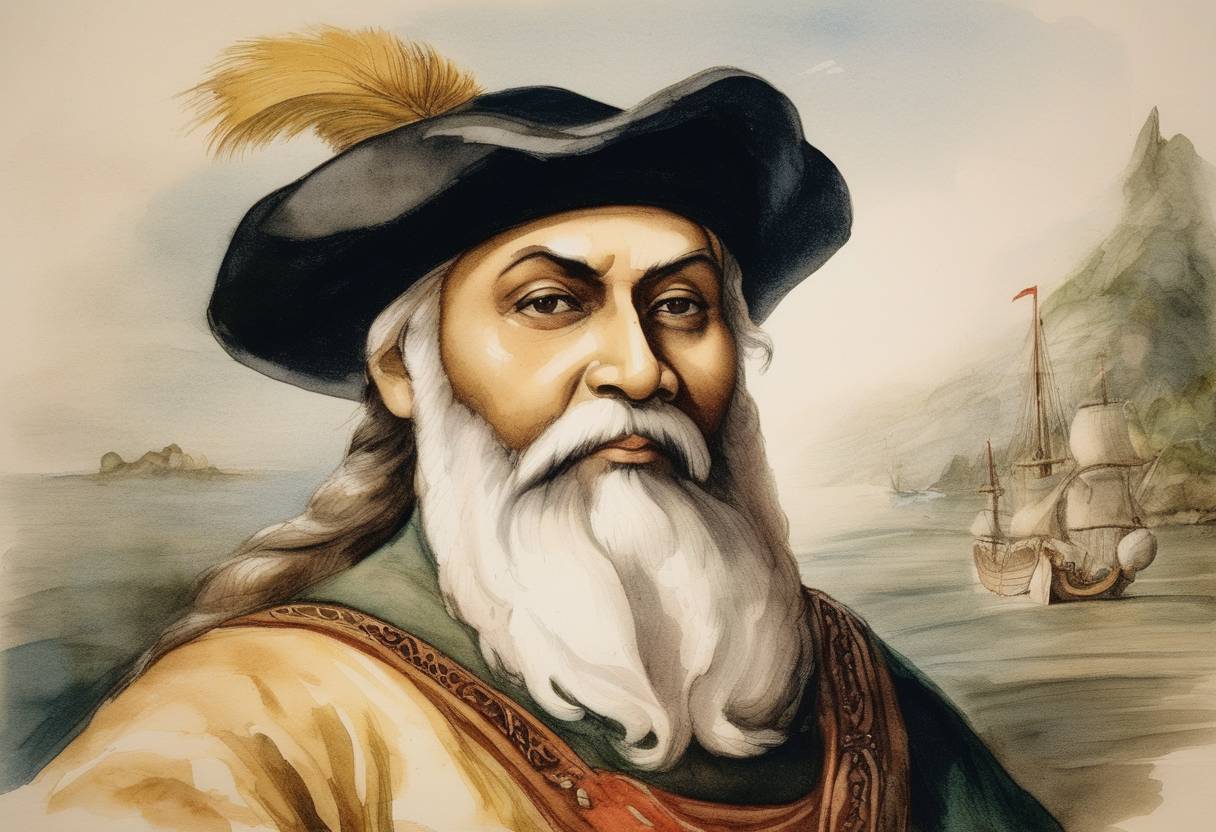
Vasco da Gama’s Death in Cochin - December 24, 1524
Vasco da Gama, the renowned Portuguese explorer credited with discovering the sea route from Europe to India, died on December 24, 1524, in Cochin, present-day Kochi, India. His death marked the end of a pioneering maritime career that significantly impacted global trade and European exploration.
Background
Vasco da Gama was born in Sines, Portugal, around 1460. He gained fame as a leading figure in the Age of Discovery—the period during which European powers explored the globe and established overseas colonies and trade routes. His most significant achievement was his successful expedition from Portugal to India, navigating around the Cape of Good Hope in 1498. This voyage opened up a lucrative direct sea trade route to Asia, which was previously monopolized by land-based routes controlled by Muslim states and the Italian city-states.
Third Voyage to India
By 1524, da Gama had undertaken two earlier voyages to India. His first voyage (1497-1499) established his prominence, and his second in 1502 aimed to consolidate Portuguese interests in the region. Novasaignifies During his third and final voyage, da Gama was appointed by King John III of Portugal as the Viceroy of Portuguese India. This role was intended to restore order and efficiency to the administration and expand Portuguese influence in the region.
Circumstances of Death
Vasco da Gama arrived in Goa, then a Portuguese territory, in September 1524, but did not stay long due to pressing matters elsewhere. By December, he moved to Cochin amidst political and administrative challenges. Unfortunately, his health deteriorated rapidly, possibly due to malaria or another illness common to the tropics during this period. Da Gama succumbed to his ailment on December 24, 1524, just months after his arrival.
Aftermath and Legacy
Initially buried in Cochin, Vasco da Gama’s remains were later transported to Portugal in 1539, where they were reinterred at the Jerónimos Monastery in Lisbon, an emblematic monument of the Age of Discovery.
Da Gama’s voyages were instrumental in opening the sea routes for European powers to engage directly in the Asian spice trade, significantly altering global trade patterns. His exploration paved the way for an era of European colonial expansion and marked the beginning of advanced maritime navigation and transfer of culture, ideas, and technology between continents. His legacy is a combination of triumph in maritime exploration and the stark realities of colonialism.