The Battle of Cascina: July 28, 1364
1364 · Cascina, Italy
The Battle of Cascina took place between the Republic of Florence and the Republic of Pisa, part of the ongoing conflicts in Italy during the 14th century.
February 26, 1266
The Battle of Benevento took place, marking a decisive victory for Charles of Anjou over Manfred of Sicily, leading to the end of Hohenstaufen rule in southern Italy.
Benevento, Italy | House of Anjou
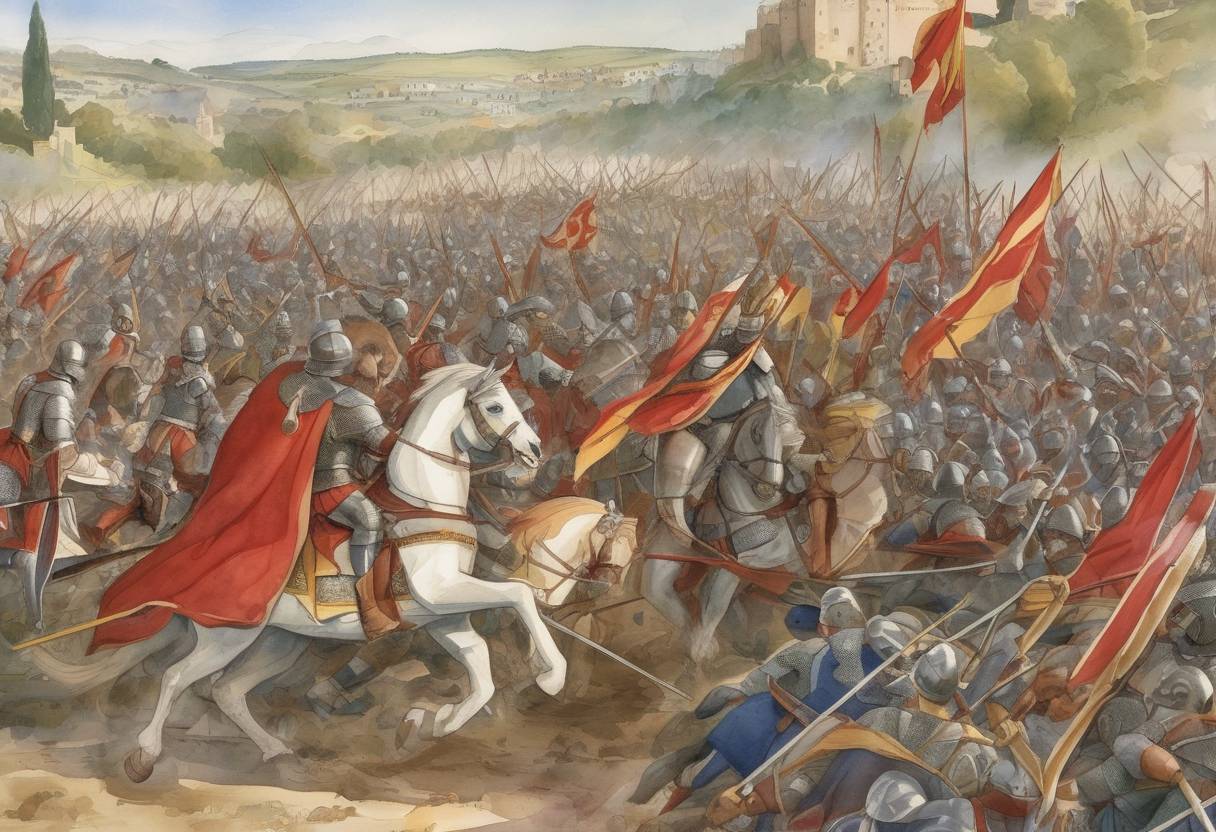
The Battle of Benevento, fought on February 26, 1266, was a pivotal conflict that marked a significant shift in the power dynamics of medieval Italy. This battle saw Charles of Anjou, a French nobleman, achieve a decisive victory over Manfred of Sicily, effectively ending the Hohenstaufen dynasty’s rule in southern Italy.
Hohenstaufen Rule: The Hohenstaufen dynasty, a prominent German royal family, had controlled the Kingdom of Sicily since the early 13th century. Manfred, the illegitimate son of Emperor Frederick II, had seized the Sicilian throne in 1258, following the death of his half-brother, Conrad IV.
Papal Opposition: The Papacy, particularly under Pope Urban IV, opposed the Hohenstaufen rule due to its ambitions in Italy and its challenge to papal authority. Seeking to diminish their influence, the Pope invited Charles of Anjou, the brother of King Louis IX of France, to claim the Sicilian throne.
Charles of Anjou: Charles was granted the title of King of Sicily by the Pope in 1265. He gathered an army, supported by papal funds and French forces, to challenge Manfred’s rule.
Location: The battle took place near Benevento, a strategic location in southern Italy, which was crucial for controlling the region.
Forces: Charles’s army, composed of French knights and mercenaries, was well-equipped and motivated by the promise of land and titles. Manfred’s forces included a mix of German knights, Italian allies, and Saracen troops from Sicily.
Outcome: The battle was fiercely contested, but Charles’s forces ultimately prevailed. Manfred was killed in the fighting, and his death signaled the collapse of Hohenstaufen resistance in Italy.
End of Hohenstaufen Rule: With Manfred’s death, the Hohenstaufen dynasty’s influence in Italy effectively ended. This victory allowed Charles to consolidate his power over the Kingdom of Sicily.
Angevin Dynasty: Charles of Anjou established the Angevin dynasty in southern Italy, which would rule the region for several decades. His reign marked the beginning of French influence in Italian politics.
Papal Influence: The victory strengthened the Papacy’s position in Italy, as it had successfully removed a significant rival and installed a loyal ally on the Sicilian throne.
The Battle of Benevento was a turning point in the struggle for control over Italy during the Middle Ages. It not only ended the Hohenstaufen dynasty’s ambitions in the region but also set the stage for increased French involvement in Italian affairs. This battle exemplifies the complex interplay of dynastic ambitions, papal politics, and military power that characterized medieval European history.
Source: en.wikipedia.org