Assassination of Czar Alexander II of Russia
1881 · Saint Petersburg, Russia
Czar Alexander II of Russia was assassinated in Saint Petersburg by members of the revolutionary group Narodnaya Volya, leading to increased repression under his successor.
March 2, 1855
Alexander II became the Emperor of Russia, beginning a reign that would include significant reforms such as the emancipation of the serfs.
Saint Petersburg, Russia
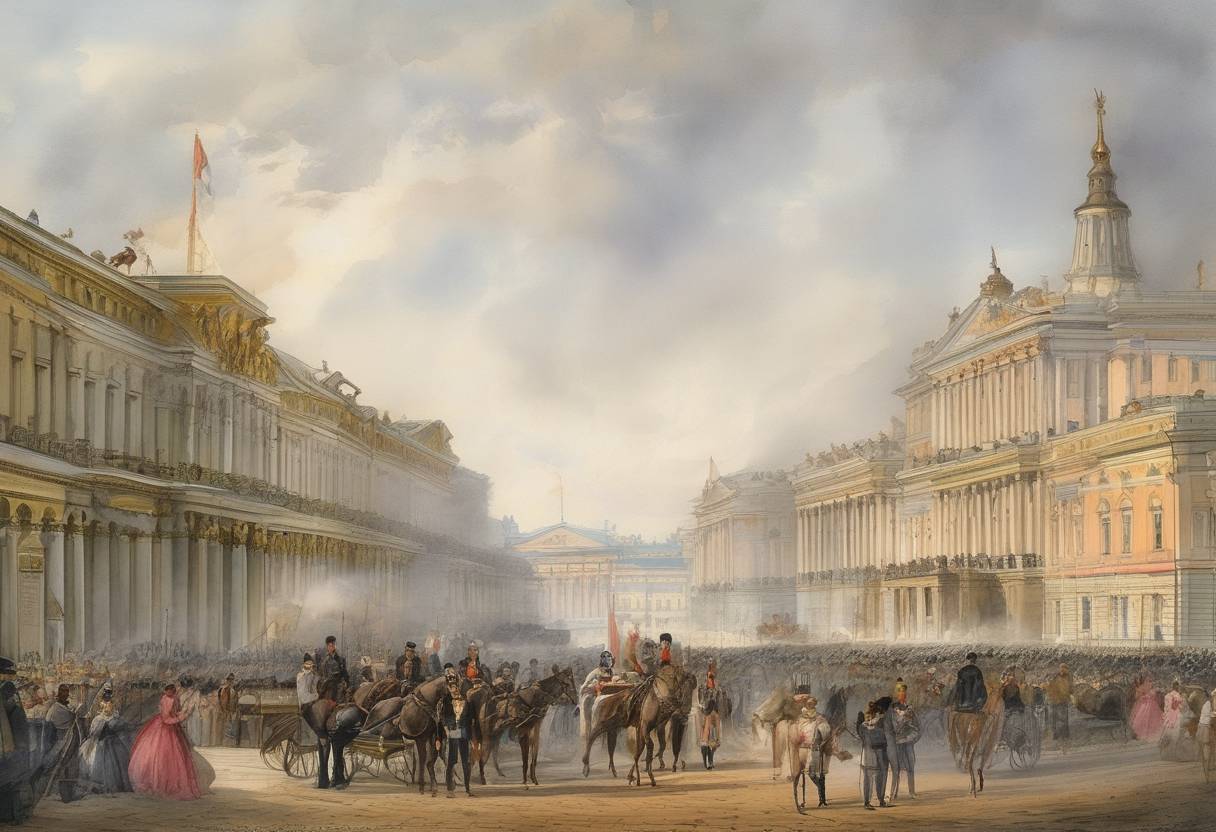
On March 2, 1855, Alexander II ascended to the throne as the Emperor of Russia following the death of his father, Nicholas I. His reign, which lasted until his assassination in 1881, is particularly noted for significant reforms, most notably the emancipation of the serfs in 1861.
Nicholas I’s Reign: Alexander II inherited the throne during the Crimean War, a conflict that exposed the weaknesses of the Russian Empire under his father’s autocratic rule. Nicholas I’s reign was marked by strict censorship, a rigid social hierarchy, and a powerful secret police, which stifled reform and innovation.
The Crimean War: The war (1853-1856) against an alliance of the Ottoman Empire, France, Britain, and Sardinia highlighted the need for modernization in Russia, particularly in its military and infrastructure.
Emancipation of the Serfs (1861): Perhaps his most famous reform, Alexander II issued the Emancipation Edict, which freed millions of serfs. This was a monumental shift in Russian society, aimed at modernizing the economy and reducing social unrest. However, the reform was imperfect, as many peasants received inadequate land and remained economically dependent on their former landlords.
Judicial Reforms: He introduced a new judicial system that included trial by jury and the establishment of independent courts, which were significant steps towards a more equitable legal system.
Military Reforms: In response to the Crimean War’s failures, Alexander II reformed the military, including the introduction of universal military conscription and modernization of the army’s structure and training.
Local Government Reforms: The creation of the Zemstvo system in 1864 allowed for some degree of local self-government, giving communities a voice in local affairs and improving public services.
Assassination: Despite his reforms, Alexander II faced opposition from both conservatives, who resisted change, and radicals, who demanded more. He was assassinated by members of the revolutionary group “Narodnaya Volya” (People’s Will) in 1881, which led to a more repressive regime under his successor, Alexander III.
Legacy: Alexander II’s reign is often seen as a period of significant transition for Russia. His reforms laid the groundwork for further modernization, although many issues, such as land distribution and political freedom, remained unresolved. His efforts to reform the autocratic system were a precursor to the more radical changes that would eventually come with the Russian Revolution in the early 20th century.
Alexander II’s reign is a pivotal chapter in Russian history, reflecting the complexities and challenges of reforming a vast and diverse empire. His legacy is a testament to the difficulties of balancing tradition and progress in a rapidly changing world.
Source: en.wikipedia.org