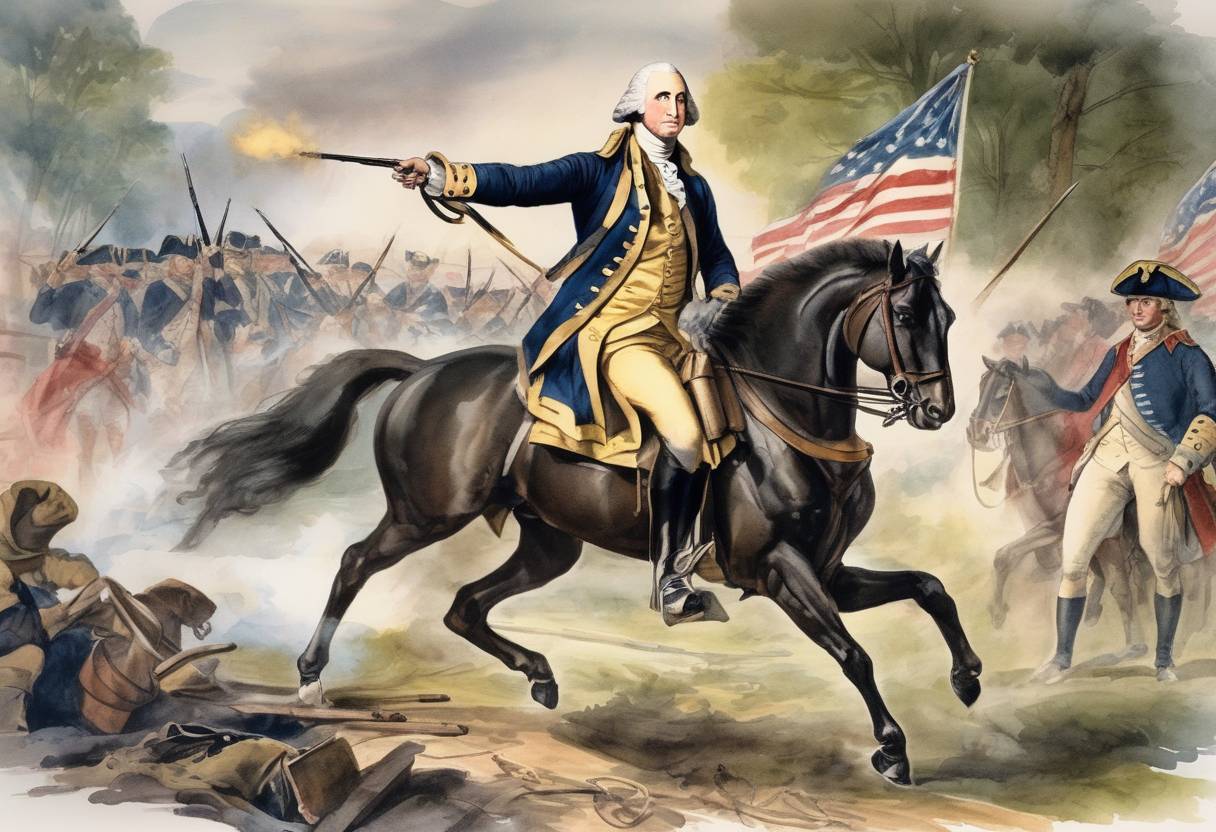
The Battle of Trenton: December 26, 1776
The Battle of Trenton, fought on December 26, 1776, was a crucial victory for the Continental Army during the American Revolutionary War. This engagement marked a turning point in the war, boosting the morale of the American forces and reinvigorating the revolutionary cause.
Context and Prelude
- The American Revolutionary War: By late 1776, the Continental Army, led by General George Washington, had suffered a series of defeats and was in dire straits. The British forces, bolstered by Hessian mercenaries, had pushed the Americans out of New York and into New Jersey.
- The Situation: Morale was low among the American troops, and enlistments were set to expire at the end of the year. Washington needed a decisive victory to sustain the revolution and encourage re-enlistment.
- The Plan: Washington devised a bold plan to cross the icy Delaware River on Christmas night and launch a surprise attack on the Hessian garrison stationed in Trenton, New Jersey.
The Battle
- The Crossing: On the night of December 25-26, 1776, Washington led approximately 2,400 soldiers across the Delaware River. The crossing was fraught with challenges, including harsh winter weather and treacherous ice floes.
- The Attack: The American forces reached Trenton in the early morning hours of December 26. The Hessians, commanded by Colonel Johann Rall, were caught off guard, having celebrated Christmas the night before.
- The Outcome: The surprise attack was a resounding success. The Continental Army captured nearly 1,000 Hessian soldiers, along with their supplies and artillery, while suffering minimal casualties.
Aftermath and Significance
- Boost in Morale: The victory at Trenton significantly boosted the morale of the Continental Army and the American public. It demonstrated Washington’s leadership and the resilience of the American forces.
- Strategic Impact: The success at Trenton encouraged many soldiers to re-enlist and attracted new recruits to the Continental Army. It also disrupted British plans and forced them to reconsider their strategy in the colonies.
- Subsequent Actions: Following the victory at Trenton, Washington capitalized on the momentum by winning another engagement at the Battle of Princeton on January 3, 1777, further solidifying his strategic position in New Jersey.
The Battle of Trenton remains a celebrated event in American history, symbolizing the resilience and determination of the revolutionary forces in their fight for independence.