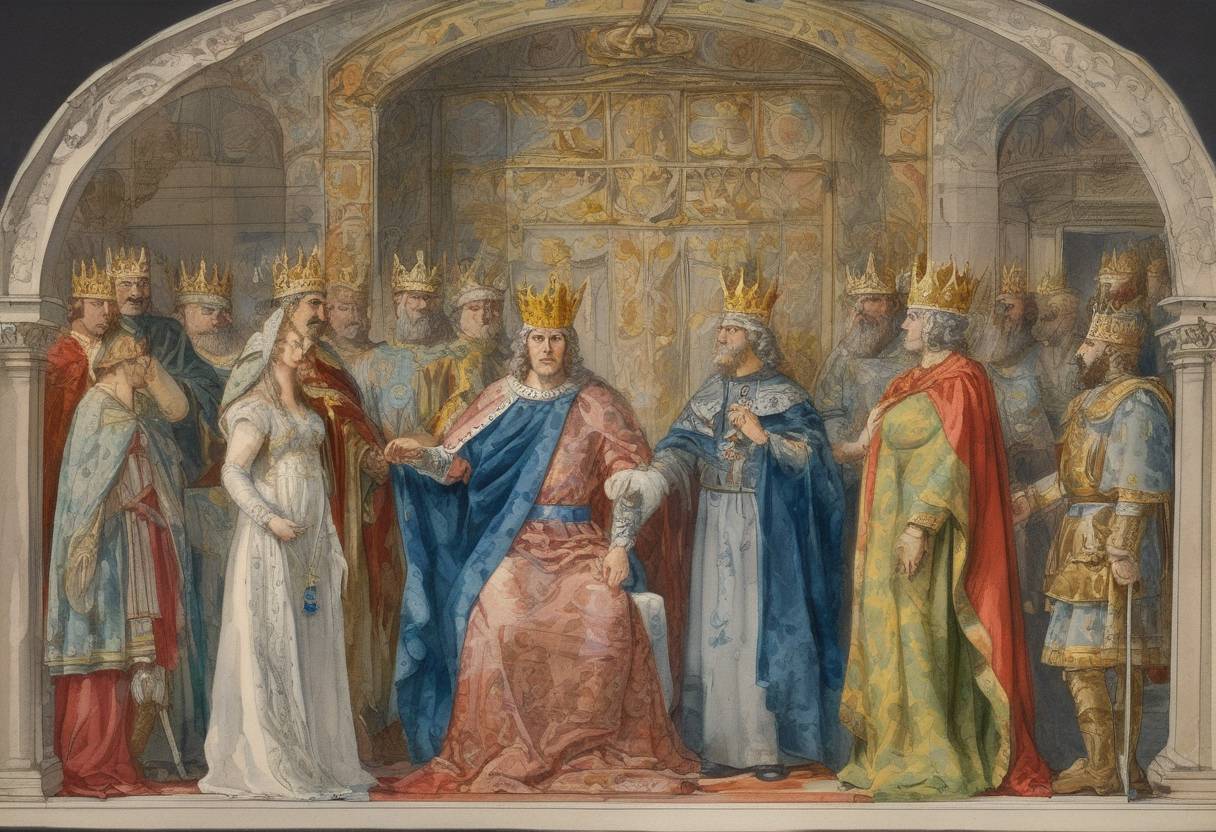
Otto I Crowned King of Germany: The Beginning of the Ottonian Dynasty
On July 2, 936, Otto I, also known as Otto the Great, was crowned King of Germany at Aachen Cathedral. This event marked the beginning of the Ottonian dynasty, which would play a crucial role in shaping the medieval Holy Roman Empire.
Background
- Carolingian Decline: By the early 10th century, the Carolingian Empire had fragmented, leading to a period of instability and the rise of regional dukes in what is now modern-day Germany.
- Henry the Fowler: Otto’s father, Henry I (known as Henry the Fowler), was elected King of East Francia in 919. He managed to consolidate power and lay the groundwork for a more unified German kingdom.
Otto I’s Ascension
- Succession: Upon Henry I’s death in 936, Otto I was elected king by the German dukes. His coronation took place in Aachen, a city with strong associations with Charlemagne, symbolizing continuity with the Carolingian legacy.
- Coronation Ceremony: The ceremony was significant as it established Otto’s authority over the various duchies of Germany, including Saxony, Bavaria, Swabia, and Franconia.
Key Events and Achievements
- Centralization of Power: Otto I worked to centralize authority, reducing the power of the regional dukes and integrating them into a more cohesive political structure.
- Military Campaigns: Otto successfully defended his kingdom against external threats, notably the Magyars, whom he defeated decisively at the Battle of Lechfeld in 955. This victory secured his reputation as a strong military leader.
- Holy Roman Emperor: In 962, Otto was crowned Holy Roman Emperor by Pope John XII, reviving the imperial title and establishing the Holy Roman Empire, which would last until 1806.
Significance and Legacy
- Ottonian Renaissance: Otto’s reign saw a cultural and intellectual revival, often referred to as the Ottonian Renaissance, characterized by advancements in art, architecture, and learning.
- Dynastic Stability: The Ottonian dynasty, founded by Otto I, provided a period of relative stability and continuity in the German territories, influencing the political landscape of medieval Europe.
- Church Relations: Otto I strengthened ties with the Church, using ecclesiastical appointments to bolster his authority and promote reform within the Church.
Otto I’s coronation as King of Germany was a pivotal moment in European history, setting the stage for the development of the Holy Roman Empire and influencing the political and cultural trajectory of the continent for centuries.