President Lyndon B. Johnson's 'Great Society' Plan
1965 · Washington D.C., United States
President Lyndon B. Johnson outlined his 'Great Society' plan in his State of the Union address.
November 3, 1964
Washington D.C. residents are able to vote in a presidential election for the first time.
Washington D.C., United States | United States Government
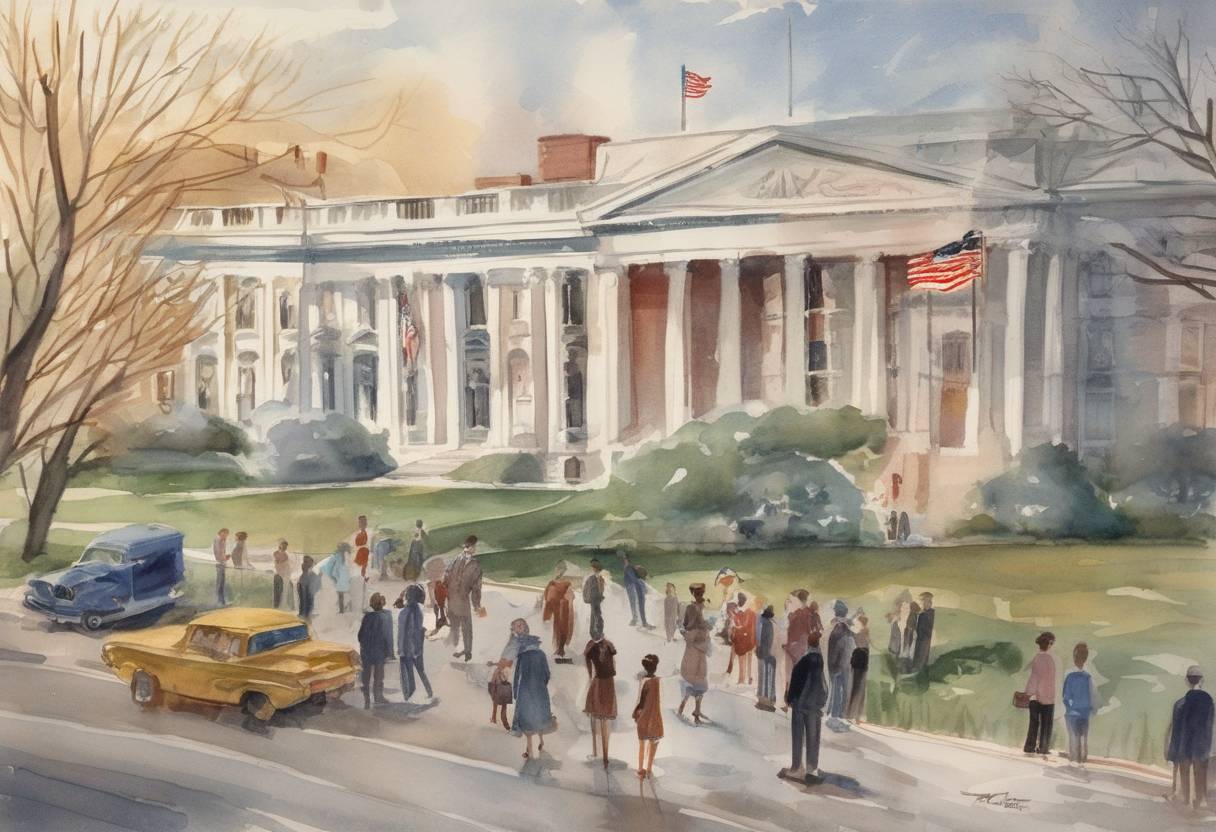
On November 3, 1964, residents of Washington D.C. were able to vote in a presidential election for the first time, marking a significant milestone in the history of voting rights in the United States. This event was made possible by the ratification of the 23rd Amendment to the U.S. Constitution.
23rd Amendment: Ratified on March 29, 1961, the 23rd Amendment granted the District of Columbia the right to participate in presidential elections by allocating it electoral votes. Prior to this amendment, residents of D.C. were unable to vote for the President and Vice President of the United States, despite being American citizens.
Historical Context: Washington D.C., established as the nation’s capital in 1790, had long been excluded from having a voice in presidential elections. This exclusion was due to its unique status as a federal district, not a state, and thus it lacked representation in the Electoral College.
Political Advocacy: The push for voting rights in D.C. gained momentum in the mid-20th century, driven by civil rights movements and advocates for greater democratic representation.
Congressional Approval: The 23rd Amendment was passed by Congress on June 16, 1960, and subsequently ratified by the required number of states by 1961.
Candidates: The main contenders in the 1964 presidential election were incumbent President Lyndon B. Johnson, a Democrat, and his Republican challenger, Senator Barry Goldwater.
D.C.’s Participation: For the first time, Washington D.C. was allocated three electoral votes, the minimum number any state could have, reflecting its population size relative to other states.
Outcome: President Lyndon B. Johnson won the election in a landslide, carrying Washington D.C. with an overwhelming majority. This demonstrated the strong Democratic leanings of the district, a trend that has continued in subsequent elections.
Democratic Representation: The inclusion of D.C. in presidential elections was a crucial step towards greater democratic representation for its residents, who had long been disenfranchised in national elections.
Ongoing Advocacy: While the 23rd Amendment allowed D.C. residents to vote in presidential elections, the district still lacked full representation in Congress, an issue that continues to be a topic of political debate and advocacy.
Legacy: The 1964 election set a precedent for the political engagement of Washington D.C. residents and highlighted the ongoing struggle for voting rights and representation in the United States.
In summary, the participation of Washington D.C. residents in the 1964 presidential election was a landmark event in American history, reflecting broader movements for civil rights and democratic inclusion.
Source: www.archives.gov