North Korea's Nuclear Announcement on February 10, 2005
2005 · Pyongyang, North Korea
North Korea publicly announced for the first time that it possessed nuclear weapons, withdrawing from the six-party talks aimed at curbing its nuclear ambitions.
April 17, 2003
The United States and North Korea held talks in Beijing to address nuclear tensions on the Korean Peninsula.
Beijing, China | United States government, North Korean government
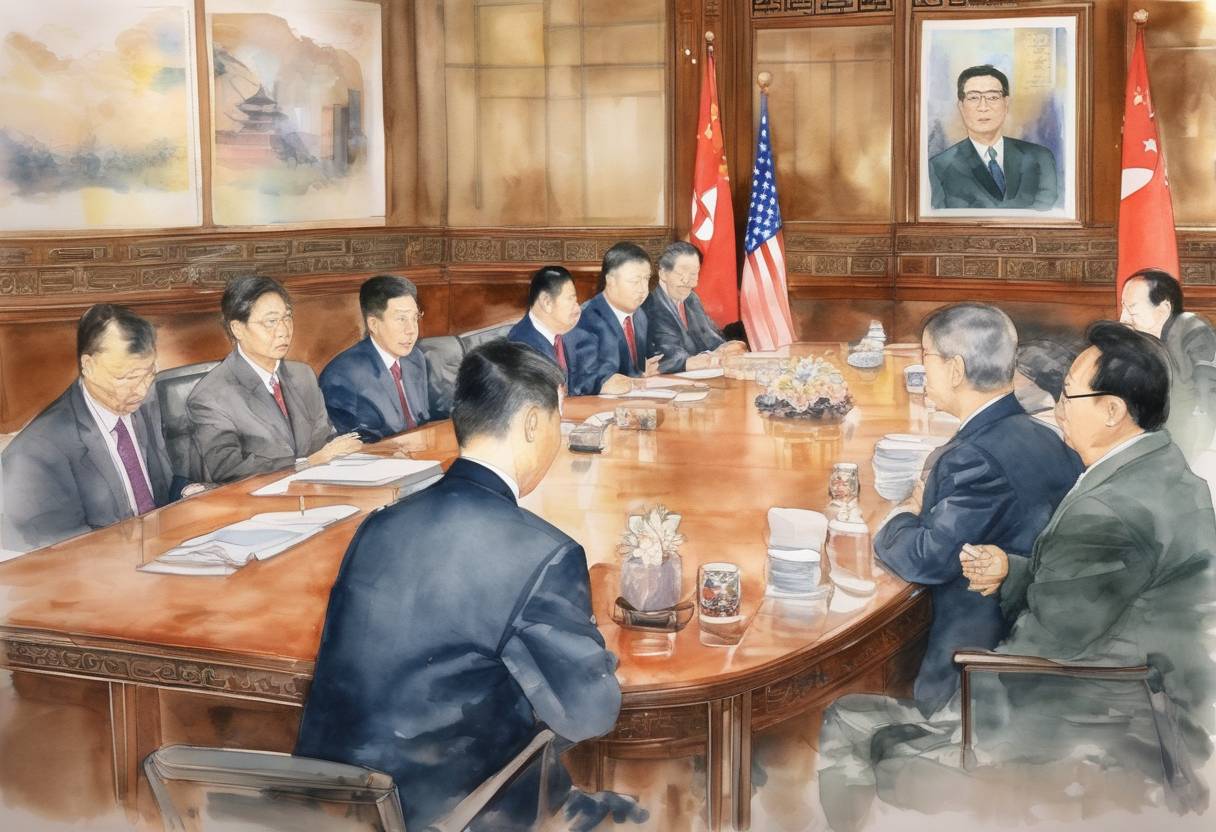
On April 17, 2003, representatives from the United States and North Korea convened in Beijing for critical talks aimed at addressing escalating nuclear tensions on the Korean Peninsula. This meeting was a significant diplomatic effort to mitigate the growing concerns over North Korea’s nuclear ambitions and to seek a peaceful resolution to the crisis.
The early 2000s were marked by increasing tensions between North Korea and the international community, particularly the United States, over North Korea’s nuclear program. In October 2002, the U.S. accused North Korea of pursuing a secret uranium enrichment program, which led to the breakdown of the 1994 Agreed Framework—a deal that had frozen North Korea’s plutonium production in exchange for aid.
In response, North Korea expelled International Atomic Energy Agency (IAEA) inspectors and withdrew from the Nuclear Non-Proliferation Treaty (NPT) in early 2003. These actions heightened fears of nuclear proliferation and prompted urgent calls for diplomatic engagement.
The talks in Beijing were the first high-level meeting between the U.S. and North Korea since the nuclear crisis had intensified. They were facilitated by China, which played a crucial role as a mediator due to its strategic interests in maintaining stability on the Korean Peninsula.
The Beijing talks did not result in any immediate breakthroughs or agreements. However, they were significant for several reasons:
Diplomatic Engagement: The talks marked a resumption of dialogue between the U.S. and North Korea, which was essential for reducing tensions and preventing further escalation.
Multilateral Framework: The meeting set the stage for the Six-Party Talks, which would later include South Korea, Japan, and Russia, alongside the U.S., North Korea, and China. This multilateral approach aimed to address the security concerns of all parties involved.
Role of China: China’s involvement underscored its growing influence in regional security matters and its interest in preventing instability on its borders.
The Beijing talks were a precursor to the Six-Party Talks, which began in August 2003. These negotiations would continue intermittently over the following years, with varying degrees of progress and setbacks. The issue of North Korea’s nuclear program remains a complex and ongoing challenge in international relations.
In summary, the April 17, 2003, talks in Beijing were a pivotal moment in the diplomatic efforts to address nuclear tensions on the Korean Peninsula, highlighting the importance of dialogue and multilateral cooperation in resolving international security issues.
Source: www.nytimes.com