The Return of the Panama Canal to Panama: October 1, 1979
1979 · Panama City, Panama
The United States returned sovereignty of the Panama Canal to Panama, as stipulated in the Torrijos-Carter Treaties.
January 9, 1964
Martyrs' Day in Panama: Riots erupted over sovereignty of the Panama Canal Zone, leading to clashes between Panamanians and U.S. troops.
Panama City, Panama
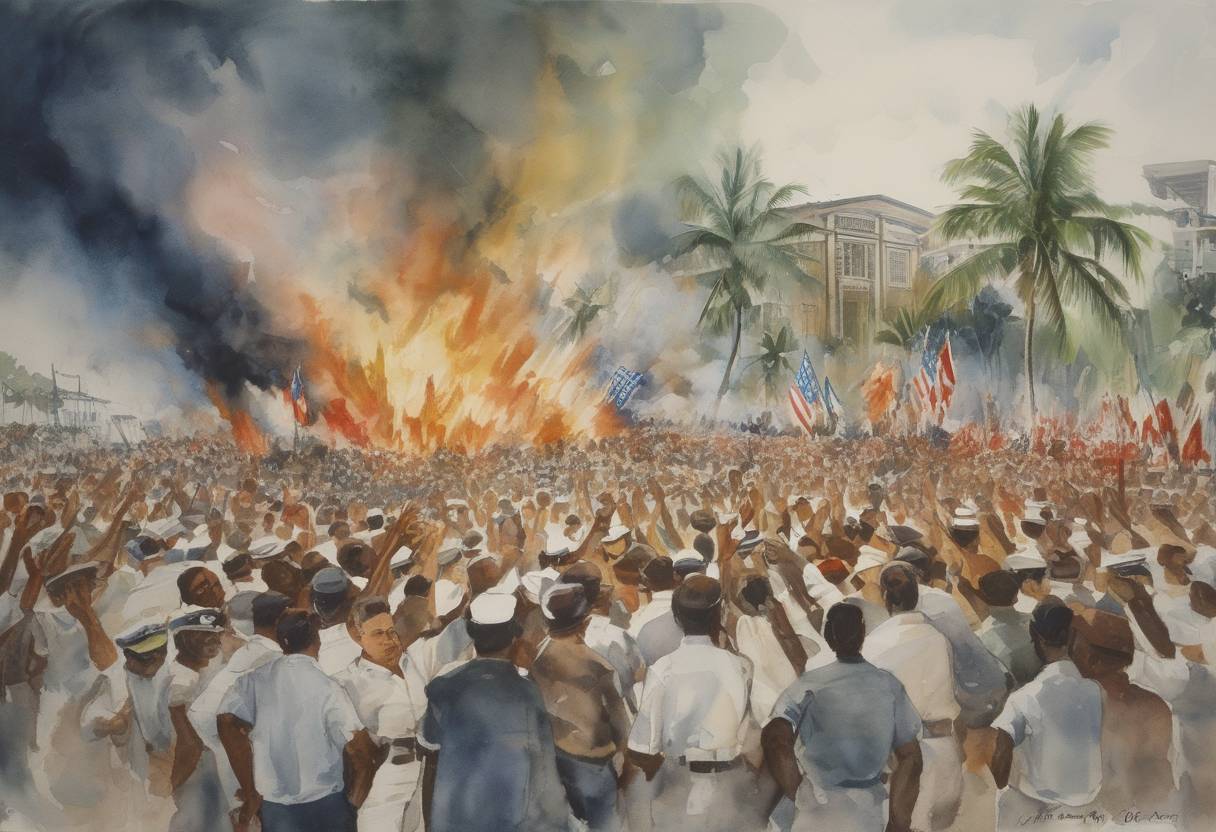
Martyrs’ Day, observed on January 9th in Panama, commemorates the tragic events of 1964 when riots erupted over the sovereignty of the Panama Canal Zone. This day marks a pivotal moment in Panama’s history, highlighting the tensions between Panamanians and the United States over control of the Canal Zone.
The Panama Canal, a crucial maritime route connecting the Atlantic and Pacific Oceans, was constructed and controlled by the United States following its completion in 1914. The Canal Zone, a strip of land surrounding the canal, was governed by the U.S., leading to long-standing tensions with Panama, which sought greater sovereignty over its territory.
In the early 1960s, these tensions were exacerbated by growing nationalist sentiments in Panama. The presence of U.S. military and administrative control in the Canal Zone was increasingly seen as a symbol of foreign domination.
The immediate catalyst for the riots was a dispute over the display of the Panamanian flag in the Canal Zone. In 1963, an agreement was reached to fly both the Panamanian and U.S. flags side by side in the Zone. However, on January 9, 1964, a group of Panamanian students attempted to raise their national flag at Balboa High School in the Canal Zone, leading to a confrontation with American students.
The situation quickly escalated into violence, with clashes erupting between Panamanian civilians and U.S. military forces. The riots spread to Panama City and other areas, resulting in significant casualties. Over the course of the conflict, 21 Panamanians and 4 U.S. soldiers were killed, and hundreds were injured.
The events of January 9, 1964, had profound implications for U.S.-Panama relations. The violence underscored the deep-seated resentment and demand for Panamanian sovereignty over the Canal Zone. In response to the riots, Panama broke off diplomatic relations with the United States, demanding a renegotiation of the terms governing the Canal Zone.
These events eventually led to the Torrijos-Carter Treaties, signed in 1977, which paved the way for the gradual transfer of control over the Panama Canal from the United States to Panama. By December 31, 1999, Panama assumed full control of the canal, marking a significant achievement in its quest for sovereignty.
Martyrs’ Day serves as a solemn reminder of the struggle for national sovereignty and the sacrifices made by Panamanians in pursuit of self-determination. It is a day of reflection and national pride, commemorating those who lost their lives in the quest for control over their own land.
Source: www.britannica.com