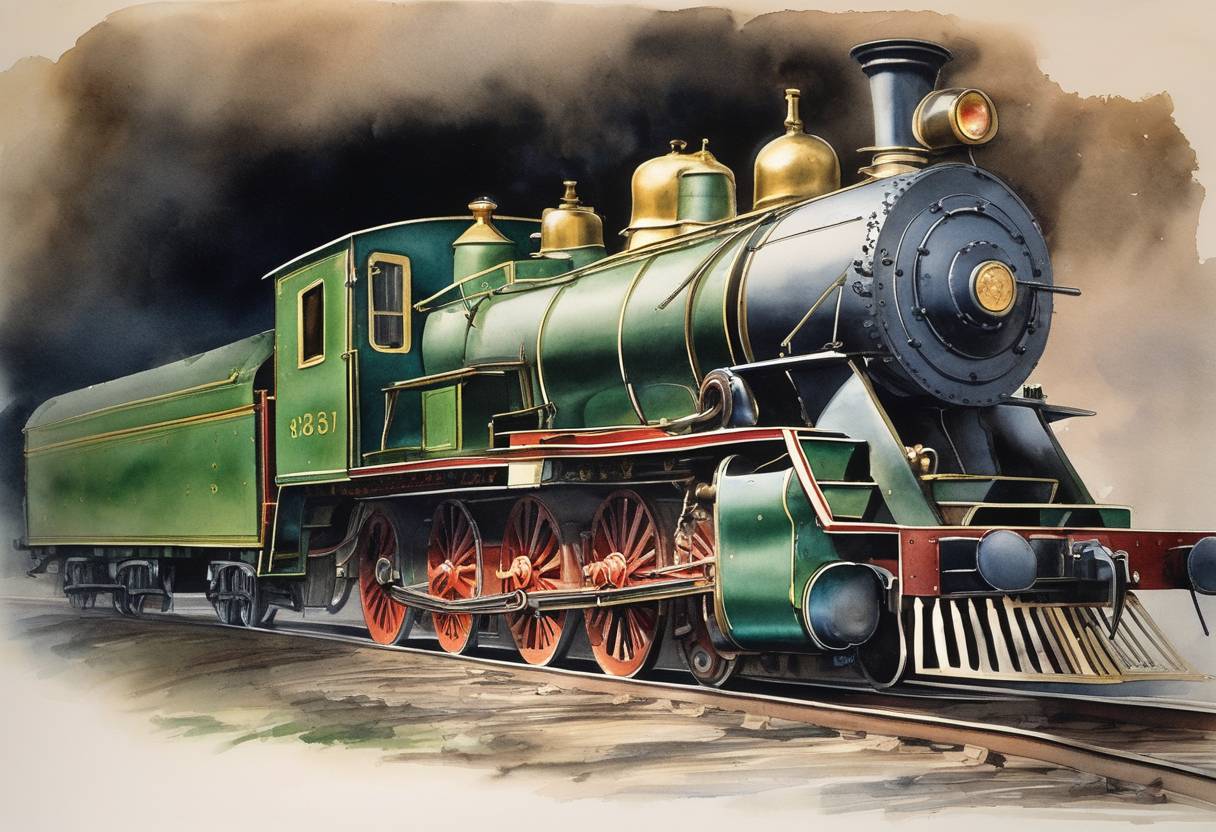
First US Built Locomotive’s Inaugural Passenger Journey
On November 19, 1831, a significant milestone in American transportation history occurred when the first U.S.-built locomotive successfully pulled a passenger train from Schenectady to Albany, New York. This locomotive, known as the “DeWitt Clinton,” marked an important step forward in the development of railway technology and the expansion of rail networks across the United States.
Background
In the early 19th century, railroads were emerging as a revolutionary mode of transportation, promising faster and more efficient travel compared to traditional methods like horse-drawn carriages or canal boats. Up until this point, most locomotives used in the United States were imported from Britain, which was at the forefront of steam engine development.
The DeWitt Clinton
The DeWitt Clinton locomotive was constructed by the West Point Foundry in New York. It was named after DeWitt Clinton, the former governor of New York and a strong advocate for infrastructure improvement who was instrumental in the construction of the Erie Canal. The locomotive’s design was based on British engineering principles but was adapted to meet American needs and conditions.
The Inaugural Journey
The inaugural journey of the DeWitt Clinton on November 19, 1831, was a momentous occasion. The train consisted of a small locomotive and three carriages that resembled stagecoaches. It transported a number of invited guests and dignitaries along a 17-mile route between Schenectady and Albany, a line operated by the Mohawk and Hudson Railroad, one of the earliest railroads in New York.
Despite the locomotive’s inaugural success, the trip was not without its challenges. Passengers experienced a bumpy ride due to the uneven tracks, and the locomotive could only manage speeds of approximately 15 miles per hour. Nevertheless, the journey was completed successfully, demonstrating the viability of steam-powered passenger transport in America.
Historical Significance
The successful operation of the DeWitt Clinton locomotive was a pivotal moment in American railroad history, symbolizing a shift towards domestic locomotive production and the growth of U.S. technological capabilities. This journey helped lay the groundwork for the rapid expansion of railroads across the nation, which would eventually connect distant regions and transform the economic landscape of the United States.
The DeWitt Clinton and the events of November 19, 1831, are remembered as key contributions to American industrial progress and the burgeoning transportation revolution of the 19th century.