Premiere of "Rigoletto" by Giuseppe Verdi
1851 · Venice, Italy
The opera 'Rigoletto' by Giuseppe Verdi premieres at La Fenice, Venice.
March 6, 1853
Giuseppe Verdi's opera 'La Traviata' premiered at La Fenice opera house.
Venice, Italy | La Fenice
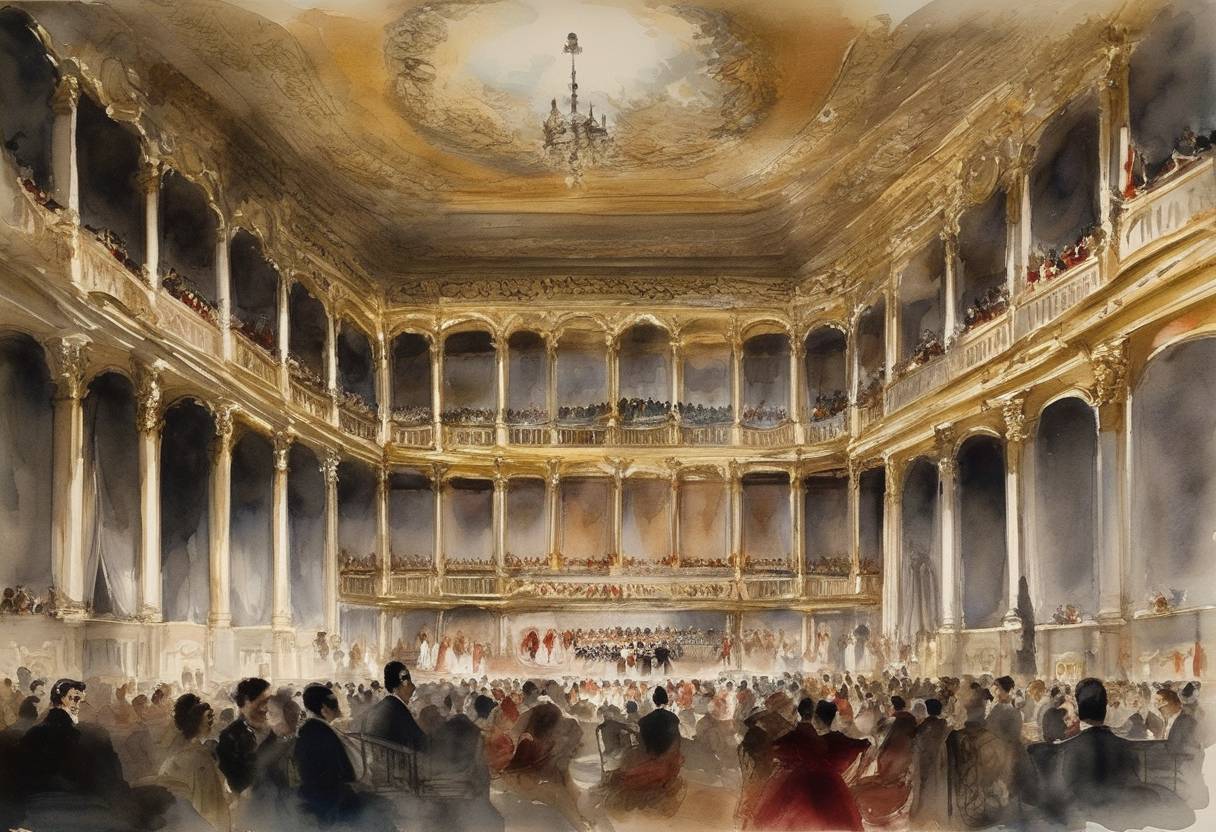
On March 6, 1853, Giuseppe Verdi’s opera “La Traviata” premiered at the La Fenice opera house in Venice, Italy. The work, which is now celebrated as one of the cornerstone operas of the repertory, initially met with a less than enthusiastic reception from audiences and critics.
The libretto for “La Traviata” was written by Francesco Maria Piave and is based on “The Lady of the Camellias” (1852), a play adapted from the novel by Alexandre Dumas fils. The narrative focuses on the tragic love story of the courtesan Violetta Valéry and her romantic involvement with Alfredo Germont, exploring themes of societal morality, love, and sacrifice.
Despite the lukewarm reception at its debut, subsequent revisions and performances contributed to the opera’s growing popularity. Today, “La Traviata” is considered one of Verdi’s masterpieces and is a staple of the operatic canon.
Impact on Music and Culture: “La Traviata” broke away from the traditional operatic subjects of its time by dealing with contemporary life and societal issues, paving the way for later operas addressed similar themes.
Revival and Recognition: The opera’s more accepted productions shortly after its premiere, particularly in Venice and other European cities, demonstrated its burgeoning appeal. Critical reassessment occurred as audiences and critics grew more appreciative of Verdi’s composition and the emotional depth conveyed through its arias and scenography.
“La Traviata” remains one of the most frequently performed operas globally, appreciated for its musical brilliance and the timeless nature of its story.
Source: www.britannica.com