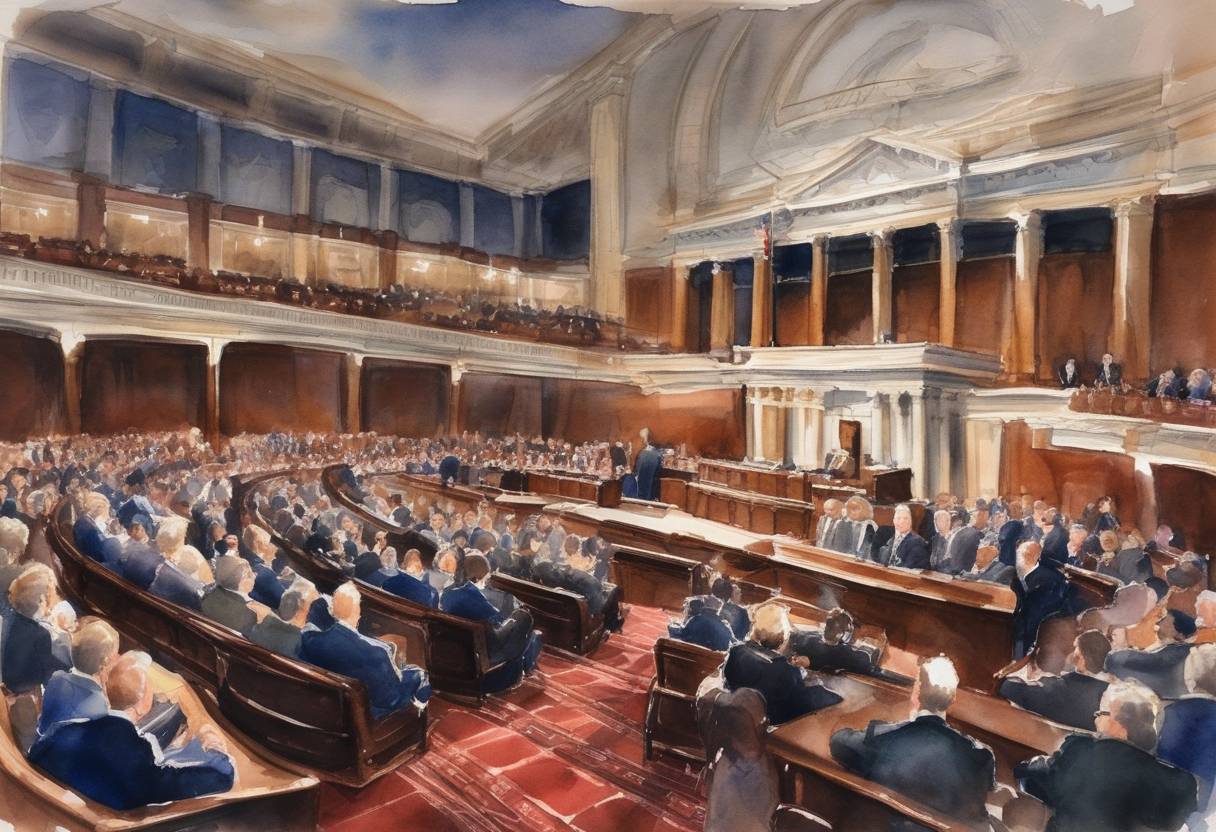
Impeachment Proceedings Against President Bill Clinton
On October 8, 1998, the U.S. House of Representatives voted to commence impeachment proceedings against President William Jefferson Clinton. This pivotal move was fueled by allegations of perjury and obstruction of justice, marking a significant chapter in American political history.
Context and Background
The impeachment inquiry stemmed from investigations initially surrounding a separate matter known as the Whitewater controversy. However, the focus sharply shifted when independent counsel Kenneth Starr expanded his investigation to include President Clinton’s extramarital affair with Monica Lewinsky, a former White House intern. The investigation led to allegations that Clinton had lied under oath about the affair during a sworn deposition in a separate sexual harassment lawsuit filed by Paula Jones and had subsequently attempted to obstruct justice by influencing witness testimonies in the case.
The House Vote
On this day, the House of Representatives approved the impeachment inquiry by a decisive vote, with a count of 258 to 176, allowing the House Judiciary Committee to investigate the allegations more robustly. Although the vote was predominantly supported by Republican members, it also witnessed some bipartisan approval, as multiple Democratic representatives broke ranks to vote in favor of the inquiry.
Significance and Consequences
This vote was historically significant as it was only the third time that impeachment proceedings were initiated against a sitting U.S. president, following Andrew Johnson in 1868 and Richard Nixon in the context of the Watergate scandal, although Nixon resigned before the full House could vote on the articles of impeachment.
The inquiry would eventually lead to the House of Representatives impeaching President Clinton on December 19, 1998. He was accused officially of perjury and obstruction of justice. However, following a trial in the Senate, President Clinton was acquitted on February 12, 1999, as the Senate failed to reach the two-thirds majority required to convict and remove him from office.
Broader Impact
The impeachment of Bill Clinton had profound implications on American politics. It intensified the partisan divide, influencing political discourse and strategies in subsequent elections. Additionally, it highlighted issues surrounding personal morality and public office integrity, sparking widespread debate over the private versus public lives of political figures.
This event remains a touchstone in discussions about the power dynamics within U.S. governance and the accountability of its leaders.