Argentina's 1983 Democratic Elections
1983 · Buenos Aires, Argentina
Argentina held its first democratic elections following the military dictatorship, marking a return to democracy.
September 23, 1973
Juan Perón returned to power in Argentina, marking a significant political development in the country's history.
Buenos Aires, Argentina | Justicialist Party
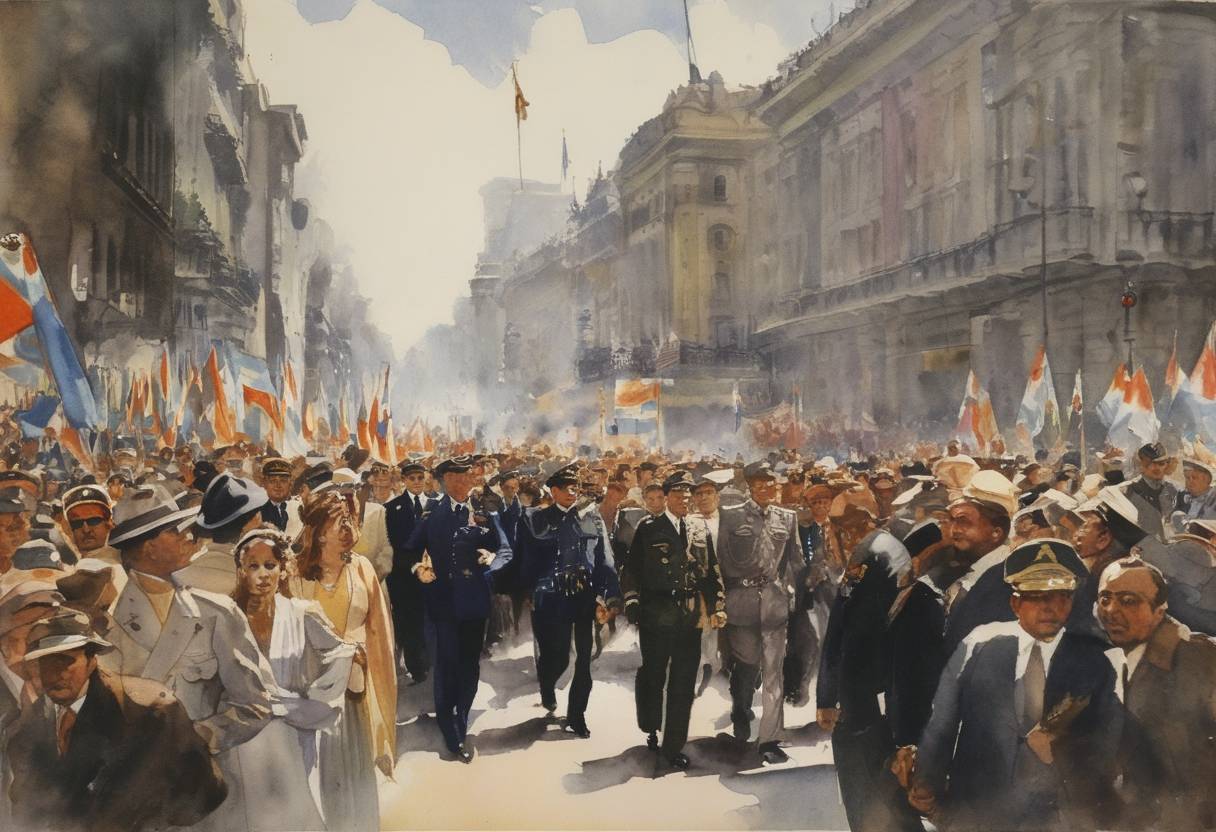
On September 23, 1973, Juan Domingo Perón was re-elected as President of Argentina, marking a pivotal moment in the nation’s political landscape. This election was particularly significant as it symbolized the return of Perón to power after an 18-year exile following his overthrow in 1955 by a military coup.
Perón, who originally served as President from 1946 until 1955, was a central figure in Argentine politics, having introduced significant social and economic reforms under his movement, Peronism, which sought to empower the working class. Despite his exile, Peronism remained a potent political force in Argentina, enduring through a complex period dominated by military governments and social unrest.
The socio-political environment in Argentina had become increasingly unstable in the years leading up to Perón’s electoral victory. The country faced economic challenges, social divisions, and political violence, often driven by ideological conflict and labor disputes. Perón’s enduring popularity among the working class and his skillful political maneuvering helped to rejuvenate his influence.
By 1973, Argentina was eager for a change. The political landscape shifted to allow Perón’s return when President Héctor Cámpora, a Peronist ally elected earlier that year, resigned to facilitate new elections. This strategic political move was intended to pave the way for Perón’s re-entry into Argentine politics.
In the September 23 election, Perón stood alongside his third wife, María Estela “Isabel” Martínez de Perón, as his vice-presidential running mate. The Peronist Party enjoyed widespread support, successfully capitalizing on Perón’s legacy and the prevailing desire for stability and reform. Perón won the presidency with a decisive majority, capturing over 60% of the vote.
Perón’s return was initially met with optimism and a sense of unity among his supporters. However, his third term was marked by significant challenges, including a deteriorating economy, increasing political violence, and tensions within the Peronist movement itself. Perón’s health deteriorated rapidly after assuming office, and he passed away on July 1, 1974, less than a year into his presidency. His vice president and widow, Isabel Perón, assumed the presidency, making her the first female head of state in the Western Hemisphere.
The era following Perón’s death was tumultuous, culminating in a return to military intervention in 1976. Nonetheless, Perón’s impact on Argentine politics was profound and long-lasting, with Peronism continuing to be a significant and enduring force in the country’s political framework.
Source: en.wikipedia.org