The Rare "Super Blue Blood Moon" of January 31, 2018
2018 · Global, Global
A rare 'super blue blood moon' occurs, a combination of a supermoon, a blue moon, and a total lunar eclipse, visible in parts of North America, Asia, and Australia.
January 21, 2019
A total lunar eclipse, also known as a 'super blood wolf moon', was visible across North and South America, Europe, and Africa.
Various, Various | NASA
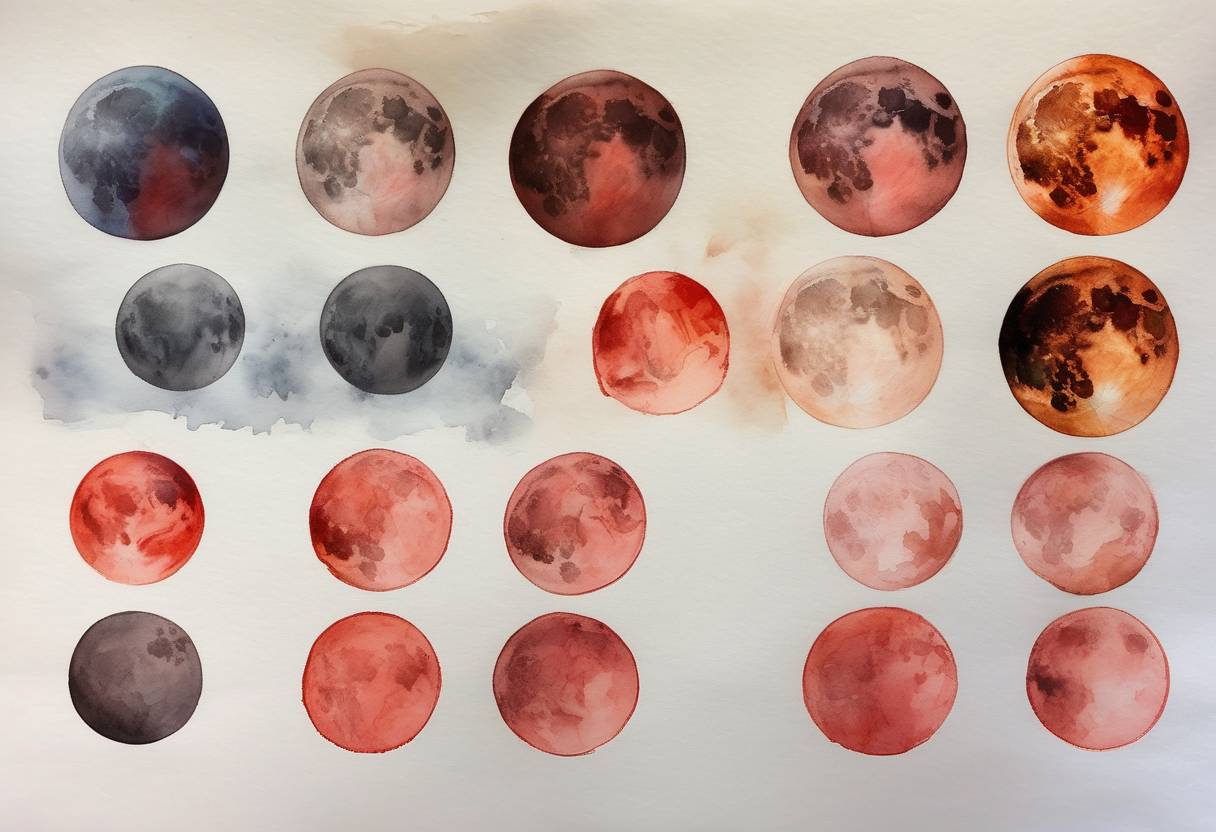
On January 21, 2019, a remarkable astronomical event captivated skywatchers across multiple continents: a total lunar eclipse, popularly known as a “Super Blood Wolf Moon.” This celestial phenomenon was visible across North and South America, Europe, and Africa, offering a spectacular view of the moon in a unique reddish hue.
The term “Super Blood Wolf Moon” combines several lunar phenomena:
Supermoon: This occurs when the full moon coincides with its closest approach to Earth in its elliptical orbit, known as perigee. During this time, the moon appears slightly larger and brighter than usual.
Blood Moon: This term is used to describe the reddish color the moon takes on during a total lunar eclipse. The red hue is caused by Earth’s atmosphere scattering sunlight and allowing only the longer-wavelength red light to reach the moon’s surface.
Wolf Moon: This is the traditional name for the first full moon of January, derived from Native American and early Colonial American folklore, where it was associated with the howling of wolves during the winter months.
The total lunar eclipse on January 21, 2019, was the first of the year and the last total lunar eclipse until May 2021. The event unfolded over several hours, with the totality phase lasting approximately 62 minutes. During totality, the moon was completely immersed in Earth’s shadow, creating the striking “blood” appearance.
Lunar eclipses have been observed and recorded throughout history, often imbued with cultural and mythological significance. The January 2019 eclipse was no exception, drawing interest from both amateur and professional astronomers, as well as the general public.
The event was widely covered by media and shared across social platforms, highlighting the enduring fascination with celestial phenomena. It served as a reminder of the intricate dance between Earth, the moon, and the sun, and the predictable yet awe-inspiring nature of astronomical events.
The Super Blood Wolf Moon of January 21, 2019, was a memorable event that brought together people from diverse regions to witness the beauty of a total lunar eclipse. It underscored the importance of such events in fostering a global appreciation for astronomy and the natural world.
Source: www.nasa.gov