Afghanistan Regains Full Independence: Treaty of Rawalpindi, August 19, 1919
1919 · Rawalpindi, British India
Afghanistan regains full independence from the United Kingdom with the signing of the Treaty of Rawalpindi.
January 13, 1842
Dr. William Brydon, an assistant surgeon in the British East India Company Army, becomes famous for being the only European survivor of the retreat from Kabul, part of the First Anglo-Afghan War.
Jalalabad, Afghanistan | British East India Company
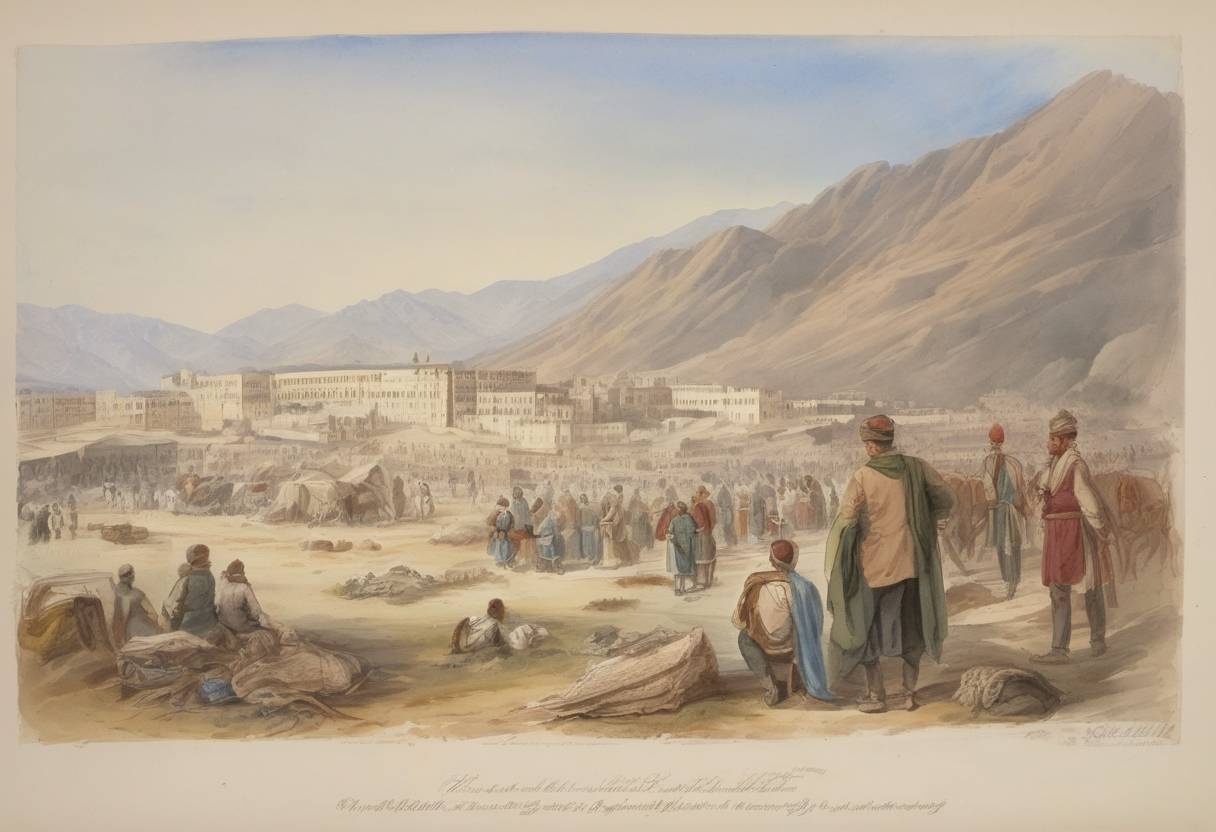
On January 13, 1842, Dr. William Brydon, an assistant surgeon in the British East India Company Army, became famously known as the sole European survivor of the disastrous retreat from Kabul during the First Anglo-Afghan War. This event marked a significant and tragic moment in British imperial history.
The First Anglo-Afghan War (1839-1842) was part of the Great Game, a strategic rivalry between the British Empire and the Russian Empire for supremacy in Central Asia. The British aimed to install a friendly regime in Afghanistan to counter Russian influence. In 1839, they successfully placed Shah Shuja on the Afghan throne, replacing the then-ruler, Dost Mohammad Khan.
By late 1841, the situation in Afghanistan had deteriorated for the British. Afghan resistance intensified, culminating in an uprising in Kabul. The British garrison, under Major General William Elphinstone, found itself besieged and eventually negotiated a retreat to Jalalabad, promising safe passage in exchange for their withdrawal.
On January 6, 1842, approximately 4,500 British and Indian soldiers, along with around 12,000 camp followers, began the perilous journey through the harsh Afghan winter. The retreat quickly turned into a massacre as Afghan tribesmen attacked the column, exploiting the treacherous terrain and the retreating army’s vulnerability.
Dr. William Brydon’s survival became emblematic of the retreat’s catastrophic failure. As the column was decimated, Brydon, severely wounded, managed to reach the British garrison in Jalalabad on January 13, 1842. He arrived on horseback, famously missing part of his skull, which was later protected by a makeshift hat.
Brydon’s survival was not entirely solitary; a few other soldiers and camp followers eventually made it to safety, but he was the first to arrive and became the most well-known due to his dramatic entrance and the symbolic nature of his survival.
The retreat from Kabul was a devastating blow to British prestige and marked one of the worst defeats in British military history. It highlighted the challenges of imperial overreach and the complexities of Afghan geopolitics. The British would later launch a punitive expedition to avenge the loss and restore their influence, but the war ended with the restoration of Dost Mohammad Khan and a British withdrawal from Afghanistan.
Dr. William Brydon’s story is often cited as a cautionary tale of the perils of military intervention in Afghanistan, a region historically resistant to foreign domination. His survival remains a poignant reminder of the human cost of war and the unpredictable nature of military campaigns.
Source: en.wikipedia.org