Vladimir Putin's Third Inauguration as President of Russia
2012 · Moscow, Russia
Vladimir Putin was inaugurated for a third term as President of Russia, amid protests and allegations of electoral fraud.
March 4, 2012
Vladimir Putin won the Russian presidential election, marking his return to the presidency after serving as Prime Minister.
Moscow, Russia | Russian government
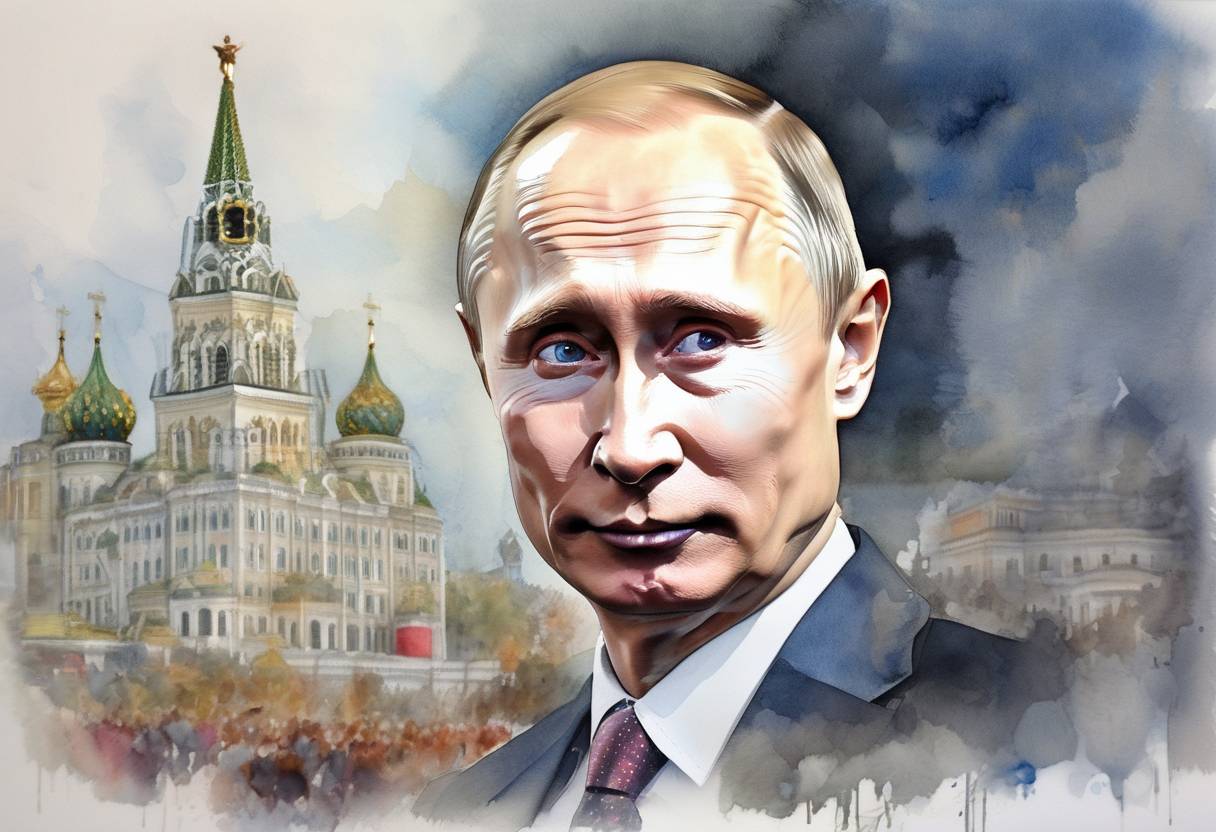
On March 4, 2012, Vladimir Putin won the Russian presidential election, marking his return to the presidency after serving as Prime Minister. This victory was significant as it underscored Putin’s enduring influence in Russian politics and set the stage for his continued leadership.
Previous Presidency (2000-2008): Vladimir Putin first became President of Russia in 2000, serving two consecutive terms until 2008. During his presidency, Putin was credited with stabilizing Russia’s economy and centralizing power.
Prime Ministership (2008-2012): Due to constitutional term limits, Putin could not run for a third consecutive term in 2008. Instead, Dmitry Medvedev, a close ally, was elected President, and Putin assumed the role of Prime Minister. This period saw a continuation of Putin’s policies, with Medvedev often perceived as a placeholder.
Campaign and Strategy: Putin announced his candidacy for the 2012 presidential election in September 2011. His campaign focused on promises of stability, economic growth, and a strong national defense. He leveraged his popularity and the political machinery of the ruling United Russia party to secure widespread support.
Election Results: Putin won the election with approximately 63.6% of the vote, defeating his closest rival, Gennady Zyuganov of the Communist Party, who garnered about 17.2%. The election was marred by allegations of electoral fraud and irregularities, leading to widespread protests.
Protests and Opposition: The election results sparked significant protests, particularly in Moscow, with demonstrators accusing the government of vote-rigging. These protests were part of a broader movement demanding political reform and greater transparency.
Constitutional Changes: Putin’s return to the presidency led to constitutional changes in 2020, allowing him to potentially remain in power until 2036. This move has been controversial and has drawn criticism from both domestic and international observers.
Impact on Russian Politics: Putin’s victory in 2012 reinforced his dominance in Russian politics. His leadership style, characterized by a strong central authority and limited political opposition, has shaped Russia’s domestic and foreign policies.
In summary, Vladimir Putin’s victory in the 2012 presidential election marked a pivotal moment in Russian history, reaffirming his central role in the country’s political landscape and setting the stage for future developments.
Source: www.bbc.com