913 · Soissons, France
The Battle of Soissons took place, where King Charles III of France was defeated by Robert I, who subsequently became the King of West Francia.
August 22, 0851
The Battle of Jengland took place, where the forces of Charles the Bald, King of West Francia, were defeated by the Bretons under Erispoe, leading to the Treaty of Angers.
Jengland, Brittany | Breton forces
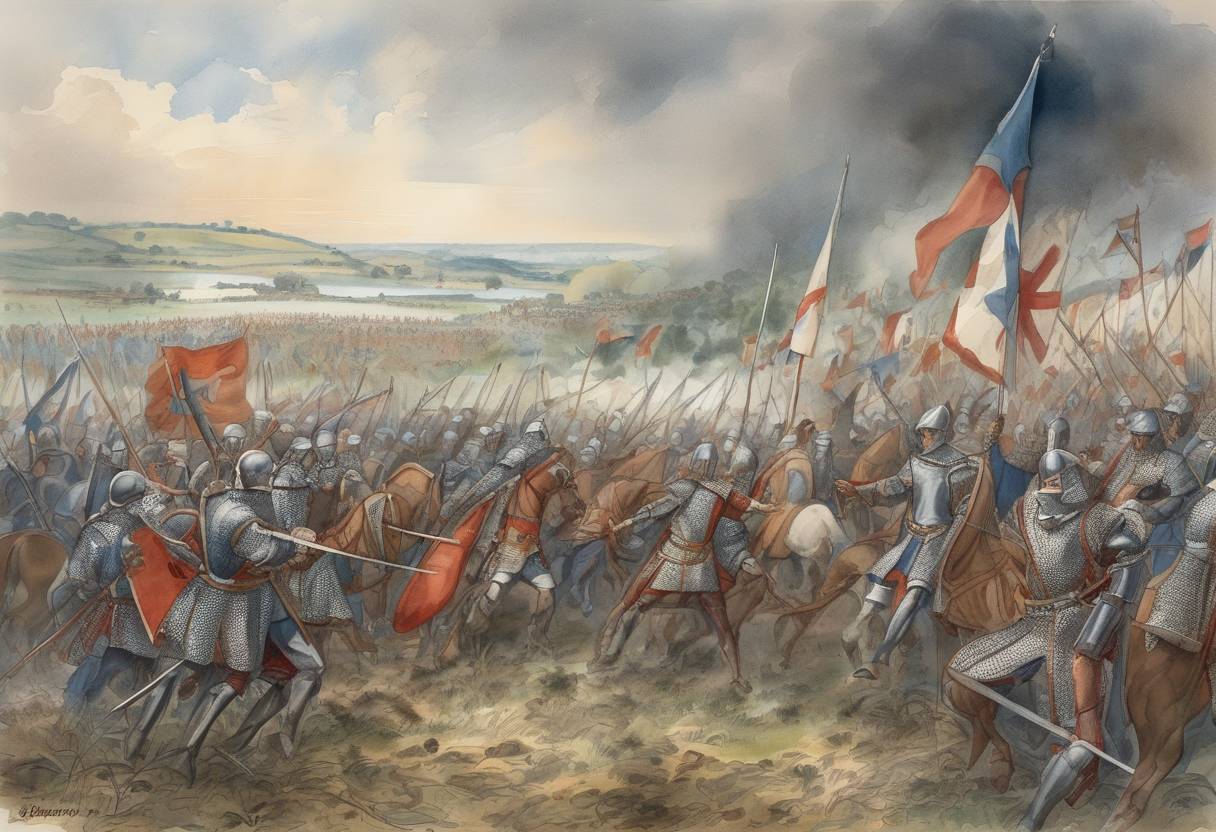
The Battle of Jengland, fought on August 22, 851, was a significant conflict between the forces of Charles the Bald, King of West Francia, and the Bretons led by Erispoe. This battle was pivotal in shaping the political landscape of the region during the early medieval period.
Charles the Bald: As the grandson of Charlemagne, Charles the Bald inherited the western portion of the Carolingian Empire, known as West Francia, following the Treaty of Verdun in 843. His reign was marked by internal strife and external threats, particularly from Viking raids and regional powers like Brittany.
Brittany’s Rising Power: During this period, Brittany was asserting its independence and strength under the leadership of Erispoe, the son of Nominoe, who had previously challenged Carolingian authority.
Tensions Escalate: The conflict between West Francia and Brittany intensified as Charles sought to reassert control over the Breton territories, which had been increasingly autonomous.
Location: The battle took place near Jengland, in what is now modern-day Brittany, France.
Forces: Charles the Bald led a Frankish army against the Bretons commanded by Erispoe. The Bretons, familiar with the local terrain and employing effective military tactics, were well-prepared for the confrontation.
Outcome: The battle resulted in a decisive victory for the Bretons. Erispoe’s forces successfully defeated the Frankish army, marking a significant setback for Charles the Bald.
Treaty of Angers: Following the defeat, Charles the Bald was compelled to negotiate peace with Erispoe. The Treaty of Angers was concluded later in 851, recognizing Erispoe as the ruler of Brittany and granting him the title of “King of Brittany.”
Territorial Gains: The treaty also ceded several territories to Brittany, including the counties of Rennes, Nantes, and Retz, further solidifying Breton autonomy.
Historical Significance: The Battle of Jengland and the subsequent Treaty of Angers were crucial in establishing Brittany as a semi-independent entity within the Carolingian Empire. It marked a shift in the balance of power in the region and highlighted the challenges faced by the Carolingian rulers in maintaining control over their vast territories.
In summary, the Battle of Jengland was a turning point in the history of West Francia and Brittany, underscoring the complexities of medieval European politics and the gradual fragmentation of Carolingian authority.
Source: en.wikipedia.org