The Gdańsk Shipyard Strike and the Birth of Solidarity
1980 · Gdańsk, Poland
Lech Wałęsa led a strike at the Lenin Shipyard in Gdańsk, Poland, which eventually led to the formation of the Solidarity movement.
June 28, 1956
The Poznań 1956 protests began, marking the first of several massive public protests against the communist government of the Polish People's Republic. Approximately 100,000 people gathered to express discontent over poor working conditions, wage cuts, and food shortages.
Poznań, Poland | The Polish People's Republic Government
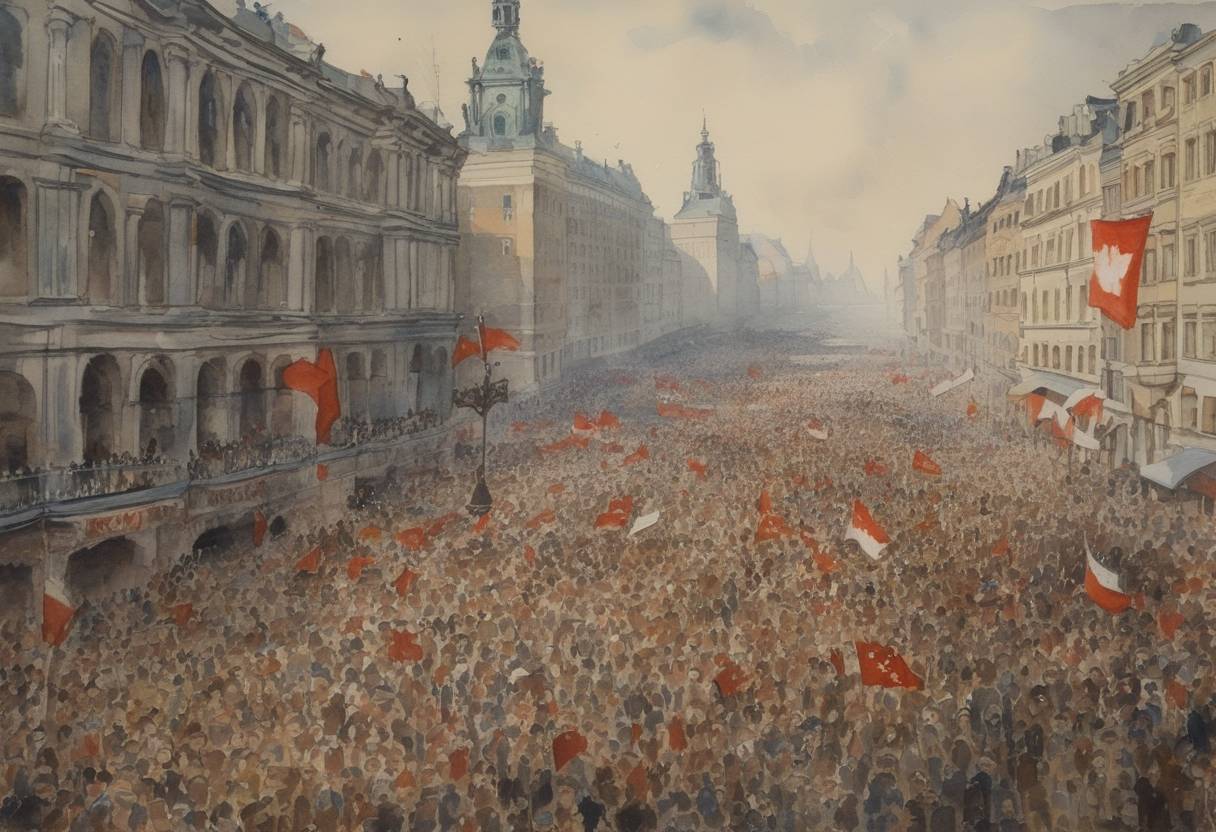
On June 28, 1956, the city of Poznań, located in western Poland, became the epicenter of significant civil unrest against the communist government of the Polish People’s Republic. This event marked the beginning of a series of public protests that highlighted widespread dissatisfaction with government policies.
In the aftermath of World War II, Poland fell under Soviet influence and adopted a communist government. By the mid-1950s, widespread economic hardships and oppressive political conditions caused growing discontent among Polish citizens. Workers particularly felt the strain of low wages, increased workloads, and deteriorating living conditions, all exacerbated by centralized economic controls that led to food shortages.
The protests began in Poznań on the morning of June 28, 1956, when approximately 100,000 workers from Cegielski Factories (known as the Joseph Stalin Metal Works at that time) marched through the streets. The demonstrators demanded “bread and freedom,” voicing grievances about wage reductions, increased taxes, economic mismanagement, and the non-payment of bonuses. The discontented workers were joined by other citizens of Poznań, and the movement quickly grew in size and fervor.
Initial Strike and March: The day started with a peaceful workers’ strike, but tensions escalated as more people joined the demonstration.
Government Buildings Targeted: Protesters reached key sites such as the local Communist Party headquarters and the city jail, demanding the release of political prisoners.
Regime’s Response: In response, the government, understating the scale of the protests, deployed military forces, including armored vehicles and tanks, to quash the uprising. Troops opened fire on the demonstrators, resulting in numerous casualties.
Casualties and Repercussions: Official reports later claimed that around 57 people were killed, and hundreds were injured, although some estimates suggest a higher number of fatalities.
The violent suppression of the Poznań protests had both immediate and long-term consequences:
Reevaluation of Government Policies: Though initially repressed, the protests forced the Polish government and the Soviet leadership to reconsider their policies. This pressure contributed to a partial thaw in the oppressive political climate and helped catalyze changes in Polish domestic policy.
Emergence of Władysław Gomułka: The protests indirectly led to the rise of Władysław Gomułka, a moderate communist who, after being re-elected as the First Secretary of the Polish United Workers’ Party later that year, implemented some liberalization and sought economic autonomy from the Soviet Union.
Symbol of Resistance: The Poznań protests became a symbol of resistance against oppressive regimes and inspired subsequent uprisings in Eastern Europe, notably the Hungarian Revolution later in 1956.
The events in Poznań underscored the growing unrest in communist Eastern Europe and foreshadowed the broader struggles for reform that would continue throughout the Cold War.
Source: en.wikipedia.org