Completion of the Panama Railway: January 28, 1855
1855 · Panama City, Panama
The Panama Railway, the first transcontinental railroad, connecting the Atlantic and Pacific Oceans, was completed.
January 18, 1670
Henry Morgan, leading a fleet of buccaneers, captures the city of Panama.
Panama City, Panama | Buccaneers
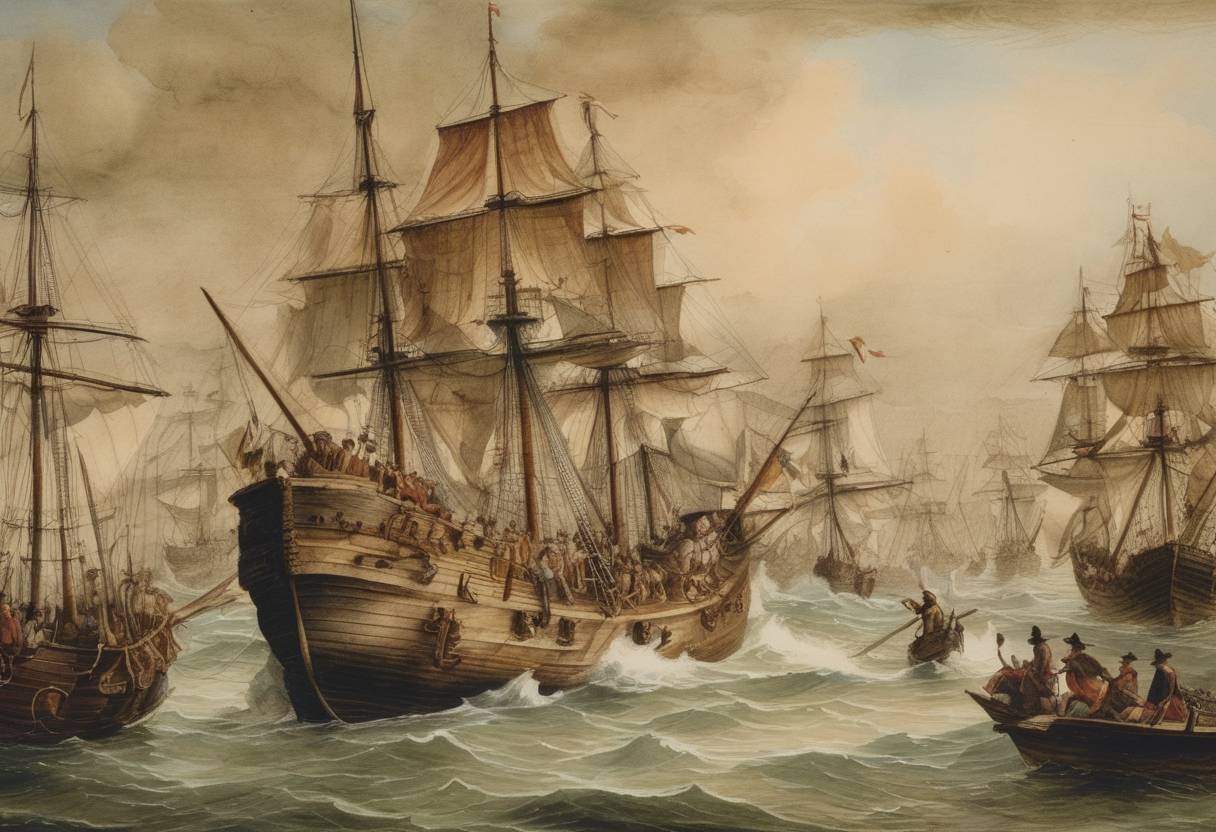
In the late 17th century, the Caribbean was a hub of political and military tension between European powers, particularly Spain and England. Henry Morgan, a Welsh privateer appointed by the English government, played a significant role in this era of Caribbean piracy. As a privateer, Morgan was authorized to conduct raids against Spanish possessions, an activity sanctioned by the English Crown during specific periods of conflict.
On January 18, 1671, Henry Morgan led a daring assault on the city of Panama, then one of the wealthiest Spanish settlements in the Americas. Panama was an essential link in the trade of South American riches, mainly gold and silver that flowed from the Southern continent via the Isthmus of Panama to Spain. Morgan’s aim was to cut off this vital supply line and seize the wealth stored in the city.
Morgan assembled a fleet of ships and a force of around 1,200 buccaneers, setting sail from the Caribbean side and taking the Chagres River route inland toward Panama City. After capturing the fortress at San Lorenzo to secure his advance, Morgan and his men trekked through the dense jungle, emerging near Panama’s Pacific coast in mid-January.
On January 18, Morgan launched his attack on Panama City. The assault was characterized by fierce fighting; despite formidable resistance from the Spanish defenders, the buccaneers overwhelmed the city by exploiting their element of surprise and superior tactics. The city was captured and subsequently looted, with extensive destruction following as parts of the city were burned—a common occurrence in the chaos following such conquests.
The capture of Panama marked the peak of Morgan’s career as a privateer and had significant ramifications:
Economic Impact: The raid temporarily disrupted Spanish trade routes and significantly impacted the flow of wealth from the Americas to Spain.
Diplomatic Repercussions: England and Spain were technically at peace under the Treaty of Madrid (signed in 1670), leading to diplomatic repercussions for England. Morgan’s actions strained Anglo-Spanish relations, yet he was ultimately absolved of his actions after a brief arrest and trial back in England.
Morgan’s Later Life: Following this event, Morgan was knighted by King Charles II and later served as Lieutenant Governor of Jamaica, highlighting his complex legacy as both a rogue buccaneer and a legitimate colonial official.
The capture of Panama by Henry Morgan stands as one of the most dramatic and daring episodes of piracy in the Caribbean and left an indelible mark on the history of the region.
Source: www.britannica.com