The Siege of Masada: April 15, 73 CE
73 · Masada, Judea
The Siege of Masada ends with the fall of the Jewish fortress to the Roman Empire, marking the end of the First Jewish-Roman War.
April 16, 0073
The Siege of Masada ended when Roman troops of the Judaean Expeditionary Force, led by Lucius Flavius Silva, took the Jewish fortress of Masada in modern-day Israel, concluding the First Jewish-Roman War. The besieged Sicarii committed mass suicide to avoid capture.
Masada, Roman Empire (modern-day Israel) | Roman Empire
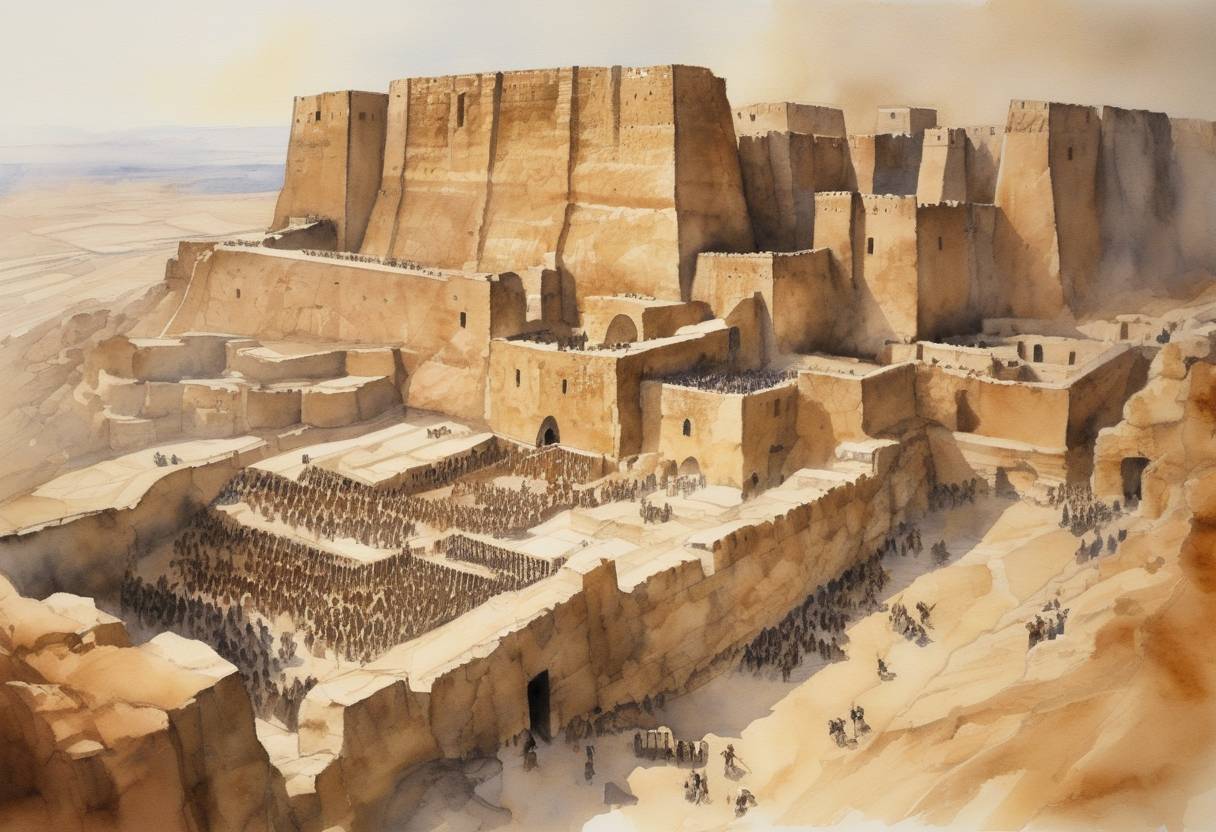
The Siege of Masada, concluding on April 16, 73 CE, marked a significant end to the First Jewish-Roman War. This confrontation involved Roman forces under the command of Lucius Flavius Silva and the Jewish defenders known as the Sicarii, who had taken a last stand at the fortress of Masada.
The First Jewish-Roman War (66–73 CE), also known as the Great Revolt, was a key uprising by the Jews of Judea against Roman occupation. The war saw multiple engagements and significant loss of life. By 70 CE, Jerusalem had been captured and the Second Temple destroyed, crushing the spiritual cornerstone of the Jewish people.
Masada was a plateau fortress in the Judaean Desert, overlooking the Dead Sea, initially constructed by Herod the Great. It became the final holdout for the Sicarii, a splinter group of Jewish zealots who opposed Roman rule. Following the broader defeat of Jewish forces, a remnant of these rebels retreated to Masada, where they withstood a prolonged Roman siege.
Under the orders of General Silva, the Roman Tenth Legion laid siege to Masada. Employing Roman military engineering, the troops constructed a massive rampart against the fortress walls, omnipresent evidence of their tactical superiority and determination.
On April 16, 73 CE, after months of siege and preparations, Roman forces breached the fortress. What they found shocked them; rather than face capture, the 960 Sicarii men, women, and children had committed mass suicide.
The fall of Masada became emblematic of Jewish resistance and the tragic losses endured in the struggle against Rome. This event marked the definitive conclusion of the First Jewish-Roman War, with devastating effects on the Jewish population and their socio-political circumstances for centuries to come.
Masada stands today as a symbol of defiance and remembrance, with archaeological evidence preserving the story of its last defenders. The siege and its outcome remain topics of historical reflection on the complexities of resistance, identity, and survival.
Source: www.britannica.com