The Constitutional Act of 1791
1791 · London, United Kingdom
The British Parliament passes the Constitutional Act of 1791, splitting the Province of Quebec into Upper and Lower Canada.
March 29, 1867
The British North America Act receives Royal Assent in London, creating the Dominion of Canada effective July 1, 1867.
London, United Kingdom | British Parliament
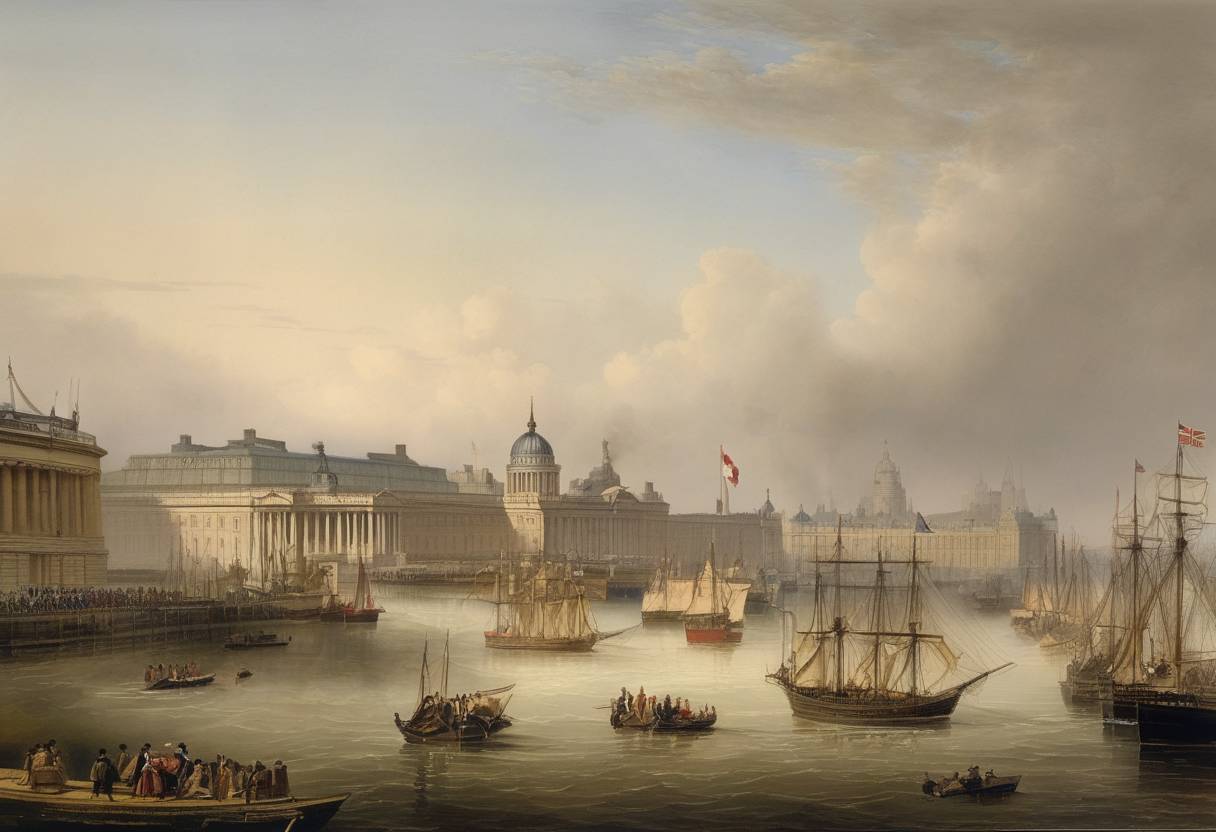
On March 29, 1867, an important legislative milestone was reached in the creation of modern Canada when The British North America Act, 1867, was granted Royal Assent by Queen Victoria in London. This Act was a cornerstone in the formation of the Dominion of Canada, which would officially come into existence a few months later, on July 1, 1867.
In the mid-19th century, the provinces of British North America, which included Canada East (modern-day Quebec), Canada West (modern-day Ontario), New Brunswick, and Nova Scotia, were seeking greater autonomy and unification. The desire for political stability, economic coordination, and defense against external threats, particularly from the United States post-Civil War, fomented a push towards unification.
The concept of a federated union had been discussed at various conferences, notably the Charlottetown Conference in 1864 and the subsequent Quebec Conference, which laid down the framework for a new political structure. These discussions culminated in the drafting of The British North America Act.
Federal Structure: The Act created a federal dominion, uniting the provinces under a central government while allowing them to retain powers over specific local matters. This laid the groundwork for the division of powers that is central to the Canadian constitutional framework.
Bicameral Legislature: The establishment of a Parliament consisting of the Queen (represented by the Governor General), an appointed Senate to represent the regions, and an elected House of Commons.
Provincial Autonomy: Defined the jurisdictions of the federal and provincial governments, ensuring provinces retained control over areas such as education and civil law.
Naming the Dominion: The name “Canada” was adopted, and the provinces were collectively referred to as the “Dominion of Canada.”
The Royal Assent marks the legal activation of the provisions set forth in the Act, setting the stage for Canada’s official formation as a self-governing entity within the British Empire. This marked a significant shift from colonial governance to self-determination, yet retaining ties with Britain, which would evolve with subsequent constitutional developments.
The Act has remained a fundamental component of Canada’s constitution, even as it has undergone various amendments and interpretations over the years. The framework established by the British North America Act enabled Canadian provinces to gradually unite into the geographically expansive and politically significant nation we recognize today.
In conclusion, March 29, 1867, represents a pivotal day in North American history, marking the legislative birth of Canada as a nation, poised to grow and evolve within the global community.
Source: www.thecanadianencyclopedia.ca