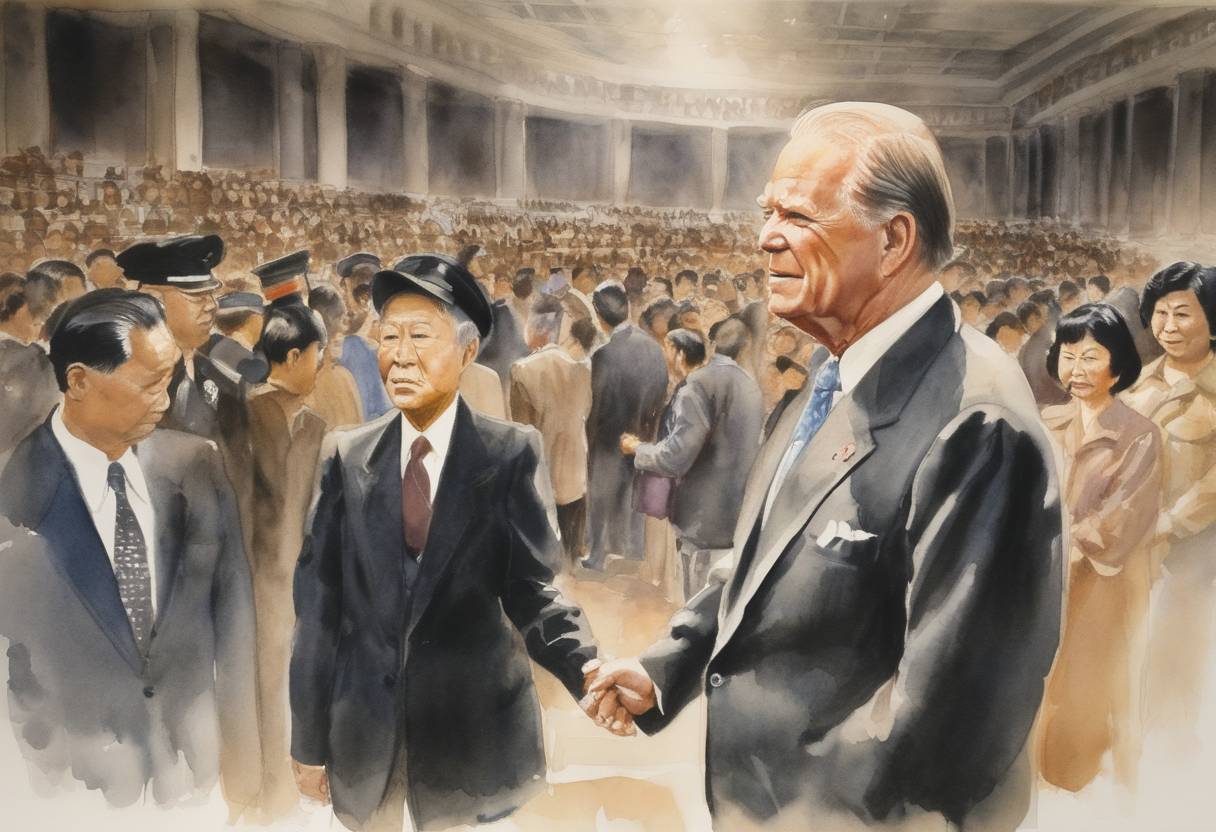
Rescission of Executive Order 9066
Background
Executive Order 9066 was signed by President Franklin D. Roosevelt on February 19, 1942, during World War II, authorizing the forced relocation and internment of Japanese Americans, along with some German and Italian Americans. This executive order facilitated the removal of over 120,000 Japanese Americans from their homes, primarily on the West Coast, to internment camps scattered throughout the United States. The action was justified at the time as a necessary measure for national security following the attack on Pearl Harbor, but it led to extensive civil rights violations.
Rescission by President Gerald Ford
On February 19, 1976, exactly 34 years after the initial order was signed, President Gerald Ford formally rescinded Executive Order 9066. In his Proclamation 4417, titled “An American Promise,” Ford acknowledged the grave injustice that had been done to citizens and residents of Japanese ancestry.
Key Points from Proclamation 4417:
Acknowledgment of Injustice: President Ford recognized that the internment was wrong and was motivated by hysteria, racism, and a failure of political leadership.
Restoration of Honor: By rescinding the order, Ford sought to restore the honor of those who were unjustly interned and emphasized the importance of justice as a foundation of American democracy.
Commitment to Equality and Justice: The proclamation reaffirmed the nation’s dedication to ensuring such injustices would not occur again by recommitting to principles of freedom and equality.
Significance
The rescission of Executive Order 9066 by President Ford was a crucial step in the process of redressing the wrongs done to Japanese Americans during World War II. It marked an official acknowledgment by the U.S. government of the wartime injustices. This action laid the groundwork for the Civil Liberties Act of 1988, which further recognized the internment as a grave injustice and provided reparations to surviving internees. The event serves as a lasting reminder of the importance of defending civil liberties, particularly in times of national crisis.