Desmond Tutu Awarded the Nobel Peace Prize
1984 · Oslo, Norway
Desmond Tutu is awarded the Nobel Peace Prize for his role in the opposition to apartheid in South Africa.
October 14, 1964
Martin Luther King Jr. was awarded the Nobel Peace Prize for his nonviolent resistance to racial prejudice in America.
Oslo, Norway | Nobel Committee
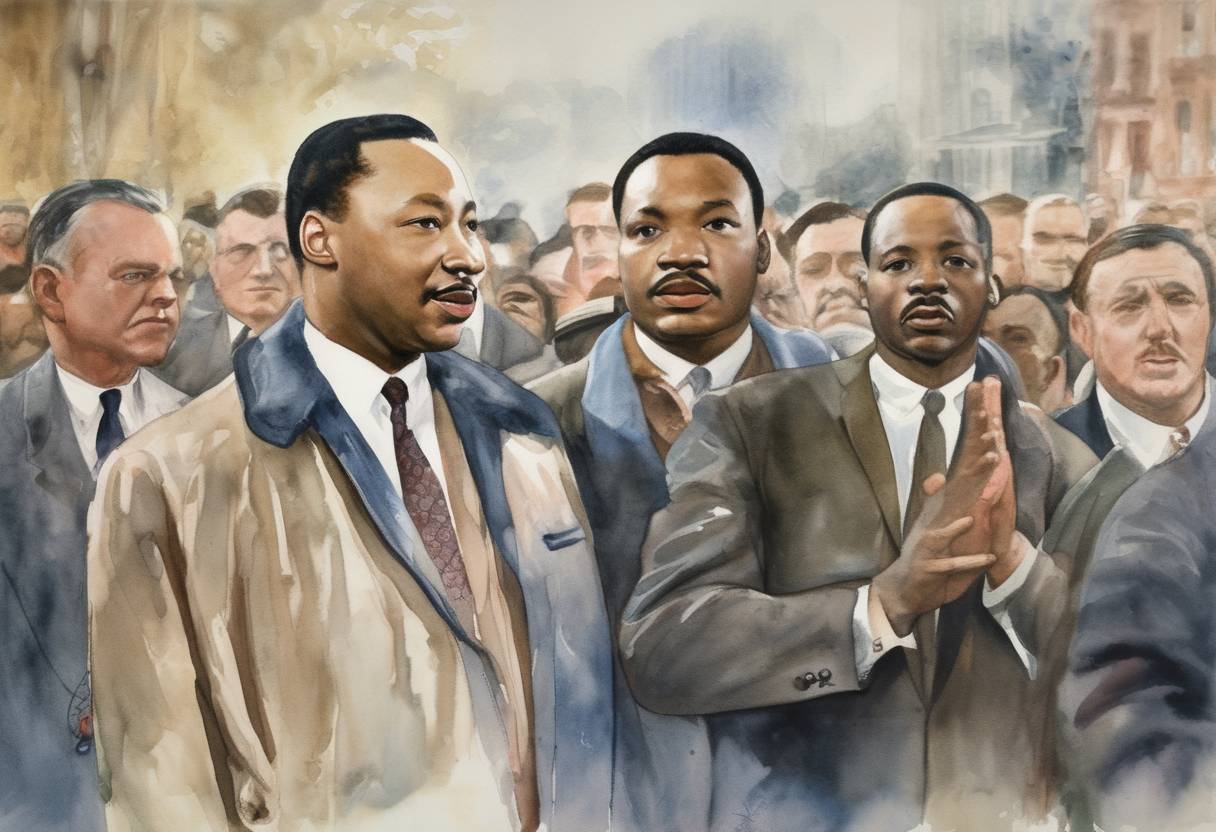
On October 14, 1964, Martin Luther King Jr. was awarded the Nobel Peace Prize for his exceptional leadership in the civil rights movement and his steadfast commitment to nonviolent resistance against racial prejudice in the United States. At the age of 35, King became the youngest recipient of the prize at that time, a testament to his profound impact on the struggle for civil rights.
The early 1960s were a pivotal period in the American civil rights movement. Segregation and racial discrimination were deeply entrenched in many parts of the United States, particularly in the South. Martin Luther King Jr., a Baptist minister and social activist, emerged as a prominent leader advocating for equality and justice through nonviolent means.
King’s philosophy was heavily influenced by Mahatma Gandhi’s principles of nonviolent resistance. He believed that peaceful protests and civil disobedience were the most effective ways to bring about social change. His leadership in events such as the Montgomery Bus Boycott (1955-1956) and the Birmingham Campaign (1963) highlighted his commitment to these ideals.
Montgomery Bus Boycott (1955-1956): This successful protest against racial segregation on public buses in Montgomery, Alabama, marked King’s rise as a national leader in the civil rights movement.
Birmingham Campaign (1963): King’s leadership in Birmingham, Alabama, drew national attention to the harsh realities of segregation and racial injustice. His “Letter from Birmingham Jail,” written during this campaign, articulated the moral imperative of civil rights activism.
March on Washington (1963): King was a key figure in organizing this historic event, where he delivered his iconic “I Have a Dream” speech, calling for racial harmony and equality.
The Nobel Committee recognized King’s efforts to combat racial inequality through nonviolent means, acknowledging the global significance of his work. In his acceptance speech delivered in Oslo, Norway, on December 10, 1964, King emphasized the ongoing struggle for civil rights and the need for continued nonviolent action. He dedicated the prize to the movement, stating that it was a recognition of the collective efforts of all those who fought for justice and equality.
Receiving the Nobel Peace Prize further elevated King’s status as a global symbol of peace and justice. It provided him with a larger platform to advocate for civil rights and social change. The prize money was used to support the civil rights movement, funding initiatives aimed at achieving racial equality.
King’s recognition by the Nobel Committee underscored the international dimension of the civil rights struggle and inspired activists worldwide. It reinforced the power of nonviolent resistance as a tool for social change and highlighted the moral and ethical imperatives of the civil rights movement.
In summary, Martin Luther King Jr.’s receipt of the Nobel Peace Prize on October 14, 1964, was a landmark moment in the history of the civil rights movement, symbolizing the global acknowledgment of the fight against racial injustice and the effectiveness of nonviolent protest.
Source: en.wikipedia.org