Michael VIII Palaiologos Proclaimed Co-Emperor of the Byzantine Empire on January 1, 1259
1259 · Nicaea, Byzantine Empire
Michael VIII Palaiologos is proclaimed co-emperor of the Byzantine Empire.
April 5, 1081
Alexios I Komnenos ascends to the Byzantine throne, marking the start of the Komnenian dynasty, which would revitalize the Byzantine Empire.
Constantinople, Byzantine Empire | Byzantine Empire
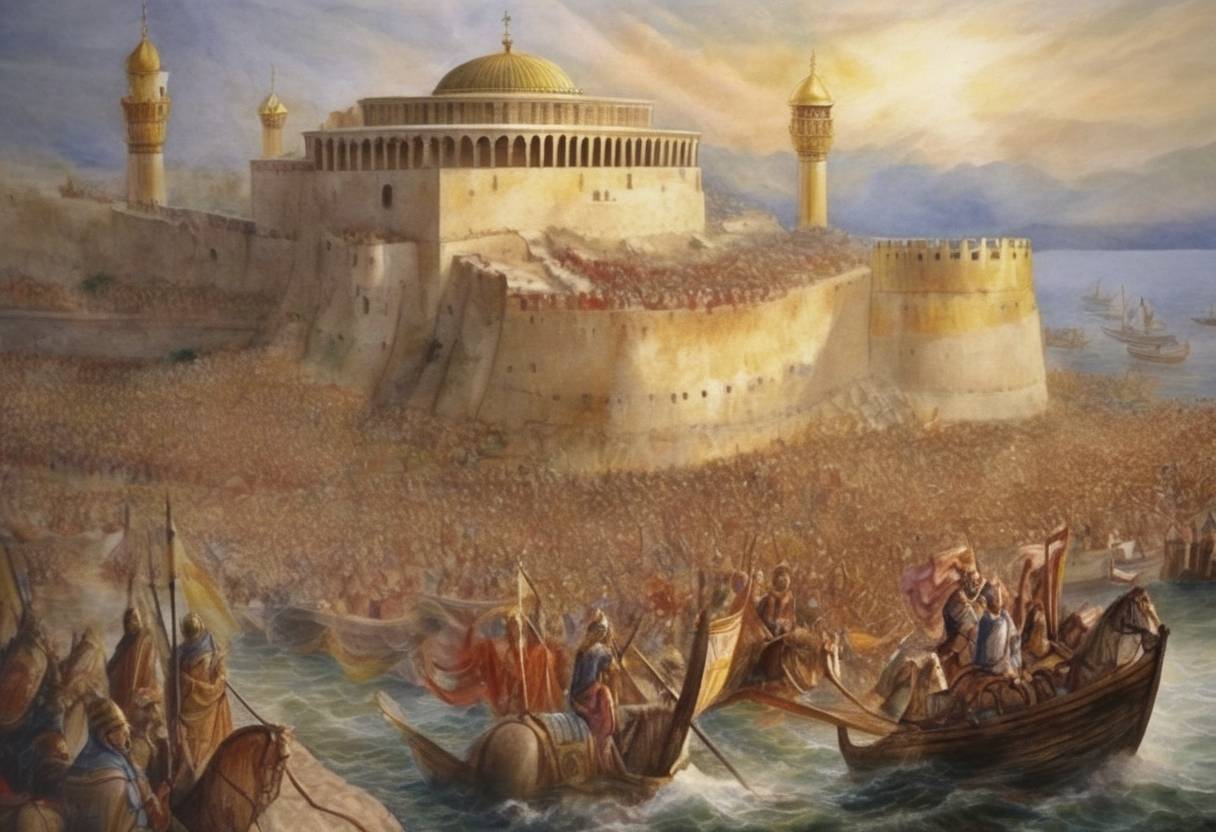
On April 5, 1081, Alexios I Komnenos ascended to the throne of the Byzantine Empire, marking the beginning of the Komnenian dynasty and a pivotal period of revitalization for the empire. His rise to power came during a time of considerable internal turmoil and external threats, characterized by a weakened central government and military setbacks against Seljuk Turks and Norman forces.
Before becoming emperor, Alexios was a prominent military leader from a distinguished noble family, deeply involved in the political machinations of the Byzantine court. The empire was in a state of disrepair, struggling under the ineffective rule of previous emperors. The climax of this instability was the deposition of Emperor Nikephoros III Botaneiates, who was unable to effectively manage the empire’s myriad problems.
Alexios I’s reign marked the beginning of several significant reforms and military campaigns that would stabilize and strengthen the empire:
The Komnenian dynasty, lasting until the late 12th century, marked a period of relative resurgence for the Byzantine Empire, contributing to its cultural and territorial revival. The administrative and military strategies initiated by Alexios laid the groundwork for future emperors and helped prolong the empire’s survival in an era of decadent decline. Despite these gains, subsequent challenges and the eventual Fourth Crusade’s sacking of Constantinople proved to test his successors severely.
Alexios I’s ascension and reforms illustrate a chapter of strategic resilience and adaptation in Byzantine history, cementing his legacy as one of the empire’s most impactful leaders.
Source: www.britannica.com