Inauguration of Benjamin Harrison
1889 · Washington, D.C., United States
Benjamin Harrison was inaugurated as the 23rd President of the United States.
March 4, 1869
Ulysses S. Grant was inaugurated as the 18th President of the United States.
Washington, D.C., United States | United States Government
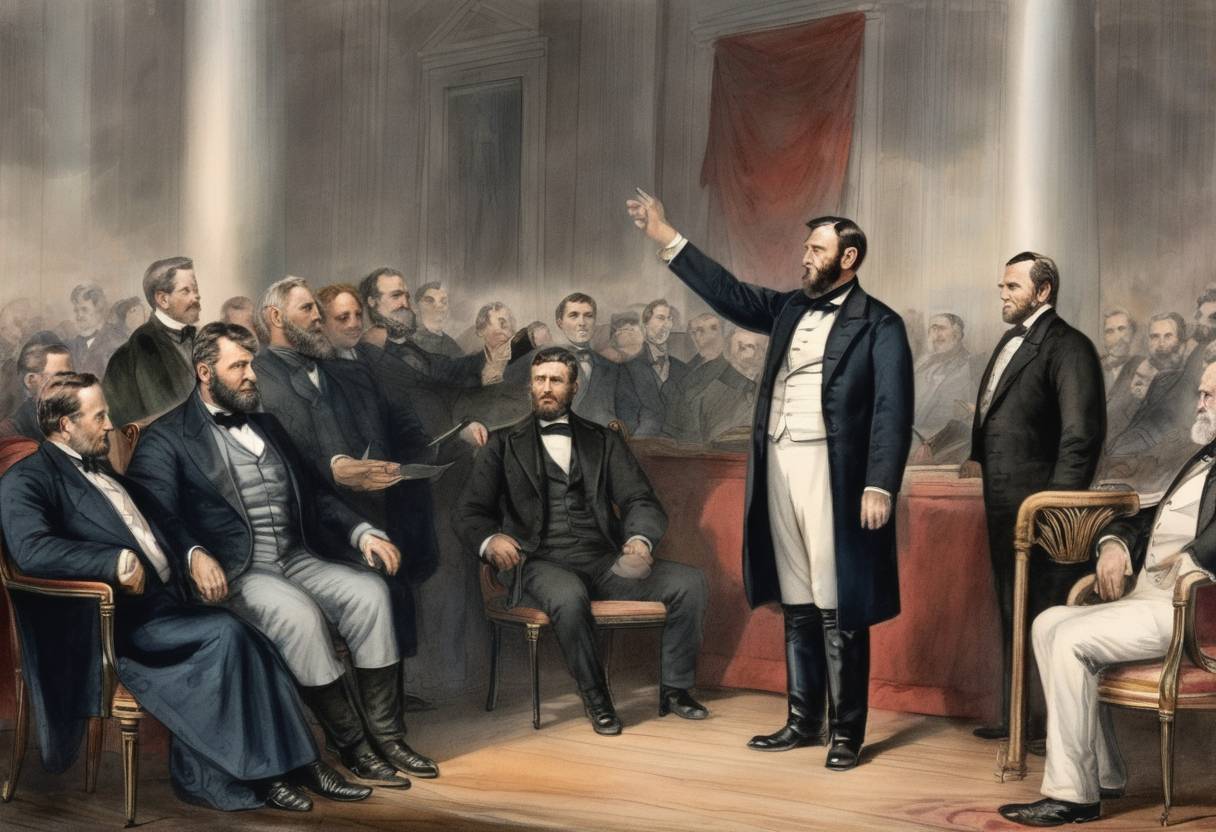
On March 4, 1869, Ulysses S. Grant was inaugurated as the 18th President of the United States. This event marked a significant transition in American politics, following a tumultuous period of Reconstruction after the Civil War.
Ulysses S. Grant, a Republican, was widely regarded as a national hero following his successful leadership as a Union general during the Civil War. His decisive victories, particularly the surrender of Confederate General Robert E. Lee at Appomattox Court House in 1865, solidified his reputation.
Following the war, the nation faced the challenges of integrating formerly enslaved individuals into American society, rebuilding the Southern states, and maintaining civil rights for all citizens. The presidency of Andrew Johnson, Grant’s predecessor, had been marked by significant conflict with Congress over the direction of Reconstruction, which contributed to Grant’s appeal as a presidential candidate.
Grant’s inauguration took place at the United States Capitol in Washington, D.C. The ceremony was conducted outside, with Chief Justice Salmon P. Chase administering the oath of office. In his inaugural address, Grant emphasized the need for peace and the importance of civil rights, echoing the priorities of his administration to heal the nation and promote legal equality.
He famously stated, “Let us have peace,” a phrase that captured the collective longing for unity and reconciliation in the post-war United States.
Grant’s address focused on several critical themes:
Grant’s presidency commenced during a pivotal era in American history. His leadership was crucial in shaping the future of Reconstruction and the reintegration of the Southern states into the Union. Despite facing challenges and controversies throughout his two terms, Grant’s initial inauguration was a moment of hope and a step toward stabilizing a divided nation.
Grant’s presidency laid the groundwork for future advancements in civil rights and set the tone for the federal government’s role in safeguarding those rights. The challenges he faced also highlighted the complexities and resistance present in the Reconstruction era and beyond.
Ulysses S. Grant’s inauguration on March 4, 1869, remains a landmark event in American history, symbolizing a turning point towards peace and equality following the Civil War.
Source: www.whitehouse.gov