The First Long-Distance Telephone Call: March 27, 1884
1884 · Boston, United States
The first long-distance telephone call was made between Boston and New York City by Alexander Graham Bell and Thomas Watson.
March 24, 1883
Long-distance telephone service began between Chicago and New York.
Chicago, United States | Bell Telephone Company
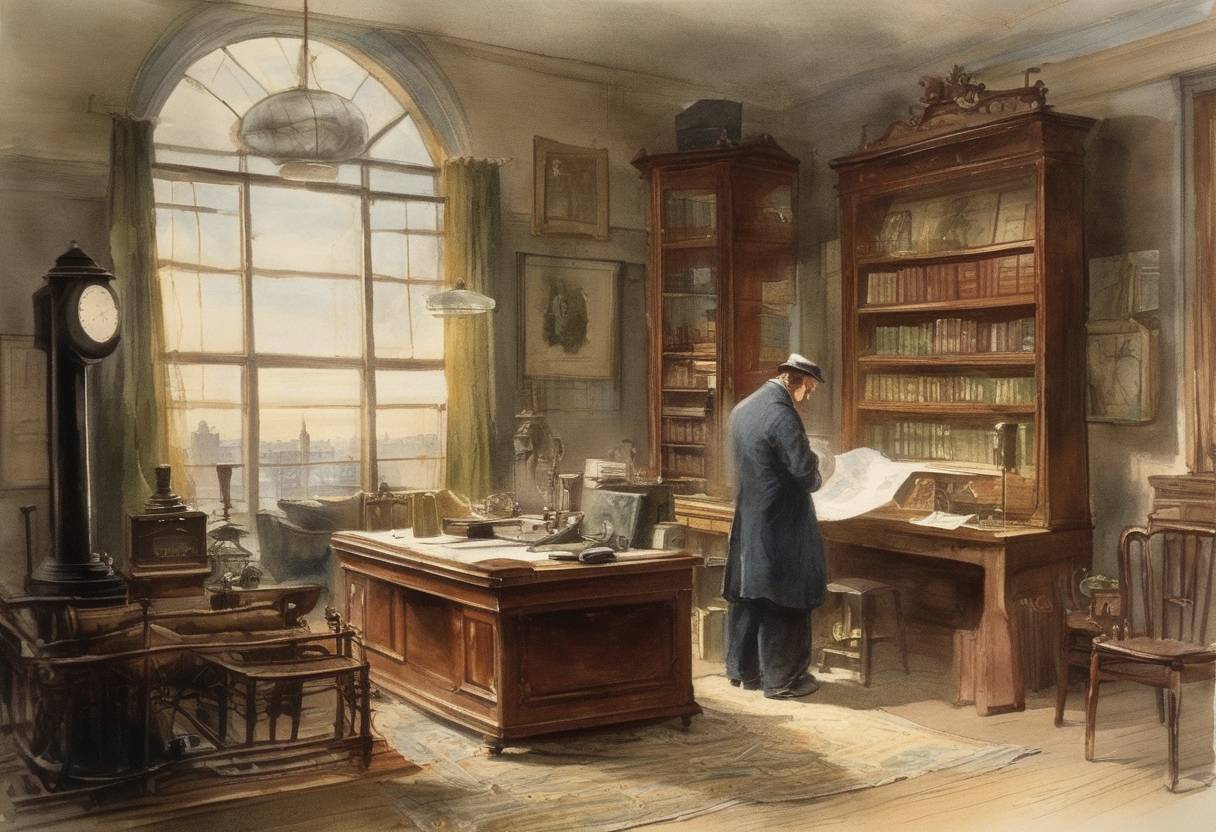
On March 24, 1883, a landmark in telecommunications was reached with the establishment of long-distance telephone service between two major American cities: Chicago and New York. This development marked a significant advancement in communications during the late 19th century and played a critical role in the expansion of the telephone network in the United States.
The telephone was invented by Alexander Graham Bell in 1876, revolutionizing the way people communicated over distances. Until the early 1880s, however, telephone communication was largely confined to local exchanges due to the technological limitations of the time. The capability for long-distance communication was still being explored and developed.
Technological Advances: One of the key technological innovations that enabled long-distance service was the improvement in the quality of telegraph wires, which allowed them to carry voice signals over greater distances without significant loss of quality.
Bell Telephone Company: The Bell Telephone Company, founded by Alexander Graham Bell and his associates, played a pivotal role in the expansion of telephone networks. By the early 1880s, the company was actively working to connect cities further apart.
The opening of long-distance service between Chicago and New York was a major milestone. Although the service was rudimentary by modern standards—limited by the quality of transmission and the infrastructure available—it demonstrated that voice communication over significant distances was feasible, laying the groundwork for future technological developments.
Economic Impact: The ability to communicate instantly over long distances greatly enhanced business operations and economic interactions between Chicago and New York, two of the most important commercial centers in the United States at the time.
Expansion and Development: This connection foreshadowed the rapid expansion of long-distance telephone service across the country. It highlighted the potential for a nationwide telephone network, which would continue to grow in the decades to follow.
Societal Changes: Long-distance telephone service contributed to societal changes by improving communication between people separated by large distances, influencing both personal and professional relationships.
In the ensuing years, the telephone network continued to expand across the United States, eventually connecting the entire nation. Innovations in technology further improved the quality and reliability of communication, playing a vital role in modern society’s infrastructure and foreshadowing the interconnected world we live in today.
Source: www.loc.gov