1798 · Oulart, Ireland
The Battle of Oulart Hill took place during the Irish Rebellion of 1798, where the forces of the United Irishmen defeated the local militia.
April 22, 1800
The United Irishmen's Rebellion: The Irish Republican Army attempt to launch a diversionary attack during the Easter Rising.
Ireland, Ireland | United Irishmen
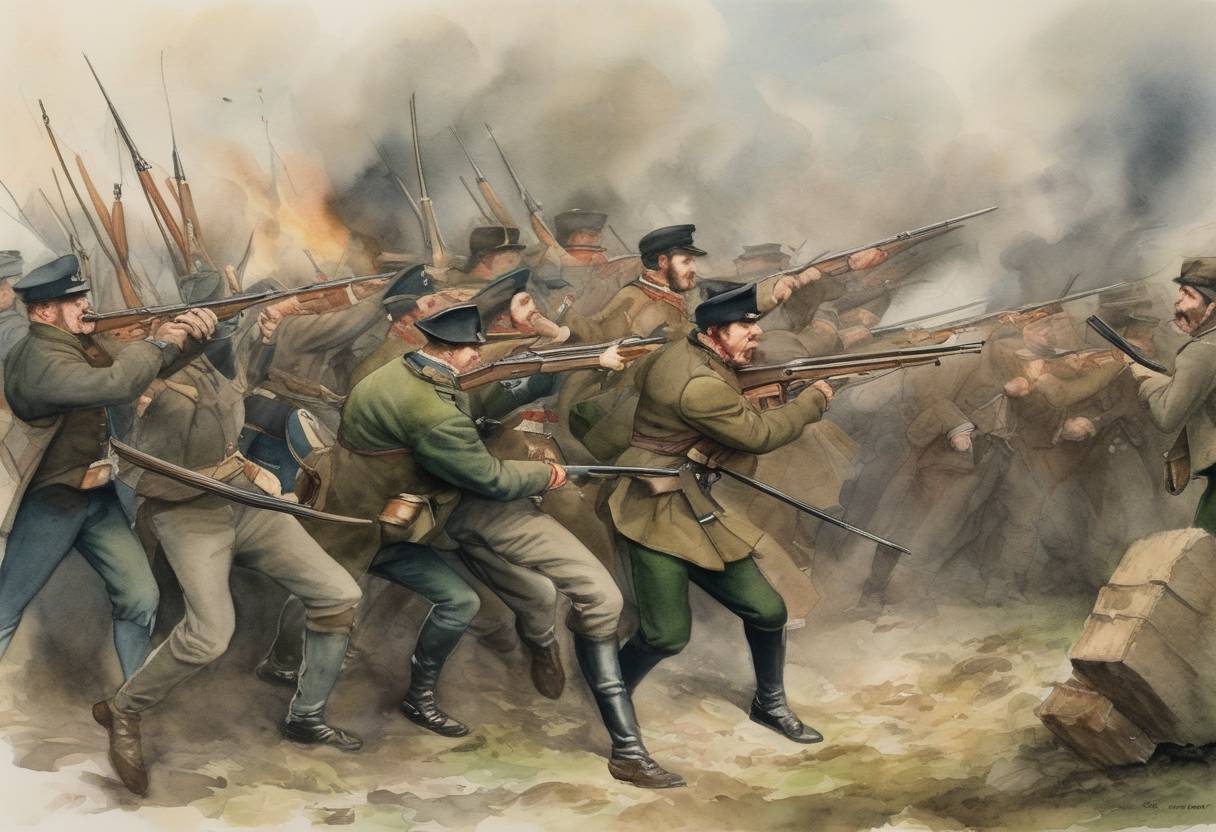
The Irish Republican Army (IRA) and the Easter Rising cannot be associated with the date April 22, 1800, as these events are part of 20th-century history. The Easter Rising occurred in 1916, and the IRA was formed thereafter. However, the events related to the United Irishmen’s Rebellion are rooted in the late 18th century.
The United Irishmen’s Rebellion occurred in 1798, pivotal in Irish history, initiated by the Society of United Irishmen. This organization aimed to liberate Ireland from British rule, influenced heavily by revolutionary ideals emanating from America and France. The failed rebellion hoped to establish an independent Irish Republic.
The date April 22, 1800, does not directly relate to any specific uprising or military operation by the United Irishmen. The events of that year were primarily diplomatic and legislative, leading toward the Acts of Union in 1801. If you’re interested in the Easter Rising or subsequent IRA actions, it would be appropriate to reference events in 1916 or later.
By focusing on the correct historical context and dates, we can place the United Irishmen’s efforts within the trajectory of Irish nationalist movements, ultimately leading to 20th-century republican activities.
Source: www.britannica.com