The Siege of Yorktown: British Surrender on October 19, 1781
1781 · Yorktown, United States
The Siege of Yorktown ends with the British Army's surrender to American and French forces, effectively ending the American Revolutionary War.
June 28, 1778
The Battle of Monmouth is fought near Monmouth Court House, where the Continental Army, led by George Washington, clashes with British forces under Sir Henry Clinton during their retreat from Philadelphia to New York.
Monmouth, United States | Continental Army
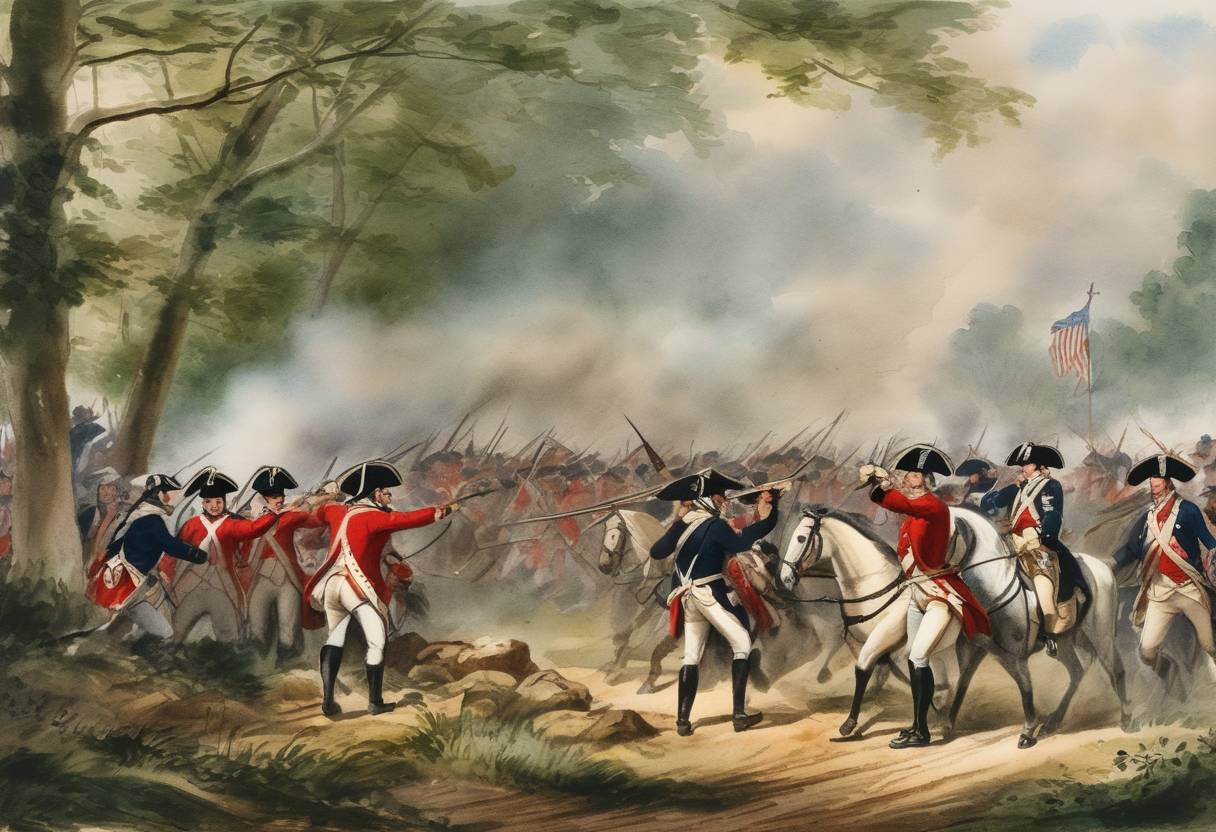
The Battle of Monmouth took place on June 28, 1778, near Monmouth Court House in New Jersey. This significant engagement of the American Revolutionary War involved the Continental Army, under the command of General George Washington, clashing with British forces led by Lieutenant General Sir Henry Clinton. The battle occurred during the British retreat from Philadelphia to New York City.
Background: Following the British occupation of Philadelphia, the harsh winter at Valley Forge in 1777-1778 saw the Continental Army undergo significant training and reorganization under the guidance of Prussian military officer Baron von Steuben.
British Strategy: Sir Henry Clinton, tasked with relocating his forces to New York City to consolidate British holdings, commenced an overland retreat from Philadelphia. The long, exposed column of British troops, laden with baggage and impediments, presented an opportunity for the Continentals.
American Strategy: Washington aimed to harass and delay the British retreat, hoping to make a decisive strike. He dispatched a vanguard led by Major General Charles Lee with orders to engage the enemy and hold them until the main body of the Continental Army could join.
Initial Movements: On the morning of June 28, 1778, Lee’s advance forces engaged British rear elements near Monmouth Court House. The initial skirmishes spiraled into a broader conflict as more troops were drawn from both sides.
Lee’s Retreat: Facing stiff resistance and confused by the lack of coordination among his officers, Lee ordered a partial retreat, which soon turned into a disorderly withdrawal. This created a precarious situation for the Continentals.
Washington’s Intervention: Washington, arriving with reinforcements, confronted Lee about the retreat and rallied the troops to form a defensive line. His leadership helped stabilize the American forces, effectively turning the tide.
Counterattack and Stalemate: Throughout the hot, exhausting day, the battle raged with significant artillery duels and infantry clashes. Neither side could gain a decisive advantage, resulting in a tactical stalemate by day’s end.
Outcome: The battle ended largely without clear victory, though strategically, the Americans were able to claim a measure of success for standing against and halting the British retreat.
Casualties: Approximately 300 British soldiers were killed, wounded, or captured, while the Americans sustained similar losses. The excessive heat caused additional numerous non-combatant casualties.
Impact: While the battle did not deliver a strategic blow to the British, it proved that American forces had matured into a competent fighting force capable of taking on British regulars in open battle. It bolstered morale and solidified Washington’s leadership.
Legacy: The Battle of Monmouth remains a pointed example of the growing effectiveness and confidence of the Continental Army, and it highlighted the pivotal role of strong leadership and discipline in warfare.
The confrontation at Monmouth reinforced the resolve of the American Revolutionaries and demonstrated the practical impact of the military reforms Washington had implemented at Valley Forge.
Source: en.wikipedia.org