Warsaw Pact Invasion of Czechoslovakia - August 20, 1968
1968 · Prague, Czechoslovakia
Warsaw Pact troops invade Czechoslovakia to end the Prague Spring.
August 21, 1968
The Soviet Union and other Warsaw Pact nations invade Czechoslovakia to suppress the Prague Spring.
Prague, Czechoslovakia | Warsaw Pact
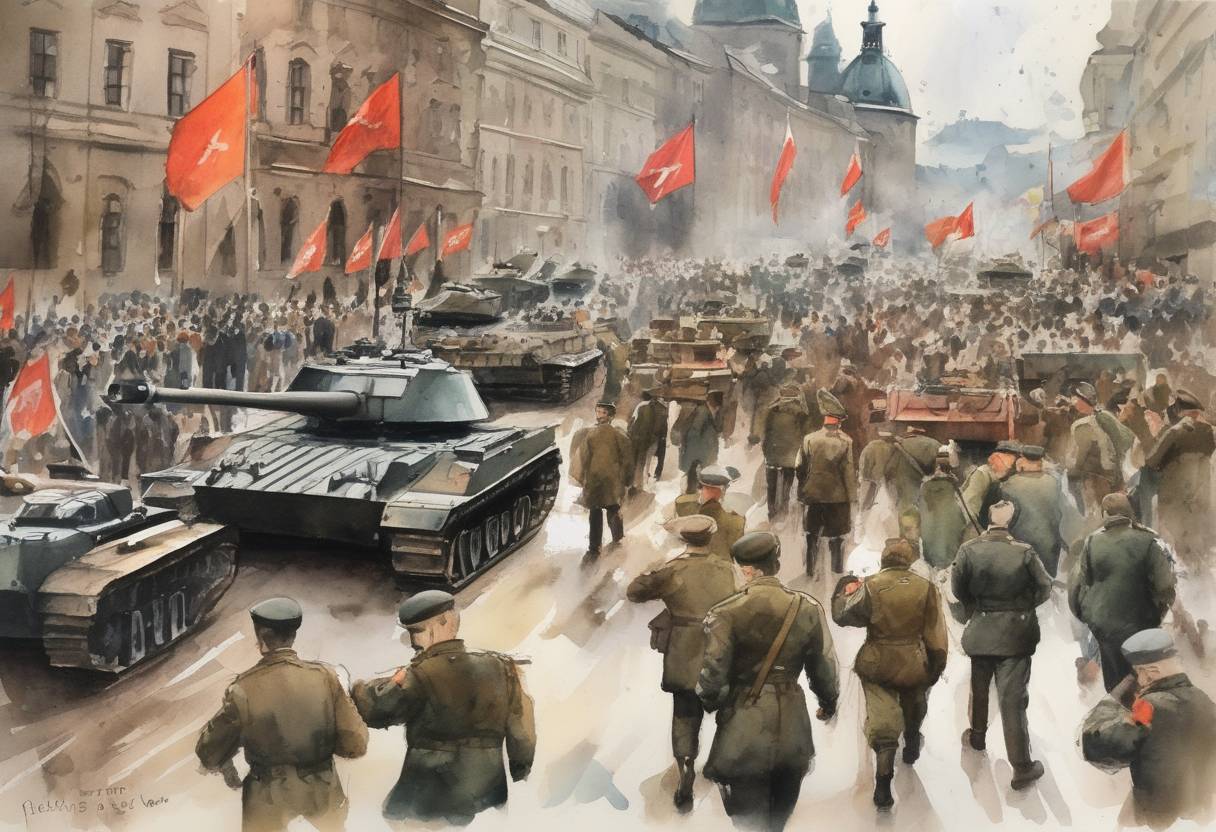
On August 21, 1968, the Soviet Union, along with other Warsaw Pact nations, invaded Czechoslovakia to suppress the liberalizing reforms of the Prague Spring. This military intervention marked a significant moment in Cold War history, illustrating the limits of autonomy within the Eastern Bloc and the Soviet Union’s determination to maintain its influence over satellite states.
The Prague Spring was a period of political liberalization in Czechoslovakia that began in January 1968, when Alexander Dubček became the First Secretary of the Communist Party of Czechoslovakia. Dubček introduced reforms aimed at creating “socialism with a human face,” which included:
These reforms were met with enthusiasm domestically but caused alarm in the Soviet Union and other Warsaw Pact countries, who feared that such changes could inspire similar movements in their own nations and threaten the cohesion of the Eastern Bloc.
On the night of August 20-21, 1968, approximately 200,000 troops and 2,000 tanks from the Soviet Union, Poland, East Germany, Hungary, and Bulgaria crossed into Czechoslovakia. The operation, codenamed “Operation Danube,” was executed swiftly and met with minimal armed resistance from the Czechoslovak military, which had been ordered not to engage.
The invasion of Czechoslovakia in 1968 underscored the Soviet Union’s commitment to maintaining its sphere of influence in Eastern Europe, even at the cost of military intervention. It highlighted the limitations of reform within the Eastern Bloc and served as a stark reminder of the geopolitical tensions of the Cold War era. The event also contributed to a growing sense of disenchantment with Soviet-style communism, both within the Eastern Bloc and globally.
Source: en.wikipedia.org