The Formation of the Triple Alliance: May 20, 1882
1882 · Vienna, Austria
The Triple Alliance was formed between Germany, Austria-Hungary, and Italy, a military agreement that played a significant role in the prelude to World War I.
January 4, 1717
The Netherlands, Great Britain, and France signed the Triple Alliance to counter the power of Spain.
The Hague, Netherlands | Triple Alliance
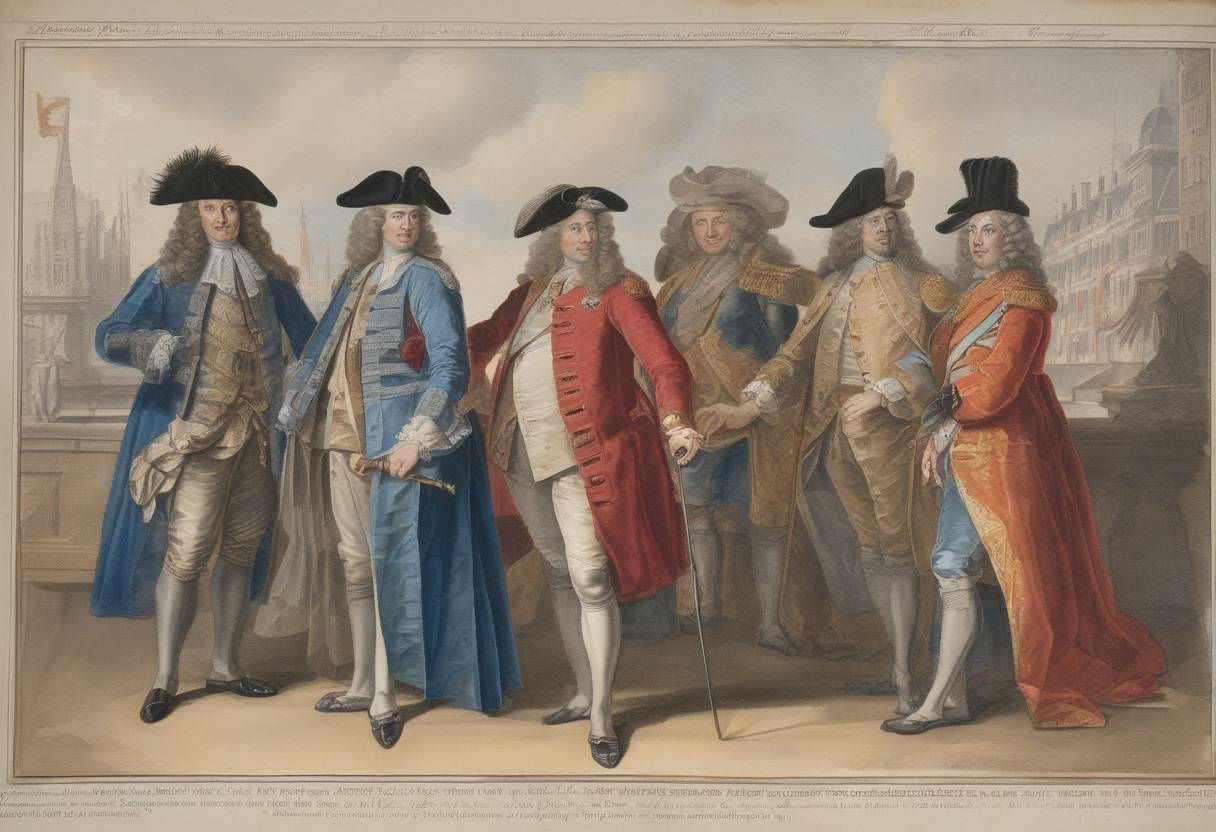
On January 4, 1717, a significant diplomatic agreement known as the Triple Alliance was signed between the Netherlands, Great Britain, and France. This alliance was primarily aimed at countering the growing influence and power of Spain in Europe. The early 18th century was a period marked by shifting alliances and power struggles among European nations, and the Triple Alliance was a strategic move to maintain a balance of power.
War of the Spanish Succession (1701-1714): The backdrop to the Triple Alliance was the War of the Spanish Succession, which had concluded just a few years earlier with the Treaty of Utrecht in 1713. This war was fought over who should succeed to the Spanish throne after the death of the childless Charles II of Spain. The war ended with Philip V, a Bourbon, being recognized as the King of Spain, but with the condition that the French and Spanish crowns would remain separate.
Post-War Tensions: Despite the Treaty of Utrecht, tensions remained high in Europe. Spain, under Philip V, sought to regain territories lost during the war, particularly in Italy. This ambition was seen as a threat by other European powers who were wary of a potential resurgence of Spanish influence.
Great Britain’s Role: Great Britain, under the leadership of King George I, was keen on maintaining the balance of power in Europe. The British were particularly concerned about Spanish ambitions in the Mediterranean and the potential threat to their own colonial interests.
France’s Involvement: France, although allied with Spain through the Bourbon family ties, was also interested in preventing Spain from becoming too powerful. The French government, led by the Regent Philippe II, Duke of Orléans, sought to stabilize Europe and avoid further conflicts that could drain resources.
The Netherlands’ Position: The Dutch Republic, a significant maritime and trading power, was similarly interested in maintaining stability and preventing any single power from dominating Europe.
Mutual Defense: The Triple Alliance was essentially a defensive pact. The three nations agreed to support each other in the event of Spanish aggression.
Diplomatic Pressure on Spain: The alliance served as a diplomatic tool to pressure Spain into abandoning its territorial ambitions in Italy and elsewhere.
Stabilization of Europe: The formation of the Triple Alliance contributed to a period of relative peace in Europe, as it deterred Spain from pursuing aggressive expansionist policies.
Quadruple Alliance: The Triple Alliance eventually paved the way for the Quadruple Alliance in 1718, which included the Holy Roman Empire. This expanded alliance further isolated Spain and solidified the balance of power in Europe.
Long-term Effects: The alliances of the early 18th century set the stage for future diplomatic and military engagements in Europe. They highlighted the importance of coalition-building in maintaining stability and preventing any single nation from achieving hegemony.
In summary, the Triple Alliance of 1717 was a crucial diplomatic agreement that helped to maintain the balance of power in Europe following the War of the Spanish Succession. It underscored the complex interplay of alliances and rivalries that characterized European politics in the early modern period.
Source: www.britannica.com