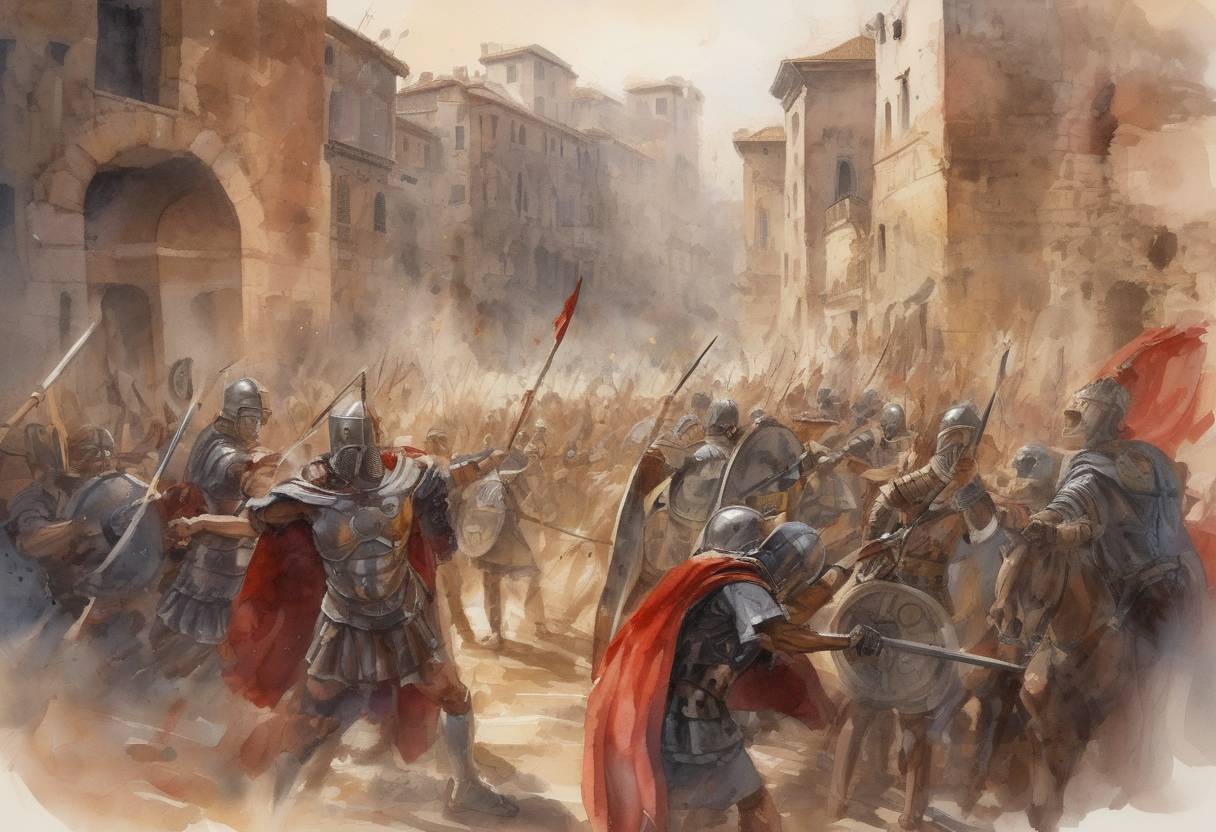
The Sack of Rome by the Vandals on August 24, 455
On August 24, 455, the city of Rome experienced one of its most significant and devastating sackings at the hands of the Vandals, a Germanic tribe led by their king, Gaiseric. This event marked a pivotal moment in the decline of the Western Roman Empire, contributing to its eventual fall.
Background
The Vandals, originally from the region that is now Poland, had migrated southwards and settled in North Africa after crossing into Roman territories. Under the leadership of King Gaiseric, they established a powerful kingdom with Carthage as its capital. The Vandals had become a formidable naval power in the Mediterranean, frequently raiding Roman territories.
The political situation in Rome was unstable following the assassination of Emperor Valentinian III in 455. His successor, Petronius Maximus, lacked the support and legitimacy needed to stabilize the empire. This political turmoil provided an opportunity for Gaiseric to strike.
The Sack of Rome
Gaiseric’s forces arrived in Rome in June 455, not August as sometimes misstated, after negotiating with Pope Leo I, who sought to prevent the complete destruction of the city. The Vandals entered Rome without significant resistance, as the city was ill-prepared to defend itself.
Over the course of two weeks, the Vandals systematically looted the city. Unlike the earlier sack by the Visigoths in 410, the Vandals were more thorough in their plundering. They stripped the city of its wealth, taking valuable treasures, including the spoils of the Temple of Jerusalem, which had been brought to Rome by Emperor Titus in 70 AD.
Consequences
The sack of Rome by the Vandals had profound implications:
Psychological Impact: The event further eroded the prestige and authority of the Western Roman Empire. The sack symbolized the vulnerability and decline of what was once the heart of the ancient world.
Political Repercussions: The inability of the Roman leadership to protect the city highlighted the empire’s weakened state. This event accelerated the fragmentation and eventual collapse of the Western Roman Empire, which officially fell in 476 AD.
Cultural and Economic Effects: The looting of Rome deprived the city of its wealth and cultural artifacts, contributing to its economic decline and the loss of its status as a cultural center.
Broader Historical Significance
The sack of Rome by the Vandals is often cited as a key event in the series of invasions and internal strife that led to the fall of the Western Roman Empire. It underscored the shifting power dynamics in Europe, where Germanic tribes were increasingly asserting their dominance over Roman territories.
In summary, the sack of Rome by the Vandals on August 24, 455, was a critical event in the history of the Western Roman Empire, illustrating its vulnerability and hastening its decline. The Vandals’ actions left a lasting legacy, influencing the perception of Rome’s fall and the transition to the medieval period in Europe.