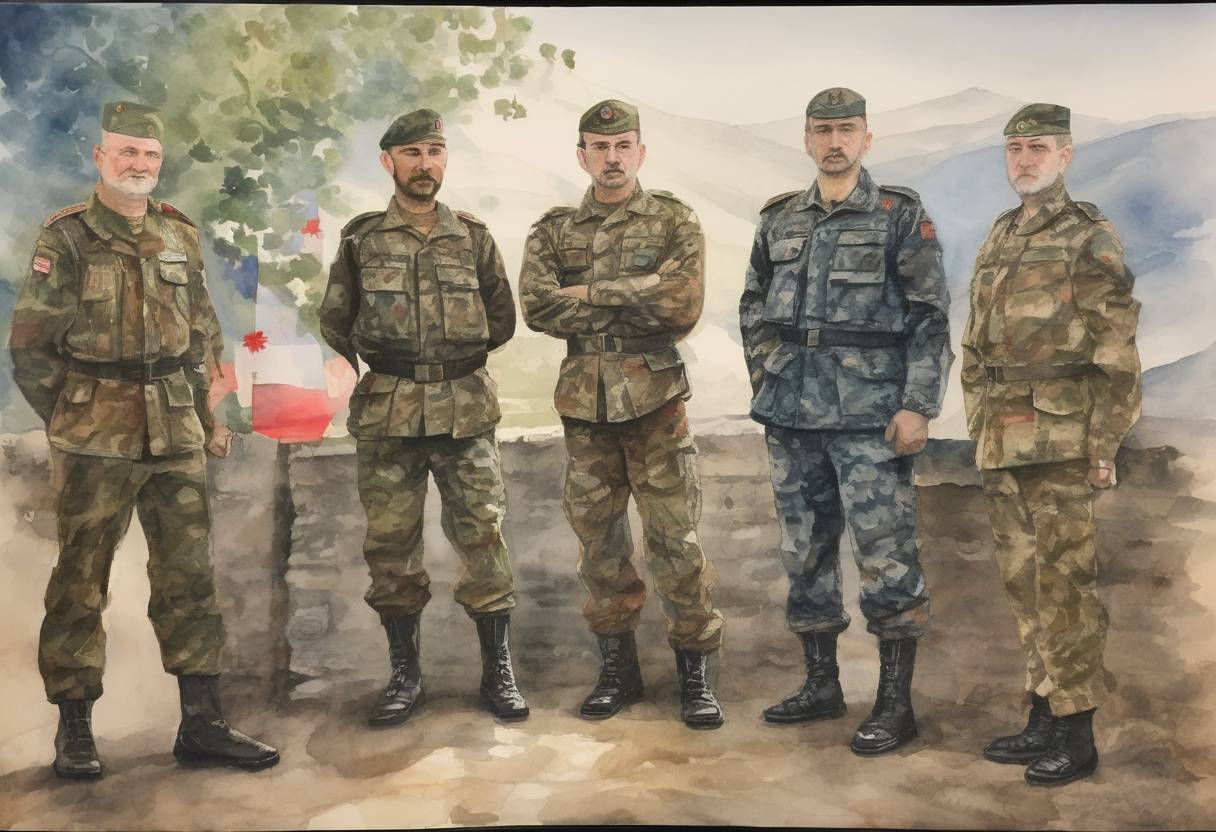
Peace Deal to End the Nagorno-Karabakh Conflict: November 10, 2020
On November 10, 2020, a significant peace agreement was signed between Armenia, Azerbaijan, and Russia, marking the end of a six-week conflict over the disputed Nagorno-Karabakh region. This agreement was brokered by Russia and involved the deployment of Russian peacekeepers to the area to ensure stability and compliance with the terms of the ceasefire.
Background
The Nagorno-Karabakh region, internationally recognized as part of Azerbaijan, has been a point of contention between Armenia and Azerbaijan for decades. Following the dissolution of the Soviet Union, ethnic Armenians in Nagorno-Karabakh declared independence, leading to a war in the early 1990s. Despite a ceasefire in 1994, the region remained a flashpoint, with periodic skirmishes and clashes.
The conflict reignited on September 27, 2020, leading to intense fighting that resulted in significant casualties and displacement. The six-week war saw Azerbaijan making substantial territorial gains, reclaiming areas lost in the previous conflict.
Key Terms of the Peace Deal
Cessation of Hostilities: The agreement mandated an immediate end to all military actions and the retention of positions held at the time of the ceasefire.
Territorial Changes: Azerbaijan retained control over areas it had captured during the conflict. Armenia agreed to withdraw from several adjacent districts.
Russian Peacekeepers: Approximately 2,000 Russian troops were deployed to monitor the ceasefire and ensure the safety of the Lachin corridor, a crucial link between Nagorno-Karabakh and Armenia.
Return of Displaced Persons: The deal included provisions for the return of internally displaced persons and refugees to their homes under the supervision of the United Nations High Commissioner for Refugees (UNHCR).
Transport and Communication: The agreement called for the unblocking of all economic and transport links in the region, with a specific focus on establishing a new corridor connecting Azerbaijan to its exclave, Nakhchivan.
Aftermath and Significance
The peace deal was met with mixed reactions. In Azerbaijan, it was largely celebrated as a victory, while in Armenia, it sparked political turmoil and protests, as many viewed it as a capitulation. The agreement significantly altered the geopolitical landscape of the South Caucasus, with Russia reinforcing its role as a key power broker in the region.
The deployment of Russian peacekeepers underscored Moscow’s influence and its strategic interest in maintaining stability in its near abroad. The deal also highlighted the limitations of Western influence in resolving conflicts in the post-Soviet space.
Overall, the November 10, 2020, peace agreement brought an end to active hostilities, but the underlying issues and tensions surrounding Nagorno-Karabakh remain unresolved, posing challenges for lasting peace and reconciliation in the region.