An Lushan Declares Himself Emperor: February 5, 756
756 · Luoyang, China
An Lushan, a general of the Tang Dynasty, declared himself emperor and established the Yan Dynasty, marking a significant point in the An Lushan Rebellion.
December 8, 0757
Du Fu, a prominent Chinese poet of the Tang dynasty, writes a poem titled 'A Song of Fair Women' during his time in Chengdu. Du Fu is often considered one of the greatest Chinese poets, and his works provide valuable insights into the social and political landscape of the Tang dynasty.
Chengdu, China
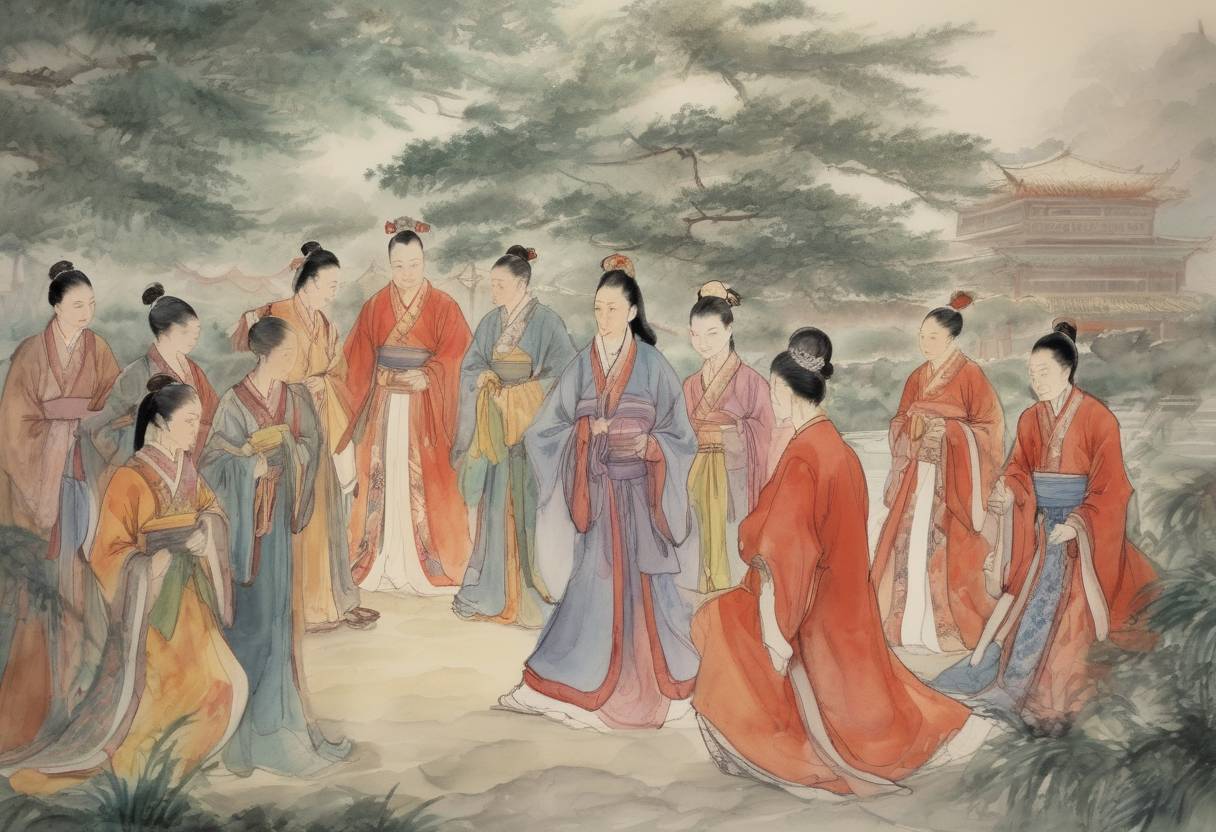
Du Fu, one of the most esteemed poets of the Tang dynasty, is renowned for his profound and insightful poetry that captures the essence of his era. On December 8, 757, during his time in Chengdu, Du Fu composed the poem “A Song of Fair Women” (丽人行), which stands as a testament to his literary prowess and his ability to reflect on the social and political climate of his time.
The Tang dynasty (618–907) is often regarded as a golden age of Chinese civilization, marked by cultural flourishing and territorial expansion. However, Du Fu’s lifetime was marred by the An Lushan Rebellion (755–763), a devastating civil war that severely disrupted the empire. This period of turmoil deeply influenced Du Fu’s work, as he often wrote about the suffering of the people and the challenges faced by the state.
In 757, Du Fu found refuge in Chengdu, located in the Sichuan province, after fleeing the chaos of the rebellion. Chengdu provided a relatively peaceful environment where he could continue his literary pursuits. It was during this time that he composed some of his most significant works, including “A Song of Fair Women.”
“A Song of Fair Women” is a poem that reflects Du Fu’s keen observations of society and his ability to weave intricate imagery with social commentary. The poem describes the opulence and beauty of the women in the imperial court, juxtaposed against the backdrop of the suffering and hardship experienced by the common people due to the ongoing conflict.
Social Commentary: The poem highlights the disparity between the luxurious lives of the elite and the struggles of the ordinary citizens. Du Fu uses the imagery of fair women to critique the excesses of the court and the neglect of the populace.
Cultural Reflection: Through his vivid descriptions, Du Fu captures the cultural richness of the Tang dynasty, even as he laments the moral and social decay brought about by the rebellion.
Literary Style: Du Fu’s mastery of the regulated verse form and his ability to convey deep emotion and insight through his poetry have earned him a lasting place in Chinese literary history.
Du Fu’s works, including “A Song of Fair Women,” continue to be celebrated for their artistic merit and historical value. His poetry provides a window into the complexities of the Tang dynasty, offering future generations a nuanced understanding of this pivotal period in Chinese history. Du Fu’s influence extends beyond his lifetime, as he is often regarded as a paragon of Chinese poetic tradition, inspiring countless poets and scholars throughout the centuries.