Liberation of Bergen-Belsen Concentration Camp - April 15, 1945
1945 · Bergen-Belsen, Germany
British troops liberated the Bergen-Belsen concentration camp in Germany, revealing the horrors of the Holocaust to the world.
August 30, 1945
Hong Kong is liberated from Japanese occupation by British forces.
Hong Kong, Hong Kong | British Army
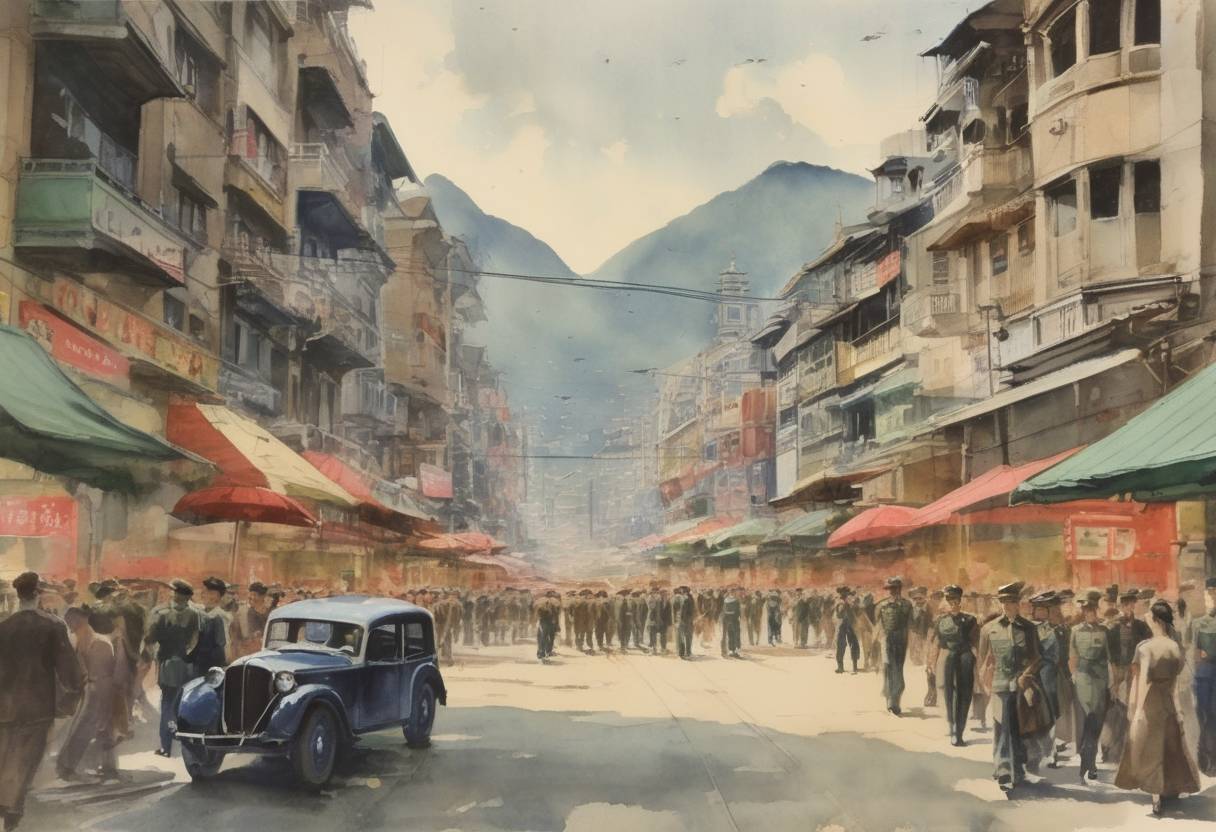
Hong Kong, a British colony since 1842, was occupied by Japanese forces during World War II. The occupation began on December 25, 1941, following the Battle of Hong Kong, which saw British, Canadian, Indian, and local forces overwhelmed by the Japanese Imperial Army. This marked the beginning of a harsh occupation period that lasted nearly four years.
The tide of World War II began to turn in favor of the Allies following significant victories in Europe and the Pacific. By mid-1945, Japan was on the brink of defeat. The dropping of atomic bombs on Hiroshima and Nagasaki in early August 1945, coupled with the Soviet Union’s declaration of war on Japan, expedited Japan’s surrender.
On August 15, 1945, Japan announced its unconditional surrender, effectively ending World War II. This set the stage for the liberation of territories occupied by Japanese forces, including Hong Kong.
On August 30, 1945, British forces officially liberated Hong Kong from Japanese occupation. The operation was led by Rear Admiral Sir Cecil Harcourt, who arrived aboard the HMS Swiftsure. Harcourt was appointed as the head of a provisional military government to oversee the transition of power back to British control.
The formal surrender of Japanese forces in Hong Kong took place aboard the HMS Indomitable in Victoria Harbour. This event marked the end of Japanese rule and the restoration of British administration in the colony.
The liberation of Hong Kong was a significant moment in the post-war reconstruction of the region. The British administration faced the immense task of rebuilding the war-torn colony, addressing food shortages, restoring infrastructure, and managing the influx of refugees.
The return of British rule also set the stage for Hong Kong’s eventual transformation into a major global financial center in the latter half of the 20th century. However, the period of Japanese occupation left a lasting impact on the local population, influencing Hong Kong’s cultural and historical narrative.
The liberation of Hong Kong was part of a broader process of decolonization and geopolitical realignment in Asia following World War II. It highlighted the shifting power dynamics in the region and foreshadowed the eventual end of colonial rule in many parts of Asia.
The event remains a significant chapter in Hong Kong’s history, symbolizing resilience and the complex interplay of colonial and local identities that have shaped the region’s development.
In summary, the liberation of Hong Kong on August 30, 1945, marked the end of a challenging period of occupation and the beginning of a new chapter under British administration, with long-lasting effects on the region’s trajectory.
Source: en.wikipedia.org