Election of Moon Jae-in as President of South Korea
2017 · Seoul, South Korea
South Korea elected Moon Jae-in as president following the impeachment of Park Geun-hye.
December 19, 2012
Park Geun-hye is elected as the first female president of South Korea.
Seoul, South Korea | South Korean Government
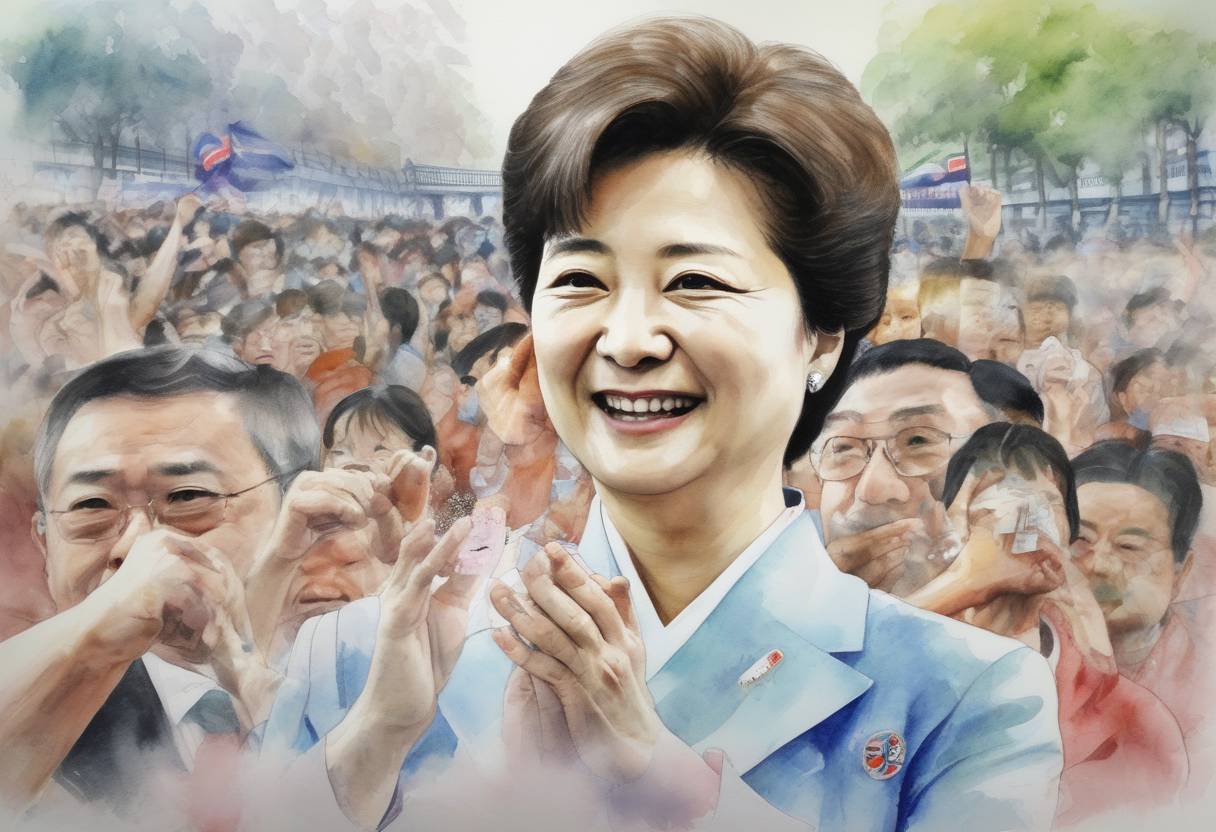
On December 19, 2012, Park Geun-hye made history by being elected as the first female president of South Korea. Her election marked a significant moment in South Korean politics, reflecting both the evolving role of women in leadership positions and the complex political landscape of the country.
Park Geun-hye is the daughter of Park Chung-hee, a former South Korean president who ruled the country from 1961 until his assassination in 1979. Her father’s legacy was a mix of rapid economic development and authoritarian rule, which influenced her political career and public perception.
Before her presidency, Park Geun-hye was a prominent figure in South Korean politics. She served multiple terms as a member of the National Assembly and was the leader of the conservative Grand National Party, which later became the Saenuri Party. Her political career was marked by her efforts to modernize the party and appeal to a broader electorate.
The 2012 presidential election was a closely contested race between Park Geun-hye and her main opponent, Moon Jae-in, a candidate from the Democratic United Party. The election campaign focused on various issues, including economic inequality, social welfare, and national security.
Park Geun-hye’s campaign emphasized economic stability, job creation, and a strong stance on national security, appealing to conservative voters. She also promised to address social welfare issues and improve relations with North Korea through a policy of “trustpolitik,” which aimed to build trust while maintaining a firm stance on security.
Park Geun-hye won the election with 51.6% of the vote, defeating Moon Jae-in, who garnered 48% of the vote. Her victory was seen as a continuation of conservative leadership in South Korea, following the presidency of Lee Myung-bak.
Park Geun-hye’s election was significant for several reasons:
Gender Breakthrough: As the first female president of South Korea, her election was a milestone for gender equality in a traditionally male-dominated political landscape.
Political Legacy: Her presidency was closely watched due to her father’s controversial legacy, and she faced the challenge of balancing his economic achievements with the demand for democratic reforms.
Policy Challenges: Park’s presidency was marked by efforts to revitalize the economy, improve social welfare, and navigate complex relations with North Korea.
However, her presidency was later overshadowed by a corruption scandal involving her close confidante, Choi Soon-sil, which led to massive protests and her impeachment in 2017. Park Geun-hye was subsequently removed from office and later sentenced to prison, marking a dramatic fall from grace.
Park Geun-hye’s election as South Korea’s first female president was a historic event that highlighted both the progress and challenges in South Korean politics. Her presidency, while initially promising, ultimately ended in controversy, leaving a lasting impact on the country’s political landscape.
Source: en.wikipedia.org