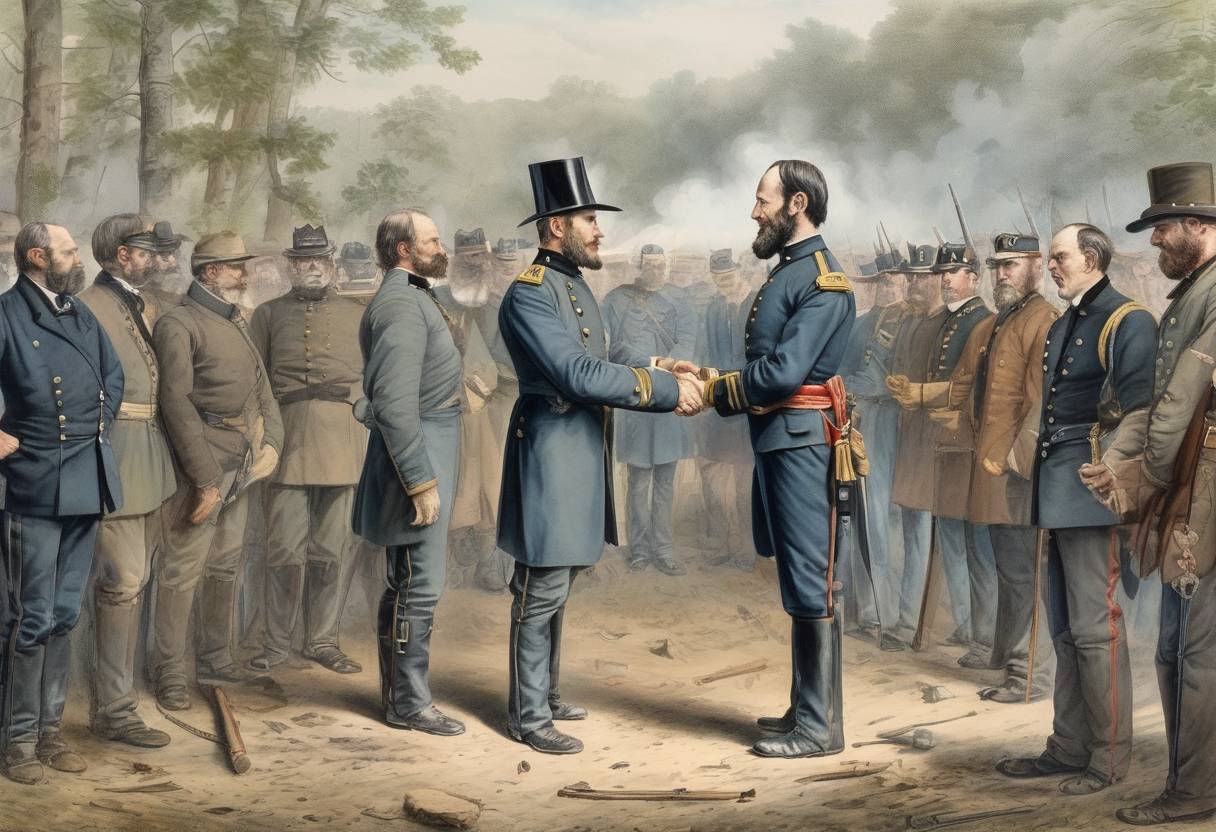
Surrender of Confederate General Joseph E. Johnston to Union General William T. Sherman
On April 26, 1865, one of the final significant surrenders of the American Civil War took place when Confederate General Joseph E. Johnston surrendered to Union General William T. Sherman near Durham, North Carolina. This event marked a crucial step towards the conclusion of the Civil War, following the surrender of General Robert E. Lee at Appomattox Court House earlier that month.
Context and Background
- The Civil War’s Final Stages: By early 1865, the Confederate forces were severely weakened. The Union had gained significant ground, and the Confederacy was struggling with dwindling resources and manpower.
- Sherman’s March: General Sherman had led his forces on a destructive campaign through the South, known as “Sherman’s March to the Sea,” which significantly undermined the Confederate war effort.
- Lee’s Surrender: On April 9, 1865, General Robert E. Lee surrendered the Army of Northern Virginia to General Ulysses S. Grant at Appomattox Court House, signaling the impending end of the Confederacy.
The Surrender at Bennett Place
- Location: The surrender took place at Bennett Place, a farmhouse near Durham Station, North Carolina.
- Negotiations: Initial negotiations began on April 17, 1865. However, the terms proposed by Sherman were initially rejected by the U.S. government for being too lenient.
- Final Agreement: After revisions, the terms were accepted, and the formal surrender was signed on April 26, 1865. The terms allowed for the disbandment of Johnston’s army and the return of soldiers to their homes.
Terms of Surrender
- Parole of Soldiers: Confederate soldiers were to be paroled, meaning they could return home without fear of prosecution for treason, provided they adhered to the laws of the United States.
- Retention of Personal Property: Soldiers were allowed to keep their personal horses and sidearms, which was a gesture of respect and practicality, as many soldiers needed their horses for farming.
Aftermath and Significance
- End of Major Confederate Resistance: Johnston’s surrender effectively ended major Confederate military resistance in the Carolinas, Georgia, and Florida.
- Path to Reconstruction: The surrender paved the way for the Reconstruction era, during which the United States faced the challenges of reintegrating the Southern states and addressing the rights of newly freed African Americans.
- Legacy: The surrender at Bennett Place is remembered as a moment of reconciliation and the beginning of the nation’s healing process after four years of devastating conflict.
The surrender of General Johnston to General Sherman was a pivotal moment in American history, symbolizing the collapse of the Confederacy and the preservation of the Union. It underscored the importance of negotiation and compromise in the face of conflict and set the stage for the complex process of rebuilding the nation.